
Overview
Honeywell HC-SDS730-ESD Migration-Ready Signal Distribution Module: Legacy System Retrofit & Compatibility Upgrade
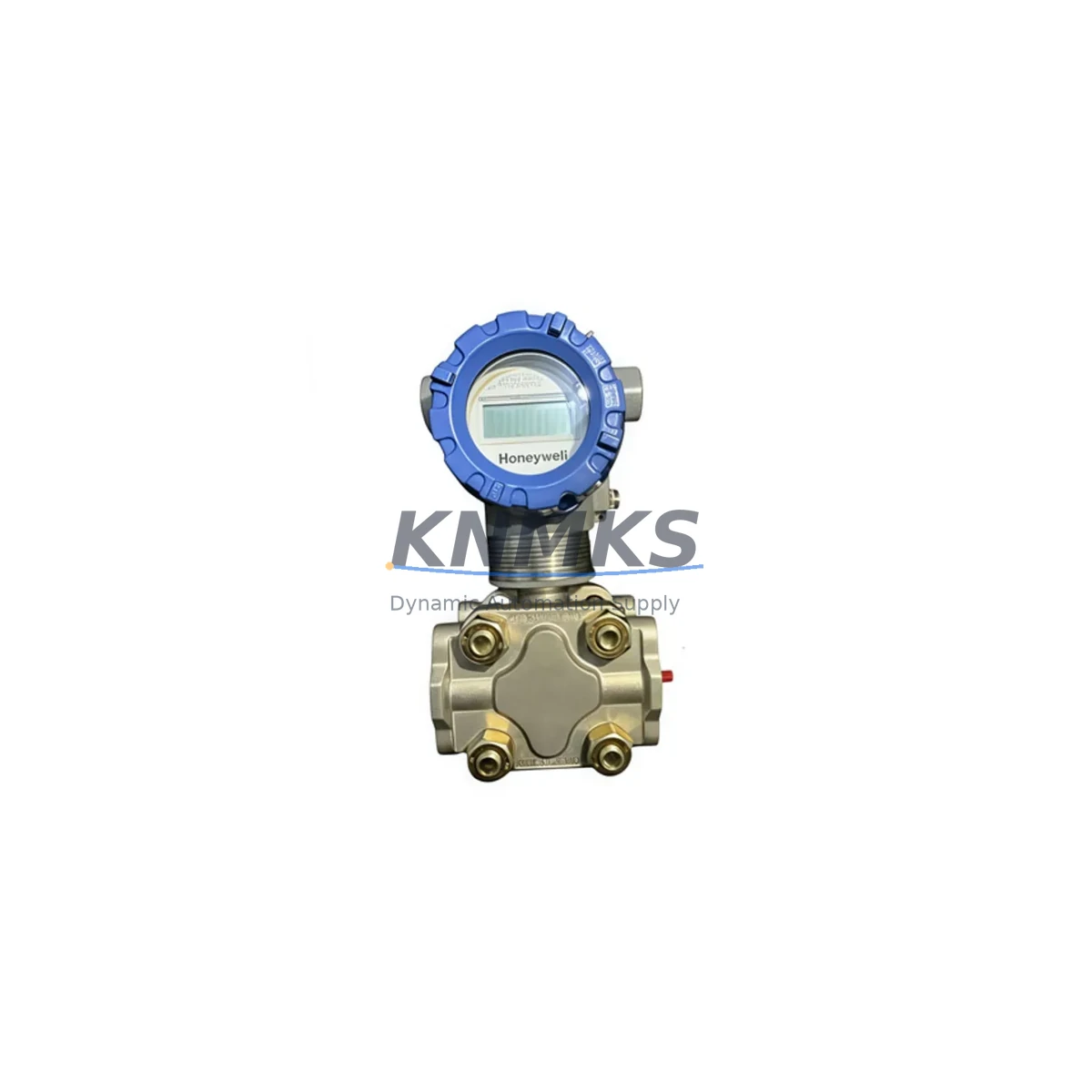
The Honeywell HC-SDS730-ESD is a signal distribution module originally designed for the Honeywell TDC-3000 Distributed Control System (DCS) platform. As TDC-3000 components reach end-of-life and spare parts become increasingly scarce, the HC-SDS730-ESD has become a critical replacement target for facilities managing aging control infrastructure across petrochemical, refining, power generation, and continuous process industries. KNMKS maintains verified stock of the HC-SDS730-ESD and supports customers through every stage of the retrofit process — from pre-migration compatibility assessment to post-installation commissioning verification.
When planning a replacement for the HC-SDS730-ESD, engineers must confirm several key parameters before proceeding. Power supply capacity at the backplane level must be validated to ensure the replacement module does not exceed the available rail budget — particularly in dense I/O cabinets where multiple modules share a common HC-PSU-ESD power supply unit. Terminal wiring assignments must be cross-referenced against the original loop drawings, as signal distribution modules in the TDC-3000 architecture route field wiring through marshalling panels before reaching the module face terminals. Any deviation in terminal mapping between the legacy module and its replacement can introduce signal errors or ground loops that are difficult to diagnose under live plant conditions.
Backplane interface compatibility is equally important. The HC-SDS730-ESD connects to the TDC-3000 High-Performance Process Manager (HPPM) or the Basic Process Manager (BPM) via a defined backplane slot assignment. Before installation, the module address configured in the system database must match the physical slot position. Mismatched module addressing will cause the controller to fail recognition of the new module, resulting in loss of I/O points and potential process upsets. Engineers should also verify that the HC-TDIL-ESD data highway interface link and associated communication modules remain compatible with the replacement unit’s firmware revision.
Program logic compatibility is another area requiring careful attention. The HC-SDS730-ESD interfaces with control strategies built in the TDC-3000 Control Language (CL) environment. When replacing a failed module, the existing CL blocks referencing that module’s point addresses must be verified to ensure no parameter drift has occurred. If the replacement module carries a different firmware version, certain function block behaviors — particularly those related to signal conditioning, range scaling, and alarm limit handling — may require re-validation against the original process design basis. HMI display pages referencing the replaced module’s tag names should also be reviewed to confirm that faceplates and trend displays continue to reflect accurate process values after the swap.
Communication link integrity must be maintained throughout the migration. The TDC-3000 Universal Control Network (UCN) and Local Control Network (LCN) segments connected to the process manager housing the HC-SDS730-ESD should be monitored for network health before and after the module replacement. In systems where the HC-LNKT-ESD network interface module or similar communication bridge components are installed in the same chassis, any interruption to the backplane during module hot-swap or cold-swap procedures can temporarily affect network traffic. Coordinating the replacement window with the control room team to minimize concurrent process variable changes reduces the risk of spurious alarms during the transition.
Physical installation space must also be confirmed. The HC-SDS730-ESD occupies a defined slot width within the TDC-3000 I/O chassis or file assembly. In retrofit scenarios where the original chassis has been partially populated with newer HC-IOLM-ESD I/O link modules or expanded with additional I/O files, available slot positions may be constrained. A physical site survey of the control cabinet layout — including cable tray routing, door clearance, and ventilation spacing — should be completed before scheduling the replacement outage.
KNMKS ships the HC-SDS730-ESD with a completed factory acceptance test (FAT) report, confirming that each unit has been powered, addressed, and verified for signal integrity prior to dispatch. All units are covered by a support terms confirmed by quotation from the date of shipment. Customers requiring expedited delivery for emergency plant shutdowns or unplanned outages can contact our sales team directly for priority stock allocation.
Migration Compatibility Table
| Parameter | HC-SDS730-ESD Specification | Retrofit / Migration Notes |
|---|---|---|
| Platform Compatibility | Honeywell TDC-3000 (HPPM / BPM) | Verify process manager type before ordering; HPPM and BPM use different backplane pinouts |
| Backplane Interface | TDC-3000 I/O File / Chassis Slot | Confirm slot address assignment matches system database configuration |
| Terminal Wiring | Field wiring via marshalling panel | Cross-reference loop drawings; verify terminal block compatibility with existing field cables |
| Power Requirement | Supplied via backplane rail (HC-PSU-ESD) | Validate available power budget on shared rail before installation |
| Communication Protocol | UCN / LCN (TDC-3000 native) | Monitor network health during swap; coordinate with control room to minimize concurrent changes |
| Firmware Compatibility | TDC-3000 firmware revision dependent | Match firmware version to existing system release; re-validate CL function blocks if firmware differs |
| Installation Dimensions | Standard TDC-3000 module form factor | Confirm available slot positions in chassis; check cabinet clearance and ventilation |
| Replacement Scope | Drop-in replacement for failed / EOL units | No hardware modification required for like-for-like swap; program re-download may be needed |
| Pre-Shipment Testing | Factory acceptance test (FAT) completed | FAT report included with each unit; covers power-on, addressing, and signal integrity verification |
| Support terms | support terms confirmed by quotation from shipment date | Covers manufacturing defects; contact admin@knmks.com for support requests |
Retrofit Planning for Existing Automation Systems
A successful HC-SDS730-ESD retrofit begins well before the physical module swap. The first step is a comprehensive audit of the existing TDC-3000 cabinet, identifying all modules currently installed in the same chassis or file assembly. In a typical TDC-3000 control cabinet, the signal distribution module shares the chassis with process manager cards, I/O link modules such as the HC-IOLM-ESD, and power supply units. Understanding the interdependencies between these components allows the retrofit team to sequence the replacement correctly and avoid inadvertently disrupting adjacent modules during the swap.
Field wiring termination is one of the most time-sensitive aspects of the retrofit. In TDC-3000 installations, field cables are typically landed on marshalling panels before being routed to the module face terminals. If the marshalling panel uses a terminal block system that is incompatible with the replacement module’s wiring interface, adapter terminal blocks or re-termination of field cables may be required. This work should be completed during a planned maintenance window rather than under emergency conditions to ensure correct polarity, shielding continuity, and loop resistance values.
For facilities that are simultaneously upgrading their communication infrastructure — for example, migrating from the TDC-3000 UCN to a modern Ethernet-based control network — the HC-SDS730-ESD replacement may be part of a broader system modernization that also involves replacing the HC-LNKT-ESD network interface module and associated gateway hardware. In these cases, the signal distribution module replacement should be coordinated with the network migration schedule to avoid creating isolated I/O segments that cannot communicate with the new control platform during the transition period.
I/O expansion requirements should also be assessed during the retrofit planning phase. If the existing TDC-3000 installation is operating near its I/O capacity, the replacement of a failed signal distribution module may present an opportunity to reconfigure the I/O file layout and add additional HC-TDIL-ESD data highway interface links or supplementary I/O modules to support future process expansion. Signal isolators installed between the field devices and the module terminals should be verified for compatibility with the replacement module’s input impedance and signal range specifications. Programming cables used for firmware updates or configuration downloads — such as the standard RS-232 or USB-to-serial adapters compatible with the TDC-3000 engineering workstation — should be confirmed available on-site before the maintenance window begins.
Downtime Control During System Migration
Minimizing unplanned downtime during an HC-SDS730-ESD replacement requires a structured approach that prioritizes program logic preservation, field signal continuity, and systematic commissioning verification. The first priority is to export and archive the current TDC-3000 database — including all CL control strategies, alarm configurations, and historian tag assignments — before any hardware changes are made. This backup ensures that the original program logic can be restored immediately if the replacement module introduces unexpected behavior during initial power-up.
Where process conditions permit, a cold-swap procedure is preferred over a hot-swap approach. Powering down the affected I/O file before removing the HC-SDS730-ESD eliminates the risk of backplane transients that could corrupt adjacent module memory or trigger spurious output changes on connected field devices. If the process cannot tolerate a complete I/O file shutdown, the control room team should place all affected control loops in manual mode before the swap begins, ensuring that field actuators remain in their last commanded position during the module exchange.
After the replacement module is installed and the chassis is powered up, a systematic loop check should be performed for every signal point associated with the HC-SDS730-ESD before returning loops to automatic control. This includes verifying that each analog input reads correctly against a known field reference, that digital input states match the physical status of connected field devices, and that analog output signals drive field actuators to the expected positions. Any discrepancies identified during the loop check should be resolved before the process is returned to normal operation.
HMI display pages referencing the replaced module’s I/O points should be reviewed in parallel with the loop check to confirm that all faceplates, trends, and alarm displays are updating correctly. In TDC-3000 systems where the HMI is hosted on a dedicated Universal Station (US) or Global User Station (GUS), the display database may need to be refreshed after the module replacement to clear any stale communication error flags that accumulated during the downtime period. Documenting the completed loop check results and retaining the FAT report provided by KNMKS creates a complete audit trail for the retrofit, supporting future maintenance planning and regulatory compliance requirements.
Retrofit Support FAQ
Q: Is the HC-SDS730-ESD a direct drop-in replacement for the original Honeywell module?
A: Yes. The HC-SDS730-ESD is designed as a form-fit-function replacement for the original Honeywell TDC-3000 signal distribution module. No hardware modifications to the chassis, backplane, or field wiring are required for a like-for-like swap. However, engineers should verify the firmware revision of the replacement unit against the existing system release and re-validate any CL function blocks that reference the replaced module’s I/O points before returning the process to automatic control.
Q: What commissioning steps are required after installing the HC-SDS730-ESD?
A: After physical installation, the module address must be confirmed to match the slot assignment in the TDC-3000 system database. A full loop check covering all analog and digital I/O points associated with the module should be completed, including verification of signal scaling, alarm limits, and output response. HMI display pages should be reviewed to confirm correct data refresh. If the replacement module carries a different firmware version, a controlled program download and function block re-validation may be required before the process is returned to automatic mode.
Q: Does KNMKS provide pre-shipment testing for the HC-SDS730-ESD?
A: Yes. Every HC-SDS730-ESD unit shipped by KNMKS has completed a factory acceptance test (FAT) covering power-on verification, module addressing, and signal integrity checks. A copy of the FAT report is included with each shipment. All units are covered by a support terms confirmed by quotation from the date of shipment. For support requests or technical support, contact admin@knmks.com or call +86 18359268345.
Q: How quickly can KNMKS supply the HC-SDS730-ESD for an emergency shutdown situation?
A: KNMKS maintains ready stock of the HC-SDS730-ESD to support both planned maintenance schedules and unplanned emergency outages. Priority shipment arrangements are available for customers facing critical plant shutdowns. Contact our sales team directly at admin@knmks.com or +86 18359268345 to confirm current stock availability and arrange expedited delivery to your facility.
© 2026 KNMKS. All rights reserved.
Original Source: https://knmks.com
Contact: admin@knmks.com | +86 18359268345
Product Identification
- Brand / Ecosystem
-
Honeywell
Honeywell - Model / Series
- HC-SDS730-ESD
- Product Family
- PLCs & Controllers
- Availability Status
- Available on request after model and quantity confirmation
- Inquiry Type
- B2B RFQ, replacement inquiry and project spare-part request
- Pre-Quote Check
- Exact SKU, brand, series, quantity, nameplate photos and destination country are checked before quotation
System Path
Where this product fits in the KNMKS automation structure.
Specification & Inquiry Focus
- Control platform
- PLC, PAC and modular controllers
- Common needs
- CPU, rack, power and I/O expansion
- Project support
- Replacement, cabinet build and maintenance
Buyer Confirmation
Information KNMKS checks before replying.
- Exact model
- HC-SDS730-ESD
- Brand / ecosystem
- Honeywell
- Product family
- PLCs & Controllers
- Application note
- Replacement, maintenance, project build or spare-part list
- Useful photos
- Nameplate, installed unit, cabinet layout or connector side
- Delivery details
- Quantity, destination country and target schedule
Document Support
Files and notes can be confirmed during quotation.
- Product photos or nameplate confirmation when available
- Packing and delivery notes before quotation confirmation
- Support scope and delivery terms confirmed per inquiry
- Export document coordination for qualified B2B requests
Inquiry Support
- Model cross-checking before quotation
- CPU, power, rack and expansion module matching
- Support for replacement and project inquiry
What to Send Us
- Brand and exact model number: Honeywell HC-SDS730-ESD
- Quantity and required delivery time
- Application, replacement requirement or nameplate photo
- Destination country and shipping preference
RFQ Preparation
This is a product inquiry page built for RFQ communication.
Fast Model Check
Send this model to KNMKS for confirmation.
Include quantity, destination country and photos if this is a maintenance replacement. The inquiry will be saved with a reference number after submission.
Brand & Compatibility Note
KNMKS displays automation product information for well-known industrial brand ecosystems and compatible replacement references. Brand names are used for product identification and compatibility reference only; final availability and commercial terms are confirmed per quotation.
 Manufacturing
 Machine Tools
 Packaging
 Energy & Power
 HMI & Displays
 Servo Systems
 Variable Frequency Drives
 Sensors