
Overview
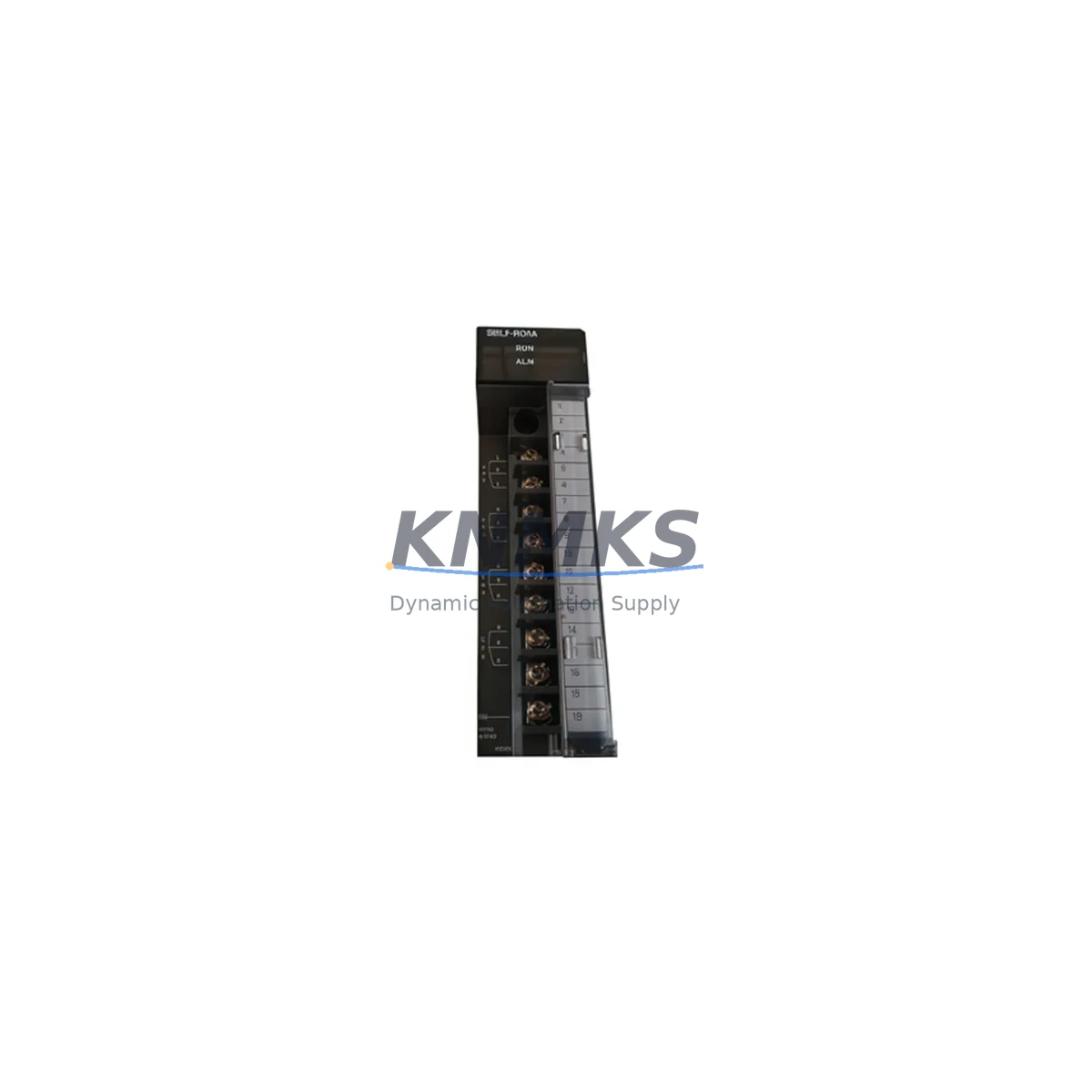
Honeywell 2MLF-RD4A Migration-Ready TC/RTD Input Module: Legacy System Retrofit & Compatibility Upgrade
The Honeywell 2MLF-RD4A is a 4-channel thermocouple and RTD input module designed for the HC900 Hybrid Controller platform. As legacy process control systems face end-of-life pressures, the 2MLF-RD4A has become a critical component in plant-wide retrofit programs — enabling engineers to extend the operational life of existing HC900 control architectures without requiring a full DCS migration. Whether you are replacing a failed module in a running production line, upgrading an aging temperature measurement loop, or consolidating spare parts inventory ahead of a planned shutdown, the 2MLF-RD4A delivers the signal accuracy, backplane compatibility, and firmware alignment needed to restore system integrity with minimal disruption.
When integrating the 2MLF-RD4A into an existing HC900 rack, engineers must verify several critical parameters before energizing the replacement module. Power budget confirmation is the first step: the HC900 power supply module — such as the HC900 PS1 or PS2 — must have sufficient headroom to support the additional input module load. Backplane slot addressing must be confirmed against the existing controller configuration file, as the HC900 assigns module addresses based on physical rack position. Any mismatch between the hardware slot and the software-configured I/O address will result in a fault condition that prevents the controller from scanning the new module.
Terminal wiring compatibility is equally important. The 2MLF-RD4A uses a removable terminal block, which simplifies field replacement — the existing wiring harness can be transferred directly to the new module without re-termination, provided the terminal block style matches. Engineers should confirm thermocouple type configuration (J, K, T, E, R, S, B) and RTD wiring mode (2-wire, 3-wire, or 4-wire) in the HC900 Designer software before downloading the updated configuration to the controller. Cold junction compensation settings and engineering unit scaling must also be reviewed to ensure continuity with the original measurement loop.
For sites running HC900 firmware versions below 4.0, a firmware compatibility check is recommended before installing the 2MLF-RD4A. In some retrofit scenarios, the HC900 C30 or C50 controller module may require a firmware update to recognize the replacement input module correctly. This is particularly relevant when the original module was installed during initial commissioning several years prior and the controller has not been updated since. Coordinating the firmware update with the module swap during a planned maintenance window eliminates the risk of an unplanned fault during normal operation.
HMI screen updates are another consideration in the retrofit workflow. If the plant uses a Honeywell HC900 OPC server or a third-party SCADA system connected via Modbus TCP or Ethernet, the tag database associated with the replaced module’s channels should be verified against the new module’s register map. In most cases, the 2MLF-RD4A maintains register-level compatibility with its predecessors, but channel offset values and alarm setpoints stored in the HMI project file should be cross-checked before returning the loop to automatic control.
Installation space confirmation is straightforward for standard HC900 rack configurations. The 2MLF-RD4A occupies a single I/O slot in the HC900 expansion rack or local rack, and its physical dimensions are consistent with other HC900 I/O modules such as the 2MLF-AO4A analog output module and the 2MLF-DI16A digital input module. This dimensional consistency simplifies panel layout planning when multiple modules are being replaced simultaneously during a control cabinet upgrade.
For applications requiring expanded I/O capacity alongside the temperature input upgrade, the HC900 platform supports remote I/O expansion via the HC900 Remote I/O Scanner module, allowing additional racks to be added without modifying the primary controller logic. Communication link integrity between the local and remote racks should be verified using the HC900 Designer diagnostics tool after any rack reconfiguration.
Pre-shipment testing is performed on every 2MLF-RD4A unit before dispatch. Each module is powered up, channel inputs are verified against calibrated reference sources, and communication with a test HC900 controller is confirmed. This factory acceptance test reduces the risk of receiving a non-functional module and supports the goal of minimizing on-site commissioning time. All units are supplied with a support terms confirmed by quotation covering manufacturing defects and functional failures under normal operating conditions.
Migration Compatibility Table
| Parameter | Details |
|---|---|
| Compatible Platform | Honeywell HC900 Hybrid Controller (C30, C50, C70, C70R) |
| Input Channels | 4-channel TC / RTD (selectable per channel) |
| Thermocouple Types | J, K, T, E, R, S, B |
| RTD Wiring | 2-wire, 3-wire, 4-wire |
| Backplane Interface | HC900 standard I/O backplane (single slot) |
| Communication Protocol | HC900 internal backplane bus; Modbus TCP / OPC via controller |
| Firmware Compatibility | HC900 firmware v3.x and above (v4.x recommended) |
| Terminal Block | Removable screw terminal (field-wiring retained on swap) |
| Installation Space | Single I/O slot, compatible with local and expansion racks |
| Replacement Recommendation | Direct drop-in for legacy HC900 TC/RTD input modules |
| Commissioning Focus | Slot address, firmware version, CJC settings, HMI tag verification |
| Support terms | support terms confirmed by quotation — manufacturing defects and functional failures |
Retrofit Planning for Existing Automation Systems
A successful HC900 retrofit begins with a complete audit of the existing rack configuration. Before ordering replacement modules, document the current slot assignments for all installed I/O modules, including the 2MLF-RD4A, any 2MLF-AO4A analog output modules, and 2MLF-DI16A or 2MLF-DO16A digital I/O modules. This audit forms the basis of the replacement bill of materials and ensures that the correct module types are ordered for each slot position.
Power supply capacity is a common constraint in aging control cabinets. The HC900 PS1 power supply supports a defined maximum load across all installed I/O modules. When adding or replacing modules, recalculate the total rack power consumption to confirm that the existing power supply can support the updated configuration. If the power budget is marginal, upgrading to the HC900 PS2 power supply in parallel with the I/O module replacement is advisable.
For sites where the HC900 controller communicates with upstream systems via Modbus TCP, verify that the Ethernet module — typically the HC900 Ethernet Communication Module — is operating on a firmware version compatible with the updated I/O configuration. In multi-rack systems using the HC900 Remote I/O Scanner, confirm that the scanner firmware supports the module types being installed in the expansion racks.
Signal isolation requirements should also be evaluated during retrofit planning. In environments with high electrical noise or ground loop potential, inserting a signal isolator between the field thermocouple and the 2MLF-RD4A input terminals can improve measurement stability and protect the module from transient damage. This is particularly relevant in retrofit scenarios where the original wiring infrastructure is being reused without full rewiring.
Programming cable availability is a practical consideration for on-site commissioning. The HC900 Designer software connects to the controller via a standard Ethernet cable, but some older installations may require a dedicated programming cable or serial adapter for initial access. Confirming cable availability and software version compatibility before the maintenance window begins prevents delays during the commissioning phase.
Downtime Control During System Migration
Minimizing unplanned downtime during an HC900 module replacement requires a structured pre-outage preparation process. Before the maintenance window begins, export the current HC900 controller configuration using HC900 Designer and store a backup copy in a secure location. This backup preserves all loop tuning parameters, alarm setpoints, I/O scaling factors, and communication settings, and can be used to restore the controller to its pre-retrofit state if an unexpected issue arises during commissioning.
During the module swap, the HC900 controller can remain powered if the replacement is performed in a rack that supports hot-swap operation. However, for the 2MLF-RD4A, it is recommended to place the affected control loops in manual mode at the HMI before removing the module, preventing the controller from generating spurious output signals during the transition. Once the new module is seated and the terminal block is reconnected, the controller will automatically scan the new module and report its status in the HC900 Designer diagnostics view.
After the module is installed, perform a channel-by-channel verification by comparing the live process values displayed in the HMI against independent field measurements. This step confirms that thermocouple type assignments, RTD wiring configurations, and engineering unit scaling are correct before returning the loops to automatic control. Document the commissioning results and update the plant maintenance records to reflect the module replacement date and the new module’s serial number.
For planned shutdowns involving multiple module replacements across several racks, staging the replacement sequence by rack — starting with the least critical process loops — allows the commissioning team to identify and resolve configuration issues before moving to higher-priority control loops. This staged approach reduces the risk of a single configuration error affecting the entire plant control system simultaneously.
Retrofit Support FAQ
Q: Is the 2MLF-RD4A a direct replacement for older HC900 TC/RTD input modules?
A: Yes. The 2MLF-RD4A is designed as a drop-in replacement for legacy HC900 temperature input modules. The backplane connector, slot dimensions, and register map are compatible with the HC900 platform, allowing the module to be installed in the same rack slot without modifying the controller configuration file in most cases. Channel type assignments should be verified in HC900 Designer after installation.
Q: What commissioning steps are required after installing the 2MLF-RD4A?
A: After seating the module and reconnecting the terminal block, confirm the slot address in HC900 Designer, verify thermocouple and RTD type assignments for each channel, check cold junction compensation settings, and compare live process values against independent field measurements. If the controller firmware is below v4.0, a firmware update may be required before the module is recognized.
Q: Can the existing field wiring be reused when replacing the module?
A: In most cases, yes. The 2MLF-RD4A uses a removable terminal block that is compatible with standard HC900 field wiring practices. The existing terminal block can be transferred to the new module, retaining all field connections without re-termination. Verify that the terminal block style matches before removal.
Q: What support terms and supply terms apply to the 2MLF-RD4A?
A: Every 2MLF-RD4A unit is covered by a support terms confirmed by quotation against manufacturing defects and functional failures under normal operating conditions. Units are pre-tested before shipment, and stock is maintained for fast global dispatch. Contact our team to confirm current inventory availability and lead time for your project schedule.
—
© 2026 KNMKS. All rights reserved.
Original Source: https://knmks.com
Contact: admin@knmks.com | +86 18359268345
Product Identification
- Brand / Ecosystem
-
Honeywell
Honeywell - Model / Series
- 2MLF-RD4A
- Product Family
- PLCs & Controllers
- Availability Status
- Available on request after model and quantity confirmation
- Inquiry Type
- B2B RFQ, replacement inquiry and project spare-part request
- Pre-Quote Check
- Exact SKU, brand, series, quantity, nameplate photos and destination country are checked before quotation
System Path
Where this product fits in the KNMKS automation structure.
Specification & Inquiry Focus
- Control platform
- PLC, PAC and modular controllers
- Common needs
- CPU, rack, power and I/O expansion
- Project support
- Replacement, cabinet build and maintenance
Buyer Confirmation
Information KNMKS checks before replying.
- Exact model
- 2MLF-RD4A
- Brand / ecosystem
- Honeywell
- Product family
- PLCs & Controllers
- Application note
- Replacement, maintenance, project build or spare-part list
- Useful photos
- Nameplate, installed unit, cabinet layout or connector side
- Delivery details
- Quantity, destination country and target schedule
Document Support
Files and notes can be confirmed during quotation.
- Product photos or nameplate confirmation when available
- Packing and delivery notes before quotation confirmation
- Support scope and delivery terms confirmed per inquiry
- Export document coordination for qualified B2B requests
Inquiry Support
- Model cross-checking before quotation
- CPU, power, rack and expansion module matching
- Support for replacement and project inquiry
What to Send Us
- Brand and exact model number: Honeywell 2MLF-RD4A
- Quantity and required delivery time
- Application, replacement requirement or nameplate photo
- Destination country and shipping preference
RFQ Preparation
This is a product inquiry page built for RFQ communication.
Fast Model Check
Send this model to KNMKS for confirmation.
Include quantity, destination country and photos if this is a maintenance replacement. The inquiry will be saved with a reference number after submission.
Brand & Compatibility Note
KNMKS displays automation product information for well-known industrial brand ecosystems and compatible replacement references. Brand names are used for product identification and compatibility reference only; final availability and commercial terms are confirmed per quotation.
 Manufacturing
 Machine Tools
 Packaging
 Energy & Power
 HMI & Displays
 Servo Systems
 Variable Frequency Drives
 Sensors