
Overview
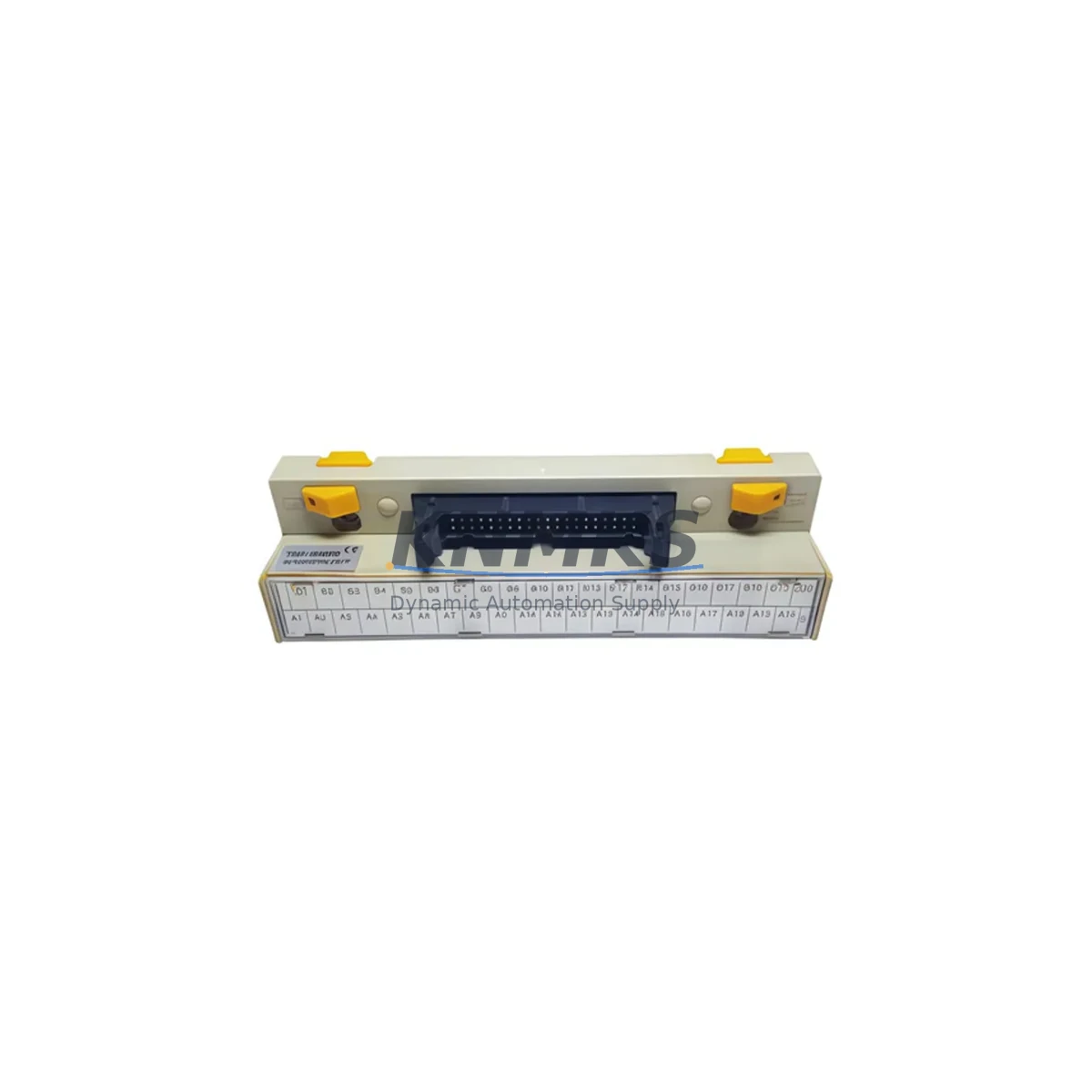
Honeywell TG7-1H40S Migration-Ready Terminal Board: Legacy System Retrofit & Compatibility Upgrade
The Honeywell TG7-1H40S is a Smart Link Terminal Board engineered for seamless integration within the TDC-3000 Distributed Control System (DCS) platform. As legacy automation infrastructure ages and OEM support for discontinued modules becomes increasingly scarce, the TG7-1H40S has emerged as a critical component in plant-wide retrofit programs, control cabinet upgrades, and I/O subsystem modernization projects across the process industries. Whether you are replacing a failed unit, extending the operational life of an existing TDC-3000 installation, or executing a phased migration toward a hybrid control architecture, the TG7-1H40S provides the electrical compatibility, mechanical form factor, and signal integrity required to maintain continuous process control without forcing a full platform replacement.
Before installing the TG7-1H40S as a direct replacement for a legacy terminal board, engineers should systematically verify several critical parameters. Power supply capacity at the local cabinet level must be confirmed — the TDC-3000 backplane distributes regulated DC power across all installed modules, and adding or swapping terminal boards without auditing the existing load budget can introduce voltage instability that affects adjacent I/O modules and communication cards. Terminal wiring compatibility is equally important: field wiring connected to the predecessor board must be mapped against the TG7-1H40S terminal layout to confirm that signal types, wire gauges, and grounding schemes are preserved. Any deviation in terminal numbering between the old and new board must be documented and corrected in the as-built drawings before energizing the system.
Backplane interface alignment is another area that demands careful attention during retrofit planning. The TG7-1H40S is designed to seat into the standard TDC-3000 card cage, but the physical slot assignment and module address configuration must match the original installation to ensure that the process controller — typically a Honeywell PM/APM or HPM module — correctly identifies the terminal board within the system database. Incorrect module addressing will cause the controller to generate fault alarms and may prevent the associated I/O channels from being scanned, effectively taking those field signals offline until the configuration is corrected. This address verification step should be completed in the engineering workstation before the replacement board is inserted into the live backplane.
Program compatibility review is mandatory when the TG7-1H40S is being introduced into a control loop that was previously served by a different terminal board variant. The control strategy loaded in the Application Module must reference the correct hardware tag assignments, and any changes to I/O channel mapping must be reflected in the CL (Control Language) or SFC logic before the system is returned to automatic control. HMI display pages that reference field device status from the affected terminal board should also be validated to confirm that graphic elements, alarm setpoints, and trend historian tags continue to resolve correctly after the swap.
Communication link integrity between the Smart Link highway and the terminal board must be verified using the system diagnostic tools available in the Honeywell Universal Station or GUS engineering console. The Smart Link protocol governs data exchange between the terminal board and the process controller, and any impedance mismatch, termination fault, or cable degradation introduced during the physical replacement can degrade communication reliability across the entire highway segment. It is advisable to perform a full Smart Link diagnostic sweep — including node enumeration and error counter review — both before and after the board replacement to establish a clean baseline and confirm that no latent faults have been introduced.
Installation space confirmation is a practical consideration that is sometimes overlooked in retrofit planning. The TG7-1H40S occupies a defined slot width within the TDC-3000 card cage, and the surrounding modules — which may include Honeywell HPM I/O Link modules, power conditioner cards, or communication interface boards — must not be disturbed during extraction and insertion. Firmware version compatibility between the TG7-1H40S and the host controller should also be reviewed against the site’s current software release level, as certain feature sets and diagnostic capabilities are version-dependent. KNMKS maintains a current firmware compatibility matrix and can advise on the appropriate firmware baseline for your specific installation.
Migration Compatibility Table
| Parameter | Details |
|---|---|
| SKU | TG7-1H40S |
| Brand / Series | Honeywell / TDC-3000 Smart Link |
| Product Type | DCS Terminal Board |
| Backplane Interface | TDC-3000 Standard Card Cage Slot |
| Communication Protocol | Smart Link Highway |
| I/O Compatibility | Compatible with HPM I/O Link and associated I/O modules |
| Installation Requirement | Slot address must match original module configuration |
| Replacement Guidance | Direct drop-in for legacy TDC-3000 terminal board variants; verify terminal wiring map before installation |
| Firmware Compatibility | Verify against site controller software release; consult KNMKS for matrix |
| Commissioning Focus | Smart Link diagnostic sweep, module address confirmation, HMI tag validation |
| Origin | USA |
| Support terms | support terms confirmed by quotation — covers manufacturing defects and functional failure under normal operating conditions |
Retrofit Planning for Existing Automation Systems
A successful TG7-1H40S retrofit begins well before the replacement board arrives on site. The engineering team should compile a complete inventory of the affected control cabinet, documenting every installed module by part number and slot position. In a typical TDC-3000 cabinet, the TG7-1H40S terminal board operates alongside components such as the Honeywell MC-TAIH02 analog input termination assembly, the Honeywell MC-TDOY22 digital output module, and the Honeywell CC-PAIX01 analog input I/O module — all of which share the same backplane power bus and must remain undisturbed during the terminal board swap. The power conditioner module supplying the affected card cage should be load-tested prior to the replacement to confirm that it can sustain the combined draw of all installed modules without entering current-limiting mode.
Signal isolation requirements should be evaluated for any field device connected to the TG7-1H40S that operates in a hazardous area or that carries millivolt-level signals susceptible to ground loop interference. In some retrofit scenarios, the introduction of a signal isolator or barrier between the field wiring and the terminal board is necessary to maintain intrinsic safety compliance and signal fidelity. The I/O expansion strategy for the upgraded system should also be mapped at this stage — if the retrofit is part of a broader migration from TDC-3000 to a hybrid architecture incorporating Honeywell Experion PKS controllers, the terminal board selection and wiring scheme must accommodate the I/O addressing conventions of the new platform.
Programming cable selection and laptop configuration for on-site firmware verification or diagnostic access should be confirmed before the maintenance window opens. The Honeywell Universal Station or a GUS console with the appropriate software release provides the primary interface for module configuration and diagnostic review, but a portable engineering workstation with the correct driver set and communication adapter is essential for field-level troubleshooting if the main console is not accessible from the work area. Spare parts staging — including a verified-functional TG7-1H40S, replacement terminal screws, and a set of labeled wire ferrules — should be completed at least 24 hours before the planned outage to eliminate last-minute delays.
Downtime Control During System Migration
Minimizing unplanned downtime during a TG7-1H40S replacement requires a structured pre-outage preparation protocol. The original control program should be backed up from the Application Module to a secure engineering workstation immediately before the maintenance window begins, creating a verified restore point that can be reloaded within minutes if the replacement procedure encounters an unexpected complication. All field devices connected to the terminal board should be placed in manual control or safe-state hold at the DCS level before the board is de-energized, preventing process upsets caused by loss of I/O signal during the physical swap.
The replacement procedure itself should follow a documented step-by-step sequence that includes photographic documentation of the original wiring configuration, torque-verified terminal reconnection, and a staged power-up sequence that allows the system to enumerate the new module before returning field devices to automatic control. The Smart Link highway should be monitored in real time during power-up using the system diagnostic console to confirm that the TG7-1H40S is recognized at the correct node address and that no communication errors are logged on adjacent highway segments. HMI alarm suppression should be applied selectively to the affected I/O tags during the transition period to prevent nuisance alarms from masking genuine process events on other parts of the plant.
Post-replacement functional verification should include a channel-by-channel I/O check against the original loop drawings, confirmation that all historian tags are logging correctly, and a 30-minute observation period in automatic control before the maintenance team stands down. KNMKS ships all TG7-1H40S units with a pre-shipment functional test report, reducing the risk of receiving a non-functional board and ensuring that the replacement unit is ready for immediate installation upon arrival.
Retrofit Support FAQ
Q: Is the TG7-1H40S a direct replacement for all TDC-3000 Smart Link terminal board variants?
A: The TG7-1H40S is compatible with the standard TDC-3000 Smart Link terminal board slot and wiring convention. However, customers should verify the specific terminal layout and module address configuration of the unit being replaced, as minor variants exist within the TDC-3000 product family. KNMKS can assist with compatibility verification based on your existing part number and installation drawings.
Q: What commissioning steps are required after installing the TG7-1H40S?
A: After physical installation, the module address must be confirmed in the system database, a Smart Link diagnostic sweep should be performed, all I/O channels should be verified against loop drawings, and HMI display pages referencing the affected tags should be validated. KNMKS provides a commissioning checklist with every shipment to guide the on-site team through each step.
Q: Does KNMKS test the TG7-1H40S before shipment?
A: Yes. Every TG7-1H40S unit undergoes a pre-shipment functional test to verify electrical integrity and communication readiness. A test report is included with the shipment. All units are covered by a support terms confirmed by quotation against manufacturing defects and functional failure under normal operating conditions.
Q: What is the typical lead time and inventory availability for the TG7-1H40S?
A: KNMKS maintains stock inventory of the TG7-1H40S to support urgent replacement requirements. Standard orders ship within 1–3 business days. For large-quantity or project-based procurement, contact our sales team to confirm availability and arrange priority allocation.
© 2026 KNMKS. All rights reserved.
Original Source: https://knmks.com
Contact: admin@knmks.com | +86 18359268345
Product Identification
- Brand / Ecosystem
-
Honeywell
Honeywell - Model / Series
- TG7-1H40S
- Product Family
- HMI & Displays
- Availability Status
- Available on request after model and quantity confirmation
- Inquiry Type
- B2B RFQ, replacement inquiry and project spare-part request
- Pre-Quote Check
- Exact SKU, brand, series, quantity, nameplate photos and destination country are checked before quotation
System Path
Where this product fits in the KNMKS automation structure.
Specification & Inquiry Focus
- Display range
- Operator panels and touch screens
- Common needs
- Screen size, interface and version matching
- Project support
- Retrofit, spare unit and panel replacement
Buyer Confirmation
Information KNMKS checks before replying.
- Exact model
- TG7-1H40S
- Brand / ecosystem
- Honeywell
- Product family
- HMI & Displays
- Application note
- Replacement, maintenance, project build or spare-part list
- Useful photos
- Nameplate, installed unit, cabinet layout or connector side
- Delivery details
- Quantity, destination country and target schedule
Document Support
Files and notes can be confirmed during quotation.
- Product photos or nameplate confirmation when available
- Packing and delivery notes before quotation confirmation
- Support scope and delivery terms confirmed per inquiry
- Export document coordination for qualified B2B requests
Inquiry Support
- Panel size and interface confirmation
- Replacement unit inquiry for discontinued HMIs
- Protective packaging for display shipment
What to Send Us
- Brand and exact model number: Honeywell TG7-1H40S
- Quantity and required delivery time
- Application, replacement requirement or nameplate photo
- Destination country and shipping preference
RFQ Preparation
This is a product inquiry page built for RFQ communication.
Fast Model Check
Send this model to KNMKS for confirmation.
Include quantity, destination country and photos if this is a maintenance replacement. The inquiry will be saved with a reference number after submission.
Brand & Compatibility Note
KNMKS displays automation product information for well-known industrial brand ecosystems and compatible replacement references. Brand names are used for product identification and compatibility reference only; final availability and commercial terms are confirmed per quotation.
 Manufacturing
 Machine Tools
 Packaging
 Energy & Power
 PLCs & Controllers
 Servo Systems
 Variable Frequency Drives
 Sensors