
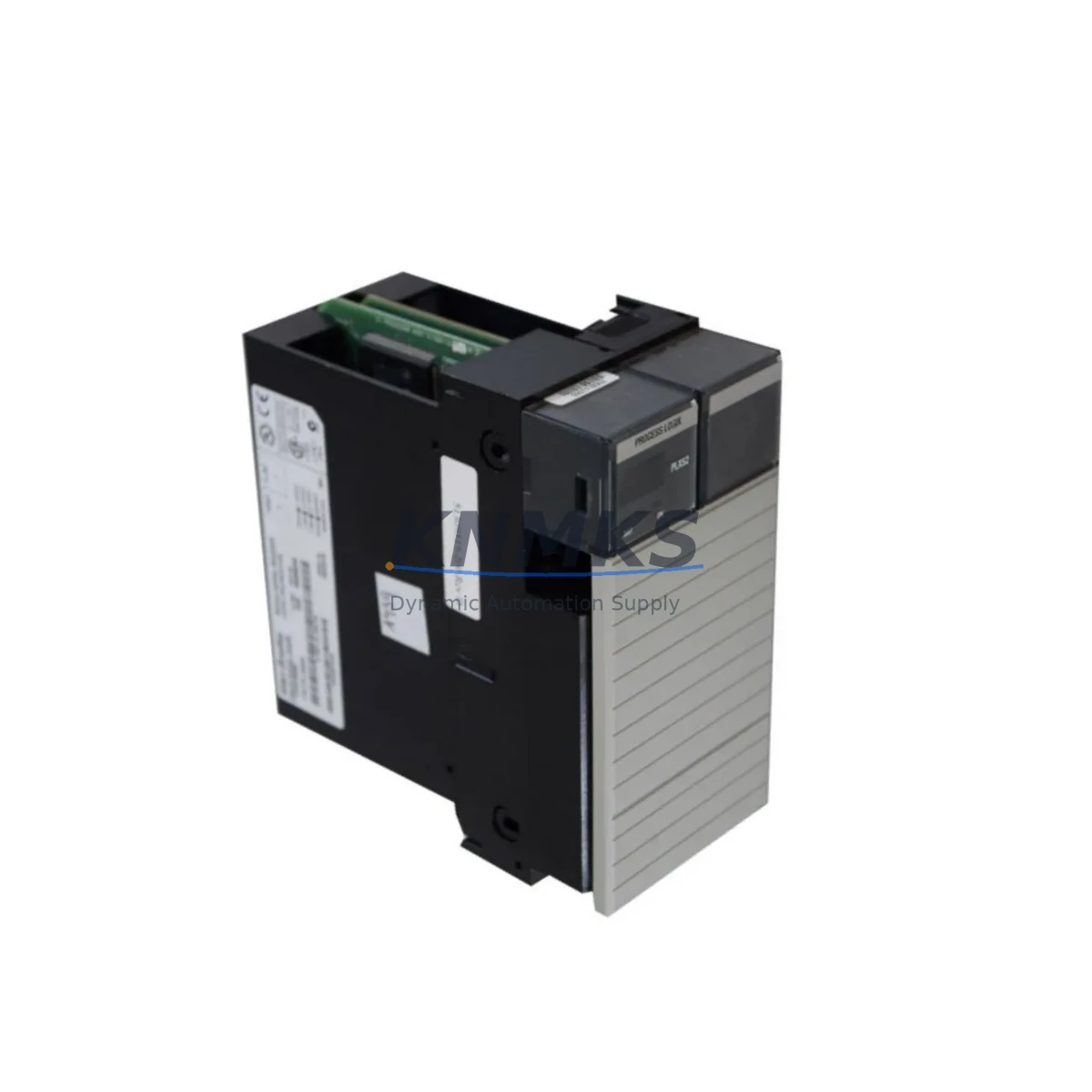
Overview
Allen-Bradley 1757-PLX52 Migration-Ready Processor for Legacy Control Systems
The Allen-Bradley 1757-PLX52 is a high-performance processor module designed for the ProcessLogix distributed control platform — a system widely deployed across refining, chemical, and continuous process industries throughout the 1990s and 2000s. As Rockwell Automation has transitioned its DCS portfolio toward the PlantPAx architecture, the 1757-PLX52 has become a critical spare and migration anchor for facilities managing aging control infrastructure. Whether you are extending the operational life of an existing ProcessLogix cabinet or executing a phased migration to a modern control platform, the 1757-PLX52 provides the processing headroom and protocol compatibility required to maintain production continuity without forcing a full cutover.
Facilities that originally commissioned ProcessLogix systems often face a common challenge: the original processor modules — including earlier variants such as the 1757-PLX31 and 1757-PLX51 — have reached end-of-life status, and sourcing verified replacements through standard distribution channels is no longer straightforward. The 1757-PLX52 addresses this gap directly. It is form-factor compatible with the existing 1757 chassis and backplane, meaning installation does not require mechanical modifications to the control cabinet. Terminal wiring, I/O module addressing, and backplane communication remain consistent with the existing system architecture, which significantly reduces the risk of wiring errors during a hot-swap or scheduled maintenance window.
Before installing the 1757-PLX52 as a replacement for a legacy processor, engineers should verify several critical parameters. Power supply capacity within the 1757 chassis must be confirmed — the 1757-SPS1 or equivalent power supply should be assessed for available headroom, particularly if additional I/O modules such as the 1757-ABRIO or analog input cards have been added since the original commissioning. Backplane slot addressing must be reviewed in the existing RSLogix or ProcessLogix configuration tool to ensure the replacement processor is recognized at the correct node address without triggering address conflicts with co-resident communication modules.
Program compatibility is a primary concern in any processor swap. The 1757-PLX52 supports the same ladder logic and function block structures used in earlier ProcessLogix processors, but firmware version alignment is essential. If the existing application program was developed on an older firmware baseline, a firmware upgrade on the replacement module may be required before the program can be downloaded successfully. It is strongly recommended to export and archive the current program, HMI tag database, and alarm configuration before initiating any hardware change. HMI screens built on RSView32 or FactoryTalk View SE that reference ProcessLogix tag paths should be validated post-swap to confirm that tag resolution remains intact across the communication link.
Communication link integrity is another area requiring careful pre-migration planning. The 1757-PLX52 supports ControlNet as its primary backplane and peer communication protocol. If the existing system includes 1757-CNB ControlNet bridge modules for remote I/O expansion or inter-controller messaging, the network schedule must be re-verified after the processor replacement to ensure all scheduled and unscheduled connections are re-established correctly. In facilities where a migration toward EtherNet/IP is underway, the 1757-PLX52 can coexist with 1756-ENBT or 1756-EN2T EtherNet/IP communication modules installed in an adjacent ControlLogix chassis, enabling a bridged architecture that preserves existing field wiring while introducing modern network connectivity.
Installation space confirmation is straightforward for most ProcessLogix cabinets, as the 1757-PLX52 occupies a standard single-slot position in the 1757 chassis. However, in densely populated control cabinets where thermal management has been a concern, airflow around the processor slot should be assessed prior to installation. The module’s operating temperature range and power dissipation characteristics are consistent with the ProcessLogix platform specification, making it suitable for the environmental conditions typical of process industry control rooms.
For facilities executing a longer-term migration toward PlantPAx or a third-party DCS platform, the 1757-PLX52 serves as a bridge asset — maintaining production while migration engineering, FAT testing, and operator training are completed in parallel. In this context, it is common to see the 1757-PLX52 operating alongside a 1756-L7x ControlLogix processor in a parallel architecture, with signal isolation modules and marshalling panels used to manage the transition of individual control loops from the legacy system to the new platform without requiring a full plant shutdown.
Migration Compatibility Table
| Parameter | Detail |
|---|---|
| Compatible Platform | Allen-Bradley ProcessLogix DCS (1757 Series) |
| Replaces | 1757-PLX31, 1757-PLX51 (direct slot-compatible replacement) |
| Backplane Interface | 1757 Series chassis backplane — no mechanical modification required |
| Communication Protocol | ControlNet (primary); compatible with ControlLogix EtherNet/IP bridge architectures |
| I/O Compatibility | Compatible with existing 1757 series analog and digital I/O modules |
| Installation Requirement | Single-slot; verify power supply headroom on 1757-SPS1 before installation |
| Firmware Alignment | Verify firmware version matches existing application program baseline before download |
| Program Compatibility | Supports existing ProcessLogix ladder logic and function block programs |
| HMI Compatibility | RSView32, FactoryTalk View SE — validate tag paths post-swap |
| Commissioning Note | Re-verify ControlNet network schedule after processor replacement |
| Support terms | support terms confirmed by quotation — covers hardware defects under normal operating conditions |
| Condition | New / Surplus New / Tested Refurbished (specify at order) |
Retrofit Planning for Existing Automation Systems
A successful 1757-PLX52 retrofit begins well before the maintenance window opens. The engineering team should conduct a full audit of the existing ProcessLogix configuration, documenting all I/O module types, slot assignments, and network node addresses. In a typical ProcessLogix cabinet, this audit will surface a mix of analog input modules, discrete output modules, and one or more 1757-CNB ControlNet bridge modules managing remote I/O drops. Each of these components has a defined role in the backplane communication schedule, and the replacement processor must be configured to recognize and communicate with all of them from the moment it comes online.
Power budget verification is a non-negotiable step. The 1757-SPS1 power supply that ships with most ProcessLogix chassis has a defined current budget across the backplane. Adding a higher-performance processor module without verifying available headroom can result in intermittent faults or unexpected module resets — particularly in cabinets where I/O density has increased since original commissioning. If the power budget is marginal, a supplemental power supply or load redistribution across chassis may be required before the processor swap proceeds.
For facilities where the migration path leads toward a ControlLogix platform, the retrofit plan typically involves installing a 1756-L7x or 1756-L8x processor in a new 1756 chassis alongside the existing ProcessLogix cabinet. Signal marshalling between the two systems is managed through a combination of hardwired I/O cross-connections and, where available, ControlNet peer messaging. Programming cables such as the 1784-U2CN USB-to-ControlNet adapter are used during commissioning to connect the engineering workstation to the ControlNet network for program download and online monitoring. As individual control loops are migrated and validated, the corresponding I/O points are transferred from the ProcessLogix system to the new ControlLogix platform, with the 1757-PLX52 continuing to manage the remaining legacy loops until the cutover is complete.
Downtime Control During System Migration
Minimizing unplanned downtime during a processor replacement or phased migration is the primary operational concern for process industry facilities. The 1757-PLX52 supports a structured approach to downtime control through its compatibility with the existing ProcessLogix program structure. Because the replacement processor accepts the same program file format as its predecessors, the program download and verification cycle can be completed and tested offline — using a bench-configured chassis — before the module is installed in the live control cabinet. This offline pre-commissioning approach eliminates the program download step from the critical path of the maintenance window, reducing live system exposure time significantly.
During the actual swap, the recommended sequence is to place the system in a safe manual control state, document all current output states and setpoints, remove the failed or end-of-life processor, install the pre-configured 1757-PLX52, and verify backplane communication with all I/O modules before returning to automatic control. HMI operators should be briefed on the expected communication interruption window and the procedure for monitoring process variables through local instrumentation during the transition. ControlNet network re-scheduling, if required, should be completed and verified before the processor is placed in run mode.
For facilities with strict uptime requirements, a parallel-run strategy — where the replacement processor is installed in a shadow chassis and validated against live process data before the cutover — provides an additional layer of risk mitigation. This approach requires careful management of I/O addressing and program synchronization but delivers the highest confidence level for critical process control applications. All units supplied by KNMKS undergo pre-shipment functional testing to confirm module communication, memory integrity, and backplane interface performance, reducing the risk of receiving a non-functional module during a time-critical maintenance event.
Retrofit Support FAQ
Q: Is the 1757-PLX52 a direct replacement for the 1757-PLX51?
A: Yes. The 1757-PLX52 is slot-compatible with the 1757 chassis and backplane, and it accepts the same program file structure as the 1757-PLX51. Firmware version alignment should be verified before program download. No mechanical modifications to the cabinet are required.
Q: What commissioning steps are required after installing the 1757-PLX52?
A: After installation, verify backplane communication with all I/O modules, confirm ControlNet network scheduling is intact, download and verify the application program, validate HMI tag resolution, and perform a controlled return to automatic mode. Pre-shipment testing by KNMKS confirms module hardware functionality before dispatch.
Q: How do I confirm wiring compatibility before the swap?
A: The 1757-PLX52 uses the same backplane connector and slot form factor as previous 1757 series processors. Field wiring connects to I/O modules, not directly to the processor, so terminal wiring does not need to be disturbed during the processor replacement. Verify I/O module addressing in the existing configuration file before proceeding.
Q: What support terms and supply terms apply?
A: All 1757-PLX52 units supplied by KNMKS carry a support terms confirmed by quotation covering hardware defects under normal operating conditions. Inventory is maintained availability confirmed by RFQ for immediate dispatch. Contact admin@knmks.com or +86 18359268345 to confirm current availability and lead time before placing your order.
© 2026 KNMKS. All rights reserved.
Original Source: https://knmks.com
Contact: admin@knmks.com | +86 18359268345
Product Identification
- Brand / Ecosystem
-
Allen-Bradley
Allen-Bradley - Model / Series
-
1757-PLX52
Legacy Series - Product Family
- PLCs & Controllers
- Availability Status
- Available on request after model and quantity confirmation
- Inquiry Type
- B2B RFQ, replacement inquiry and project spare-part request
- Pre-Quote Check
- Exact SKU, brand, series, quantity, nameplate photos and destination country are checked before quotation
System Path
Where this product fits in the KNMKS automation structure.
Specification & Inquiry Focus
- Control platform
- PLC, PAC and modular controllers
- Common needs
- CPU, rack, power and I/O expansion
- Project support
- Replacement, cabinet build and maintenance
Buyer Confirmation
Information KNMKS checks before replying.
- Exact model
- 1757-PLX52
- Brand / ecosystem
- Allen-Bradley
- Product family
- PLCs & Controllers
- Application note
- Replacement, maintenance, project build or spare-part list
- Useful photos
- Nameplate, installed unit, cabinet layout or connector side
- Delivery details
- Quantity, destination country and target schedule
Document Support
Files and notes can be confirmed during quotation.
- Product photos or nameplate confirmation when available
- Packing and delivery notes before quotation confirmation
- Support scope and delivery terms confirmed per inquiry
- Export document coordination for qualified B2B requests
Inquiry Support
- Model cross-checking before quotation
- CPU, power, rack and expansion module matching
- Support for replacement and project inquiry
What to Send Us
- Brand and exact model number: Allen-Bradley 1757-PLX52
- Quantity and required delivery time
- Application, replacement requirement or nameplate photo
- Destination country and shipping preference
RFQ Preparation
This is a product inquiry page built for RFQ communication.
Fast Model Check
Send this model to KNMKS for confirmation.
Include quantity, destination country and photos if this is a maintenance replacement. The inquiry will be saved with a reference number after submission.
Brand & Compatibility Note
KNMKS displays automation product information for well-known industrial brand ecosystems and compatible replacement references. Brand names are used for product identification and compatibility reference only; final availability and commercial terms are confirmed per quotation.
 Manufacturing
 Machine Tools
 Packaging
 Energy & Power
 HMI & Displays
 Servo Systems
 Variable Frequency Drives
 Sensors