
Overview
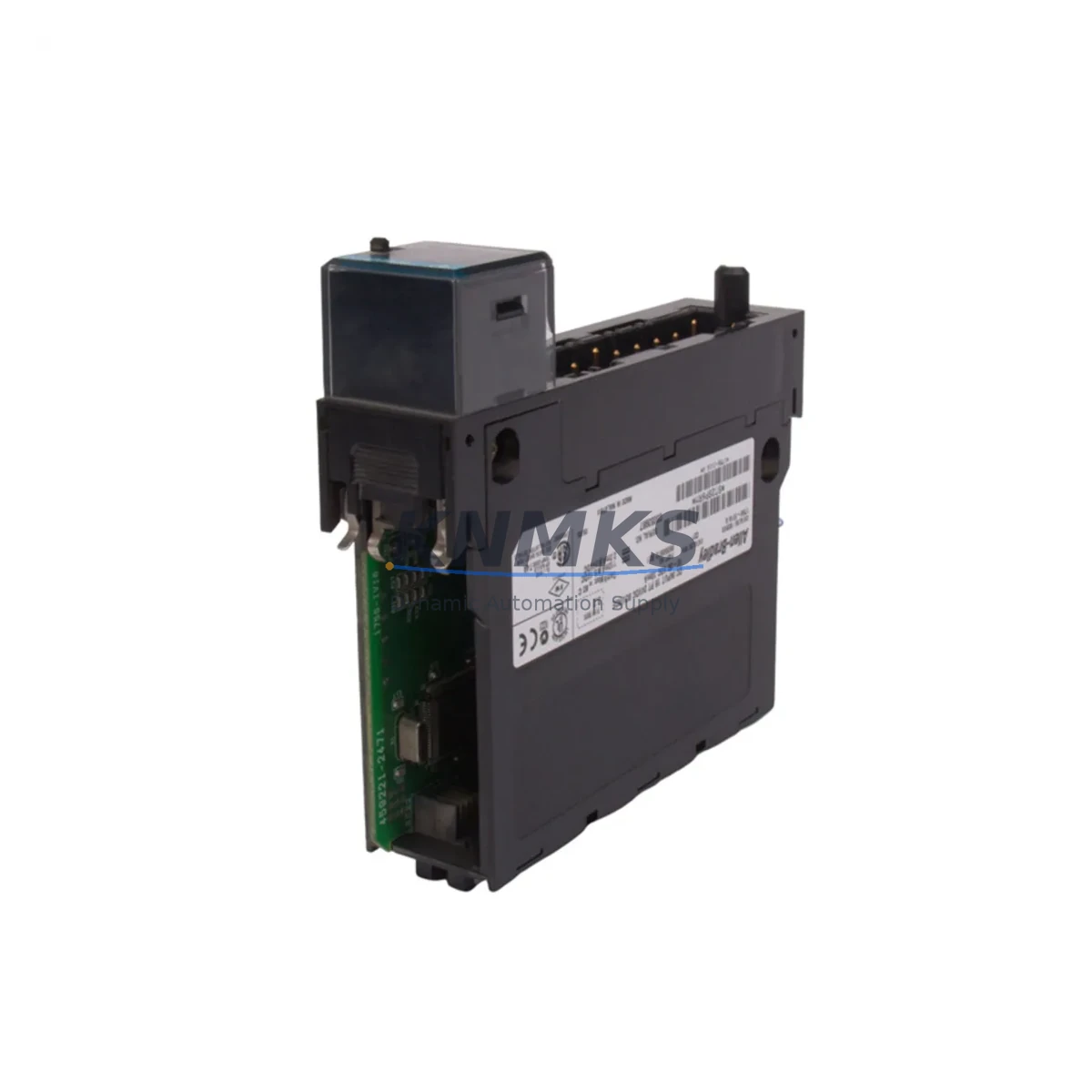
Allen-Bradley 1756-IV16 Migration-Ready Discrete Input for Legacy Control Systems
The Allen-Bradley 1756-IV16 is a 16-point, 12/24V DC discrete input module designed for the ControlLogix platform. As legacy PLC-5, SLC 500, and early ControlLogix installations reach end-of-life, the 1756-IV16 serves as a proven migration target for engineers modernizing discrete input infrastructure without redesigning the entire control architecture. Its compatibility with the 1756 backplane makes it a direct fit for existing ControlLogix chassis, reducing engineering hours and minimizing the risk of field wiring changes during retrofit projects.
For facilities running aging 1771 I/O racks or SLC 500 discrete input cards, migrating to the 1756-IV16 within a ControlLogix chassis provides a structured upgrade path. The module accepts standard 12V and 24V DC field signals, which are common in legacy sensor wiring, allowing most existing field devices — proximity switches, limit switches, pushbuttons, and photoelectric sensors — to be reconnected without signal conditioning. This directly reduces retrofit cost and downtime.
When planning a migration from a PLC-5 system, engineers typically pair the 1756-IV16 with the 1756-L7x or 1756-L8x ControlLogix controllers, which support the RSLogix 5000 / Studio 5000 programming environment. Program logic originally written in PLC-5 ladder can be converted using Rockwell’s migration tools, and the 1756-IV16’s tag-based addressing integrates cleanly into the converted program structure. Verifying module slot addressing in the I/O tree is a critical commissioning step — each module must be assigned the correct slot number within the 1756-A7, 1756-A10, or 1756-A13 chassis to match the program’s I/O configuration.
Power budget verification is essential before installation. The 1756-IV16 draws current from the 1756 backplane, and the system’s 1756-PA72 or 1756-PB72 power supply must have sufficient capacity to support all installed modules. In dense chassis configurations — particularly those combining analog, discrete, and communication modules — a power budget spreadsheet should be completed before finalizing the module count. Overloading the backplane power supply is a common cause of intermittent faults during commissioning.
Terminal wiring on the 1756-IV16 uses a removable wiring arm (RTB), which simplifies module replacement in the field. The RTB can remain connected to field wiring while the module is swapped, reducing reconnection errors and shortening planned maintenance windows. This is particularly valuable in retrofit scenarios where the original wiring documentation may be incomplete or inconsistent with as-built conditions.
Communication architecture should also be reviewed during migration planning. If the legacy system used DH+ or Remote I/O (RIO) networks, the upgrade to ControlLogix typically involves introducing a 1756-DHRIO or 1756-RIO communication module to maintain connectivity with any remaining legacy devices or HMI panels that have not yet been migrated. The 1756-IV16 itself communicates over the ControlLogix backplane and does not require separate network configuration, but its data is consumed by the controller and made available to upstream SCADA or HMI systems via EtherNet/IP using a 1756-EN2T or 1756-EN3TR communication module.
HMI screen updates are often overlooked during discrete I/O migrations. If the existing HMI references specific tag names or PLC-5 data file addresses, those references must be remapped to the new ControlLogix tag structure after the 1756-IV16 is installed and the program is converted. Coordinating HMI updates with the I/O migration schedule prevents situations where the controller is live but the operator interface displays stale or incorrect status information.
Firmware compatibility should be confirmed before deployment. The 1756-IV16 is compatible with a wide range of ControlLogix controller firmware versions, but it is best practice to verify the module’s catalog revision against the controller firmware release notes in Rockwell’s Product Compatibility and Download Center (PCDC). Mismatched firmware can cause the module to fault on startup, which adds unplanned downtime to the commissioning schedule.
Installation space in the control cabinet should be measured before ordering. The 1756-IV16 occupies one slot in a standard 1756 chassis. If the existing cabinet houses a 1756-A4 chassis that is already fully populated, a chassis expansion — using a larger 1756-A7 or 1756-A10 — may be required. Cabinet depth, DIN rail clearance, and door swing must all be confirmed to avoid installation delays on-site.
All units supplied by KNMKS are tested prior to shipment and backed by a support terms confirmed by quotation. Stock availability is confirmed at time of order, and units are dispatched with full documentation support to assist with incoming inspection and commissioning records.
Migration Compatibility Table
| Parameter | 1756-IV16 (ControlLogix) | Legacy Reference (PLC-5 / SLC 500) |
|---|---|---|
| Input Points | 16 points | 16–32 points (varies by card) |
| Input Voltage | 12/24V DC | 12/24V DC (compatible) |
| Backplane Interface | 1756 ControlLogix backplane | 1771 (PLC-5) / 1746 (SLC 500) |
| Wiring Interface | Removable Terminal Block (RTB) | Fixed or removable (model-dependent) |
| Addressing | Tag-based (Studio 5000) | File-based (RSLogix 5 / RSLogix 500) |
| Communication | ControlLogix backplane + EtherNet/IP | DH+, RIO, DH-485 |
| Power Draw | Verify against 1756-PA72/PB72 budget | Verify against 1771-P4 / 1746-P4 |
| HMI Compatibility | Requires tag remapping in FactoryTalk View | PanelView address-based references |
| Firmware Check | Confirm via Rockwell PCDC | N/A (legacy firmware fixed) |
| Replacement Recommendation | Direct slot replacement in 1756 chassis | Requires chassis and backplane change |
| Commissioning Focus | Slot addressing, power budget, tag mapping | Rack addressing, I/O map verification |
| Support terms | 12 months (KNMKS) | As-is / no support terms on legacy units |
Retrofit Planning for Existing Automation Systems
A successful retrofit using the 1756-IV16 requires coordinated planning across multiple system layers. The module itself is only one component in a broader migration effort that typically involves the 1756-L74 or 1756-L75 ControlLogix controller as the central processing unit, a 1756-EN2T EtherNet/IP communication module for network connectivity, and a 1756-PA72 power supply sized to the full chassis load.
In systems where analog signals are also being migrated, the 1756-IF16 analog input module is commonly installed alongside the 1756-IV16 in the same chassis, sharing backplane power and controller resources. For applications requiring signal isolation between field devices and the control system — common in older plants with grounding issues or long cable runs — a DIN-rail-mounted signal isolator or barrier strip should be included in the retrofit BOM before the wiring arm is connected.
If the legacy system included a 1747-L553 SLC 5/05 controller communicating over Ethernet, the migration path to ControlLogix typically preserves the Ethernet infrastructure while replacing the I/O subsystem. The 1756-IV16 slots into the new chassis, and the existing Ethernet switch and IP addressing scheme can often be retained, reducing network reconfiguration effort.
For sites with existing PanelView HMI terminals, a FactoryTalk View ME or SE license update is usually required alongside the I/O migration. The HMI application must be updated to reference the new ControlLogix tag names that the 1756-IV16 populates, replacing the legacy PLC-5 data file addresses. This step is best completed and tested in a staging environment before the cutover window begins.
Programming cables and software licenses should be confirmed before the migration date. A 1784-U2DHP USB-to-DH+ adapter may be needed if any legacy DH+ devices remain on the network during a phased migration. Studio 5000 Logix Designer must be licensed and installed on the engineering workstation used for commissioning the 1756-IV16 and the associated ControlLogix controller.
Downtime Control During System Migration
Minimizing unplanned downtime during a discrete I/O migration requires a structured cutover plan. The 1756-IV16 supports online module replacement within a running ControlLogix system, provided the chassis and controller remain powered and the replacement module matches the original catalog number and configuration. This allows individual input modules to be swapped during a brief process pause rather than a full system shutdown.
Before the cutover window, the existing PLC program should be exported and archived. If migrating from a PLC-5 or SLC 500, the converted Studio 5000 program should be fully tested offline using RSLogix Emulate or a hardware test bench before it is downloaded to the live controller. This reduces the risk of logic errors surfacing during the first live run after the 1756-IV16 is installed.
Field wiring continuity should be verified with a loop check before the RTB is connected to the new module. Each input point should be exercised from the field device to confirm signal integrity before the controller is placed in Run mode. Documenting the loop check results provides a commissioning record that supports the support terms confirmed by quotation claim process if a field issue arises after startup.
Maintaining control continuity during a phased migration — where some racks remain on the legacy system while others are cut over to ControlLogix — requires careful attention to inter-system communication. If the legacy PLC-5 and the new ControlLogix system must exchange data during the transition period, a 1756-DHRIO module can bridge the two platforms over DH+, allowing the new system to read status from the old one without interrupting production.
Retrofit Support FAQ
Q: Is the 1756-IV16 a direct replacement for legacy 1771 discrete input cards?
A: The 1756-IV16 is not a plug-in replacement for 1771 I/O cards — it requires a 1756 ControlLogix chassis and backplane. However, it accepts the same 12/24V DC field signals as most 1771 discrete input modules, so existing field wiring can typically be reused with a new RTB wiring arm.
Q: What pre-shipment testing is performed on 1756-IV16 units?
A: All units supplied by KNMKS are functionally tested prior to dispatch. Each module is verified for backplane communication, input point response, and LED status indication. A test report is available upon request for incoming inspection purposes.
Q: How is the 1756-IV16 addressed in a Studio 5000 project?
A: The module is added to the I/O tree in Studio 5000 Logix Designer by specifying its chassis slot number. Once added, the controller automatically creates a tag structure (e.g., Local:X:I.Data) that maps each of the 16 input points to individual bits accessible in ladder, function block, or structured text logic.
Q: What support terms and stock availability does KNMKS offer?
A: KNMKS maintains stock of the 1756-IV16 and offers a support terms confirmed by quotation on all units. Stock status is confirmed at time of order. Units are dispatched with documentation to support incoming inspection, and the support terms covers functional defects identified during normal operation within the confirmed support period.
© 2026 KNMKS. All rights reserved.
Original Source: https://knmks.com
Contact: admin@knmks.com | +86 18359268345
Product Identification
- Brand / Ecosystem
-
Allen-Bradley
Allen-Bradley - Model / Series
-
1756-IV16
ControlLogix Series - Product Family
- PLCs & Controllers
- Availability Status
- Available on request after model and quantity confirmation
- Inquiry Type
- B2B RFQ, replacement inquiry and project spare-part request
- Pre-Quote Check
- Exact SKU, brand, series, quantity, nameplate photos and destination country are checked before quotation
System Path
Where this product fits in the KNMKS automation structure.
Specification & Inquiry Focus
- Control platform
- PLC, PAC and modular controllers
- Common needs
- CPU, rack, power and I/O expansion
- Project support
- Replacement, cabinet build and maintenance
Buyer Confirmation
Information KNMKS checks before replying.
- Exact model
- 1756-IV16
- Brand / ecosystem
- Allen-Bradley
- Product family
- PLCs & Controllers
- Application note
- Replacement, maintenance, project build or spare-part list
- Useful photos
- Nameplate, installed unit, cabinet layout or connector side
- Delivery details
- Quantity, destination country and target schedule
Document Support
Files and notes can be confirmed during quotation.
- Product photos or nameplate confirmation when available
- Packing and delivery notes before quotation confirmation
- Support scope and delivery terms confirmed per inquiry
- Export document coordination for qualified B2B requests
Inquiry Support
- Model cross-checking before quotation
- CPU, power, rack and expansion module matching
- Support for replacement and project inquiry
What to Send Us
- Brand and exact model number: Allen-Bradley 1756-IV16
- Quantity and required delivery time
- Application, replacement requirement or nameplate photo
- Destination country and shipping preference
RFQ Preparation
This is a product inquiry page built for RFQ communication.
Fast Model Check
Send this model to KNMKS for confirmation.
Include quantity, destination country and photos if this is a maintenance replacement. The inquiry will be saved with a reference number after submission.
Brand & Compatibility Note
KNMKS displays automation product information for well-known industrial brand ecosystems and compatible replacement references. Brand names are used for product identification and compatibility reference only; final availability and commercial terms are confirmed per quotation.
 Manufacturing
 Machine Tools
 Packaging
 Energy & Power
 HMI & Displays
 Servo Systems
 Variable Frequency Drives
 Sensors