
Overview
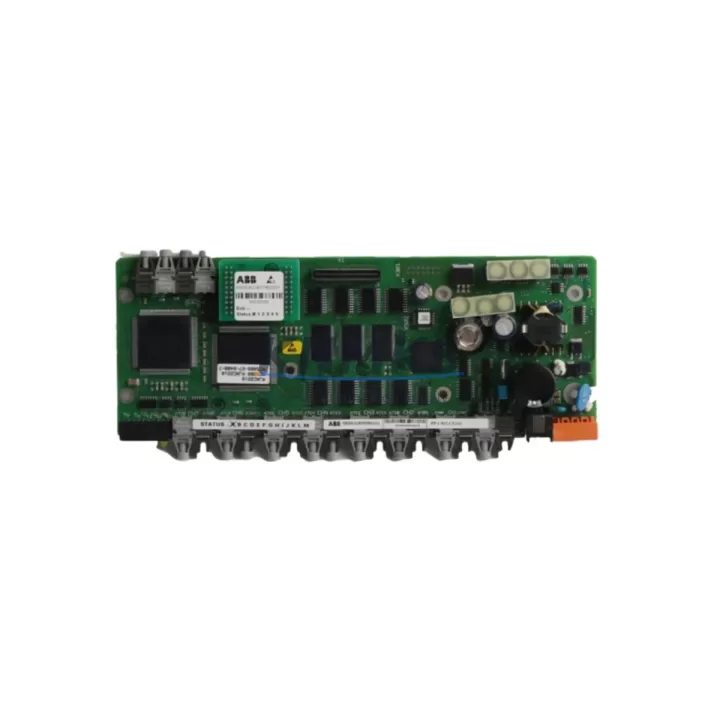
ABB PPC902CE101 Migration-Ready CPU for Legacy Control Systems
The ABB PPC902CE101 (part number 3BHE028959R0101) is a high-performance CPU module designed for the AC800PEC control platform — a distributed control architecture widely deployed in power generation, turbine control, and process automation environments. As legacy AC800PEC installations approach end-of-life support cycles, the PPC902CE101 has become a critical spare and migration-grade replacement for facilities managing aging control cabinets, discontinued firmware baselines, and phased modernization programs.
This module serves as a direct functional replacement for earlier AC800PEC CPU variants, enabling engineering teams to restore system integrity without full platform migration. Its compatibility with existing backplane interfaces, I/O bus structures, and communication links makes it a preferred choice for brownfield retrofit projects where minimizing downtime and preserving existing program logic are primary constraints.
Before deploying the PPC902CE101 as a replacement unit, engineers should verify several critical parameters: backplane slot addressing and rack configuration must match the original CPU assignment; power supply capacity within the control cabinet — typically sourced from an ABB SD802F or equivalent 24VDC module — must support the CPU’s rated load; and terminal wiring on adjacent I/O modules must remain undisturbed during the swap to avoid signal interruption. Firmware version alignment is equally important — the replacement CPU must be loaded with a firmware baseline compatible with the existing AC800PEC project file to prevent application mismatch errors on startup.
Communication link continuity is a frequent concern during CPU replacement. The PPC902CE101 supports standard CEX-Bus and optical fiber communication interfaces used across AC800PEC racks, ensuring that existing links to remote I/O units, peer controllers, and SCADA systems remain intact post-replacement. Where the original installation includes an ABB CI858 DNALink communication interface or CI857 INSUM interface module, these should be verified for firmware and protocol compatibility before the new CPU is brought online.
HMI screen mapping and tag references should be audited prior to cutover. In installations where ABB’s System 800xA or a third-party SCADA platform manages operator displays, any CPU-level tag renaming or address reassignment introduced during the replacement process can cause display anomalies or alarm suppression. Retaining the original program structure and variable mapping is strongly recommended for first-pass replacements.
For facilities managing I/O expansion across multiple racks, the PPC902CE101’s compatibility with standard AC800PEC expansion backplanes — including configurations housing ABB AI810 analog input modules and DI810 digital input modules — ensures that existing field wiring and signal conditioning infrastructure can be preserved. This significantly reduces retrofit scope and associated engineering hours.
Installation space confirmation is a practical prerequisite often overlooked in planning. The PPC902CE101 occupies a standard AC800PEC CPU slot and does not require mechanical modification to the control cabinet. However, adjacent module clearance, cable routing, and ventilation paths should be inspected, particularly in cabinets that have been field-modified over years of operation.
All units are pre-shipment tested under load conditions, verified against published ABB specifications, and dispatched with a support terms confirmed by quotation covering functional defects. Global stock availability supports emergency replacement timelines, with expedited dispatch options for critical plant situations.
Migration Compatibility Table
| Parameter | Details |
|---|---|
| Part Number | PPC902CE101 / 3BHE028959R0101 |
| Platform | ABB AC800PEC |
| Backplane Interface | AC800PEC standard CPU slot (CEX-Bus compatible) |
| Communication Interfaces | CEX-Bus, optical fiber; compatible with CI858, CI857 interface modules |
| I/O Compatibility | AI810, DI810, and standard AC800PEC I/O modules |
| Power Supply Requirement | 24VDC via rack power module (e.g., SD802F); verify cabinet capacity before installation |
| Firmware Alignment | Must match existing AC800PEC project firmware baseline; verify before startup |
| HMI / SCADA Compatibility | System 800xA and third-party SCADA; audit tag mapping before cutover |
| Installation Space | Standard AC800PEC CPU slot; no mechanical modification required |
| Replacement Scope | Direct CPU swap; preserve existing I/O wiring, program logic, and communication links |
| Pre-Shipment Testing | Yes — functional load test against ABB specifications |
| Support terms | 12 months from dispatch date |
| Origin | Germany (DE) |
| Dispatch | Global; expedited options available for critical plant situations |
Retrofit Planning for Existing Automation Systems
Retrofit planning for AC800PEC-based control systems requires a structured approach that accounts for both hardware compatibility and software continuity. The PPC902CE101 is typically deployed in control cabinets that also house power distribution modules such as the ABB SD802F, communication interface modules including the CI858 DNALink, and mixed analog and digital I/O assemblies built around AI810 and DI810 module families.
When the retrofit scope extends beyond a single CPU replacement — for example, when aging backplanes or rack assemblies are also being refreshed — engineers should map all module slot assignments before disassembly. Module address conflicts introduced during reassembly are a common source of startup failures in AC800PEC environments. Where communication protocol migration is also in scope, such as transitioning from legacy serial links to Ethernet-based PROFINET or Modbus TCP, the CI858 interface module’s configuration must be updated in parallel with the CPU replacement to maintain link continuity.
For installations that include ABB programming cables or local engineering workstation connections, the engineering tool version must be verified against the replacement CPU’s firmware. Incompatible tool versions can prevent project download or cause partial configuration uploads, extending commissioning time. Signal isolators installed between field devices and I/O modules should also be inspected during the retrofit window, as degraded isolators can introduce noise or signal offset errors that are difficult to diagnose post-startup.
Facilities managing multi-rack AC800PEC configurations should plan CPU replacements rack-by-rack, maintaining at least one operational rack during the migration window to preserve supervisory control continuity. This phased approach, combined with pre-tested replacement units and verified firmware packages, is the most reliable method for controlling retrofit risk in live production environments.
Downtime Control During System Migration
Minimizing downtime during a CPU replacement in an AC800PEC system begins with preparation, not execution. The most effective downtime reduction strategy is to complete all pre-replacement verification steps — firmware package preparation, program backup, tag mapping audit, and communication link documentation — before the maintenance window opens.
A full backup of the existing AC800PEC project, including all application programs, hardware configuration files, and communication settings, should be archived to an offline engineering workstation before the replacement CPU is installed. This backup serves as both a recovery baseline and a reference for post-replacement commissioning verification.
During the physical swap, field wiring on I/O modules should remain connected and undisturbed. The PPC902CE101’s direct slot compatibility with the AC800PEC backplane means the replacement can be completed without disconnecting field cables, provided the rack power supply is isolated correctly during the swap. Power isolation procedures should follow the site’s lockout/tagout protocol, with the SD802F or equivalent power module de-energized before the CPU is removed.
Post-installation, the replacement CPU should be powered up in a controlled sequence: rack power first, then CPU initialization, followed by communication link verification before the application program is downloaded. This sequence reduces the risk of communication errors or I/O module faults being logged as startup alarms, which can complicate post-migration diagnostics.
Where the control system interfaces with an HMI or SCADA platform, operators should be briefed on expected display behavior during the restart sequence. Temporary alarm suppression for non-critical signals during the commissioning window is a common practice that reduces operator distraction without compromising safety-critical monitoring.
Retrofit Support FAQ
Q1: Is the PPC902CE101 a direct drop-in replacement for earlier AC800PEC CPU modules?
The PPC902CE101 is functionally compatible with the AC800PEC CPU slot and supports the same backplane interface and communication architecture as earlier CPU variants in the platform. However, firmware version alignment between the replacement CPU and the existing project file must be confirmed before installation. Where firmware versions differ, a controlled firmware update or project re-download may be required during commissioning.
Q2: What pre-shipment testing is performed on each unit?
Each PPC902CE101 unit undergoes functional load testing against published ABB specifications before dispatch. Testing covers power-on initialization, communication interface verification, and basic I/O bus response. Units that do not meet specification are not dispatched. All shipped units are covered by a support terms confirmed by quotation from the dispatch date.
Q3: How should terminal wiring be managed during the CPU replacement?
Field wiring connected to I/O modules in the same rack does not need to be disconnected during a CPU swap, provided the rack power supply is correctly isolated before the CPU is removed. Terminal wiring on the CPU module itself — typically limited to communication or diagnostic connections — should be documented and photographed before removal to ensure correct reconnection. Any wiring changes made during the retrofit should be recorded in the site’s as-built documentation.
Q4: What is the stock availability and lead time for the PPC902CE101?
Stock is maintained across multiple locations to support both planned maintenance and emergency replacement requirements. Standard dispatch is available for in-stock units, with expedited shipping options for critical plant situations. Contact the sales team directly to confirm current stock status and lead time for your specific requirement. The support terms confirmed by quotation applies to all dispatched units regardless of shipping method.
© 2026 KNMKS. All rights reserved.
Original Source: https://knmks.com
Contact: admin@knmks.com | +86 18359268345
Product Identification
- Brand / Ecosystem
-
ABB
ABB - Model / Series
-
PPC902CE101 3BHE028959R0101
Legacy Control Series - Product Family
- PLCs & Controllers
- Availability Status
- Available on request after model and quantity confirmation
- Inquiry Type
- B2B RFQ, replacement inquiry and project spare-part request
- Pre-Quote Check
- Exact SKU, brand, series, quantity, nameplate photos and destination country are checked before quotation
System Path
Where this product fits in the KNMKS automation structure.
Specification & Inquiry Focus
- Control platform
- PLC, PAC and modular controllers
- Common needs
- CPU, rack, power and I/O expansion
- Project support
- Replacement, cabinet build and maintenance
Buyer Confirmation
Information KNMKS checks before replying.
- Exact model
- PPC902CE101 3BHE028959R0101
- Brand / ecosystem
- ABB
- Product family
- PLCs & Controllers
- Application note
- Replacement, maintenance, project build or spare-part list
- Useful photos
- Nameplate, installed unit, cabinet layout or connector side
- Delivery details
- Quantity, destination country and target schedule
Document Support
Files and notes can be confirmed during quotation.
- Product photos or nameplate confirmation when available
- Packing and delivery notes before quotation confirmation
- Support scope and delivery terms confirmed per inquiry
- Export document coordination for qualified B2B requests
Inquiry Support
- Model cross-checking before quotation
- CPU, power, rack and expansion module matching
- Support for replacement and project inquiry
What to Send Us
- Brand and exact model number: ABB PPC902CE101 3BHE028959R0101
- Quantity and required delivery time
- Application, replacement requirement or nameplate photo
- Destination country and shipping preference
RFQ Preparation
This is a product inquiry page built for RFQ communication.
Fast Model Check
Send this model to KNMKS for confirmation.
Include quantity, destination country and photos if this is a maintenance replacement. The inquiry will be saved with a reference number after submission.
Brand & Compatibility Note
KNMKS displays automation product information for well-known industrial brand ecosystems and compatible replacement references. Brand names are used for product identification and compatibility reference only; final availability and commercial terms are confirmed per quotation.
 Manufacturing
 Machine Tools
 Packaging
 Energy & Power
 HMI & Displays
 Servo Systems
 Variable Frequency Drives
 Sensors