
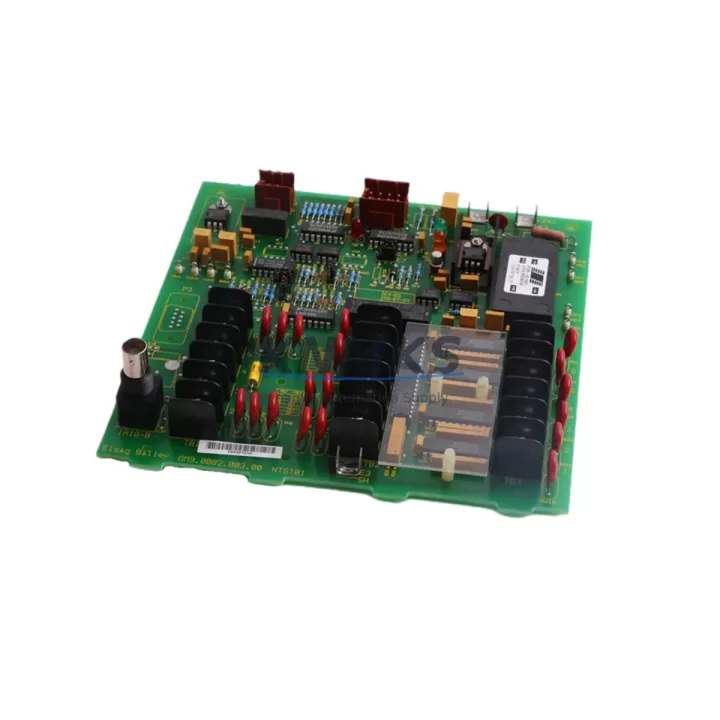
Overview
ABB NTST01 Migration-Ready Time Sync for Legacy DCS: Retrofit and Compatibility Upgrade Guide
The ABB NTST01 is a time synchronization module designed for ABB Symphony Plus distributed control systems and AC800M controller platforms. As legacy DCS installations age and original spare parts become increasingly difficult to source, the NTST01 serves as a critical component in both active system maintenance and planned control system modernization projects. Whether you are replacing a failed unit in an operating plant, extending the service life of an existing Symphony Plus cabinet, or preparing a phased migration to a newer control architecture, the NTST01 provides the timing accuracy and protocol compatibility required to maintain system integrity without disrupting production continuity.
In legacy DCS environments, time synchronization is foundational to alarm sequencing, event logging, historian accuracy, and coordinated control across distributed I/O nodes. The NTST01 supports IRIG-B and GPS-referenced time distribution, ensuring that all connected modules — including AI810 analog input modules, DI810 digital input modules, and AO810 analog output modules — operate from a unified time reference. When replacing a failed NTST01, engineers must verify that the replacement unit carries the same firmware revision as the host system expects, particularly in Symphony Plus installations running Composer HMI or System 800xA, where firmware mismatches can trigger diagnostic alarms or prevent module recognition during startup.
Before installation, confirm the physical slot assignment on the TB820 Modulebus modem or the CI854 PROFIBUS communication interface that the NTST01 is associated with. The module address configured in the engineering tool must match the hardware DIP switch or software address setting on the replacement unit. Failure to align module addressing is one of the most common causes of extended commissioning time during emergency replacements. Keep the original address map documentation from the project engineering binder, or extract it from the System 800xA Asset Optimization database before powering down the affected cabinet section.
Wiring adaptation is typically straightforward for direct NTST01-to-NTST01 replacements, as the terminal block layout is preserved across production batches. However, if the original unit was installed more than ten years ago, inspect the terminal screws and cable ferrules for oxidation or thermal fatigue before re-terminating. In high-vibration environments such as compressor stations or offshore platforms, re-torque all terminals to the manufacturer specification after seating the module. Confirm that the IRIG-B coaxial input, if used, is properly terminated with a 50-ohm load at the signal source to prevent reflection errors that degrade synchronization accuracy.
For sites migrating from an older Symphony HI or Harmony DCS platform to Symphony Plus, the NTST01 is frequently specified as part of the time distribution upgrade package. In these projects, the existing GPS receiver and antenna infrastructure can often be retained, with the NTST01 acting as the new distribution point for IRIG-B signals across the upgraded controller cabinets. Coordinate with the site’s instrument engineer to confirm antenna cable routing, signal level at the distribution point, and any lightning protection requirements before finalizing the installation design. The PM866 controller module and TP830 power supply module are commonly replaced in the same migration scope, and their installation sequence should be planned to minimize the number of cabinet power interruptions.
All NTST01 units supplied by KNMKS are tested prior to shipment. Each module undergoes power-on verification, communication link confirmation, and functional output testing. Units are shipped with a support terms confirmed by quotation covering manufacturing defects and functional failures under normal operating conditions. Stock is maintained to support both emergency replacement orders and planned project procurement. Lead time for standard orders is confirmed at the time of quotation.
Migration Compatibility Table
| Parameter | Detail |
|---|---|
| Compatible Platform | ABB Symphony Plus, AC800M, System 800xA |
| Legacy Platform Replaced | Symphony HI, Harmony DCS, Advant OCS |
| Time Protocol | IRIG-B, GPS-referenced, NTP (platform dependent) |
| Communication Interface | Modulebus (TB820), PROFIBUS (CI854) |
| Installation Format | DIN rail / backplane slot mount |
| Firmware Compatibility | Verify revision against host System 800xA version before installation |
| Terminal Wiring | Direct replacement; re-torque terminals in high-vibration environments |
| Module Addressing | DIP switch or software-configured; must match engineering database |
| Commissioning Requirement | Power-on check, IRIG-B signal verification, HMI alarm clearance |
| Support terms | 12 months from shipment date |
| Pre-shipment Test | Power-on, communication link, functional output — all units tested |
| Country of Origin | Germany |
Retrofit Planning for Existing Automation Systems
A successful NTST01 retrofit begins with a complete audit of the existing time distribution architecture. In a typical Symphony Plus installation, the NTST01 receives a GPS or IRIG-B signal from a master clock and distributes synchronized time to all controllers and I/O stations in the cabinet cluster. During the audit, document the signal path from the GPS antenna through any signal splitters or amplifiers to the NTST01 input. Confirm that the TB820 Modulebus modem connecting the NTST01 to the controller backplane is functioning correctly, as a degraded Modulebus link can cause intermittent time synchronization failures that are difficult to distinguish from a faulty NTST01 without systematic isolation.
In projects where the control cabinet is being partially upgraded, the NTST01 replacement is often scheduled alongside the replacement of the PM866 processor module and the TP830 24VDC power supply module. Replacing these three components together reduces the number of cabinet outages required and allows the commissioning team to perform a single integrated test of the controller, power, and timing subsystems. If the site uses a CI854 PROFIBUS DP communication interface to connect field devices, verify that the PROFIBUS segment configuration in the engineering tool is backed up before any hardware changes are made, as some firmware update procedures reset communication parameters to factory defaults.
For I/O-intensive retrofits, confirm that the AI810 and DI810 modules in the affected cabinet sections are compatible with the updated controller firmware version that will be loaded after the NTST01 replacement. In some Symphony Plus versions, a controller firmware update is required to support the replacement module, and this update may change the behavior of analog scaling or digital filter parameters in connected I/O modules. Review the release notes for the target firmware version and test on a non-critical cabinet section or a factory acceptance test (FAT) rig before applying changes to production equipment.
Signal isolation requirements should also be reviewed during retrofit planning. If the existing installation uses signal isolators between field transmitters and AI810 analog input modules, confirm that the isolator output range and loop power configuration remain compatible after the controller upgrade. In older installations, some isolators were configured specifically for the input impedance characteristics of legacy modules, and substituting a newer module with different input specifications can introduce measurement offset errors that are not immediately obvious during initial commissioning.
Downtime Control During System Migration
Minimizing unplanned downtime during an NTST01 replacement requires preparation at three levels: documentation, spare parts staging, and commissioning procedure. Before the maintenance window begins, extract and archive the current controller program from the PM866 using the System 800xA engineering environment. Store the backup on a local engineering workstation and a separate network location. Confirm that the Composer HMI faceplate assignments and alarm priority configurations are documented, as these settings are not always captured in the standard controller backup and may need to be manually restored if the HMI server loses its configuration during the cabinet outage.
Stage all replacement components — including the NTST01, any required Modulebus cables, and terminal ferrules — at the work site before the outage begins. A pre-staged kit eliminates the risk of discovering missing components after the cabinet has been de-energized. Assign a dedicated technician to monitor the IRIG-B signal level at the GPS distribution point throughout the replacement procedure, so that any signal degradation introduced by cable handling can be identified and corrected before the cabinet is returned to service.
After installing the replacement NTST01, allow the module to complete its initialization sequence before loading the controller program. Premature program loading can cause the controller to log time-stamped events with an incorrect reference, which creates data integrity issues in the historian and may trigger false alarms in the System 800xA alarm management system. Once the NTST01 has established a stable time lock, confirmed by the module’s status LED and the diagnostic display in System 800xA, proceed with controller program download and I/O verification. Conduct a structured loop check on a representative sample of AI810 and DI810 channels before releasing the system to operations.
Retrofit Support FAQ
Q: Is the NTST01 a direct drop-in replacement for the unit currently installed in my Symphony Plus cabinet?
A: In most cases, yes. The NTST01 is designed for direct slot replacement within Symphony Plus and compatible AC800M installations. Confirm the firmware revision of the replacement unit against your System 800xA version before installation. KNMKS can provide firmware version information upon request.
Q: What wiring changes are required when replacing a failed NTST01?
A: For like-for-like replacements, no wiring changes are required. Re-terminate all conductors to the original positions, re-torque terminal screws, and verify the IRIG-B coaxial connection if applicable. If the installation is being upgraded from a legacy Symphony HI platform, consult the wiring comparison documentation for your specific cabinet configuration.
Q: How do I verify that the replacement NTST01 is functioning correctly after installation?
A: After installation and controller program download, confirm that the NTST01 status LED indicates a valid time lock. In System 800xA, navigate to the module diagnostic view and verify that the time synchronization status is reported as active with no fault codes. Check the historian for correctly time-stamped events in the first 15 minutes of operation.
Q: What support terms and pre-shipment testing does KNMKS provide for the NTST01?
A: All NTST01 units are tested prior to shipment, including power-on verification, communication link confirmation, and functional output testing. A support terms confirmed by quotation is provided from the shipment date, covering manufacturing defects and functional failures under normal operating conditions. Contact admin@knmks.com for support requests or technical support.
© 2026 KNMKS. All rights reserved.
Original Source: https://knmks.com
Contact: admin@knmks.com | +86 18359268345
Product Identification
- Brand / Ecosystem
-
ABB
ABB - Model / Series
-
NTST01
AC800M Series - Product Family
- PLCs & Controllers
- Availability Status
- Available on request after model and quantity confirmation
- Inquiry Type
- B2B RFQ, replacement inquiry and project spare-part request
- Pre-Quote Check
- Exact SKU, brand, series, quantity, nameplate photos and destination country are checked before quotation
System Path
Where this product fits in the KNMKS automation structure.
Specification & Inquiry Focus
- Control platform
- PLC, PAC and modular controllers
- Common needs
- CPU, rack, power and I/O expansion
- Project support
- Replacement, cabinet build and maintenance
Buyer Confirmation
Information KNMKS checks before replying.
- Exact model
- NTST01
- Brand / ecosystem
- ABB
- Product family
- PLCs & Controllers
- Application note
- Replacement, maintenance, project build or spare-part list
- Useful photos
- Nameplate, installed unit, cabinet layout or connector side
- Delivery details
- Quantity, destination country and target schedule
Document Support
Files and notes can be confirmed during quotation.
- Product photos or nameplate confirmation when available
- Packing and delivery notes before quotation confirmation
- Support scope and delivery terms confirmed per inquiry
- Export document coordination for qualified B2B requests
Inquiry Support
- Model cross-checking before quotation
- CPU, power, rack and expansion module matching
- Support for replacement and project inquiry
What to Send Us
- Brand and exact model number: ABB NTST01
- Quantity and required delivery time
- Application, replacement requirement or nameplate photo
- Destination country and shipping preference
RFQ Preparation
This is a product inquiry page built for RFQ communication.
Fast Model Check
Send this model to KNMKS for confirmation.
Include quantity, destination country and photos if this is a maintenance replacement. The inquiry will be saved with a reference number after submission.
Brand & Compatibility Note
KNMKS displays automation product information for well-known industrial brand ecosystems and compatible replacement references. Brand names are used for product identification and compatibility reference only; final availability and commercial terms are confirmed per quotation.
 Manufacturing
 Machine Tools
 Packaging
 Energy & Power
 HMI & Displays
 Servo Systems
 Variable Frequency Drives
 Sensors