
Overview
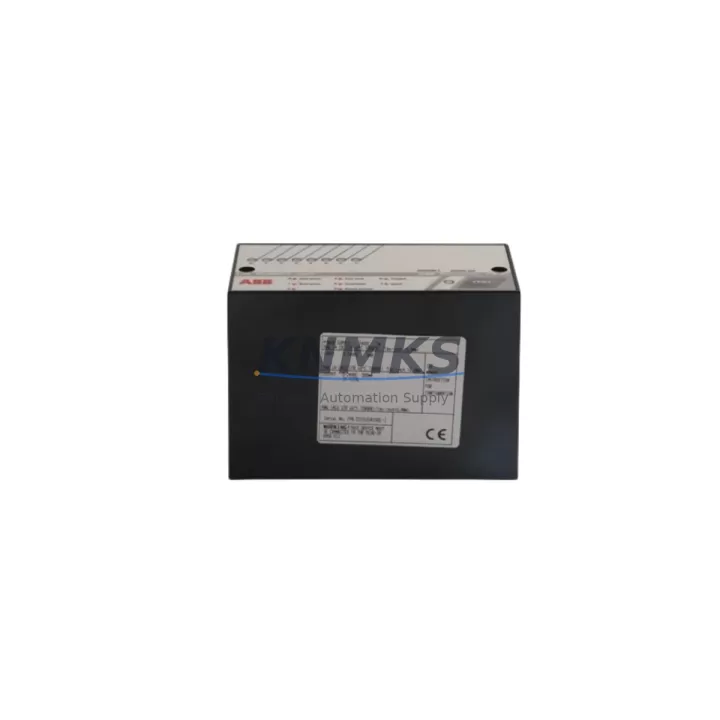
ABB DCS401.0020 Migration-Ready 20A DC Drive for Legacy Control Systems
The ABB DCS401.0020 is a 20A armature current DC drive from the DCS400 series, purpose-built for industrial environments where legacy DC motor control systems require a reliable, drop-in replacement without full drive cabinet redesign. Whether you are managing a planned retrofit of an aging production line or responding to an unplanned failure of a discontinued drive module, the DCS401.0020 delivers the electrical compatibility, communication flexibility, and mechanical form factor needed to restore control continuity with minimal downtime.
Rated at 400–500V AC input and 20A DC armature output, the DCS401.0020 is designed to replace earlier DCS400 series variants and comparable third-party DC drives in applications ranging from winding machines and extruders to conveyors, hoists, and paper processing lines. Its compact DIN-rail and panel-mount profile fits standard 600mm control cabinet depths, making it a practical choice for engineers working within existing enclosure constraints.
Before committing to a retrofit, engineers should verify the following parameters against the existing installation: supply voltage tolerance (±10% of nominal), armature current rating versus motor nameplate data, field supply voltage (typically 180–230V DC), tachometer or encoder feedback wiring compatibility, and the terminal block pitch of the existing drive. The DCS401.0020 uses a standard screw-terminal interface consistent with the DCS400 platform, which simplifies direct re-termination from legacy wiring looms without adapter boards in most cases.
For sites running PROFIBUS DP fieldbus architectures, the DCS401.0020 supports the NPBA-12 PROFIBUS adapter module, enabling seamless integration into existing Siemens S7-300 or S7-400 PLC networks without reprogramming the master station’s device database beyond a GSD file update. Sites using Modbus RTU over RS-485 can connect directly via the drive’s built-in serial port, preserving existing HMI screen mappings and SCADA register addresses where parameter sets are compatible. Engineers migrating from older ABB DCS500 or DCS600 series drives should audit parameter group structures carefully, as register offsets differ between generations.
When the existing control system includes an ABB ACS800 or ACS880 series AC drive in an adjacent axis, the DCS401.0020 can share the same control cabinet backplane space and 24V DC auxiliary power rail, provided the combined auxiliary load does not exceed the power supply module’s rated output. In mixed-drive cabinets, it is advisable to verify that the 24V SITOP or equivalent PSU module — such as the ABB CP-E 24/5.0 — is sized for the additional 0.5A auxiliary draw of the DCS401.0020 control board.
For applications where the legacy drive communicated via DeviceNet or CANopen, an appropriate gateway module will be required. The DCS401.0020’s serial interface supports ASCII and Modbus RTU natively; protocol conversion to DeviceNet can be achieved using third-party gateways, though this should be validated during the pre-commissioning phase rather than assumed during procurement.
Firmware compatibility is a critical checkpoint in any DCS400 series migration. The DCS401.0020 ships with factory-default firmware. If the replacement application requires parameter sets exported from an earlier DCS401 or DCS402 unit, engineers should confirm the firmware version of the source drive using the drive’s keypad or DriveWindow Light software before export. Parameter sets from firmware versions prior to 3.x may require manual re-entry of motor data, ramp times, and PID tuning values rather than direct import.
Installation space confirmation should include not only the drive’s physical dimensions (approximately 105mm W × 175mm H × 165mm D) but also the minimum clearance distances above and below the unit for cooling airflow. The DCS401.0020 uses forced-air cooling via an internal fan; blocking the top exhaust or bottom intake by less than 50mm will trigger thermal derating and may cause nuisance trips in high-ambient-temperature environments above 40°C.
All DCS401.0020 units supplied by KNMKS are pre-shipment tested under load conditions to verify armature current regulation, speed reference response, and communication port functionality. Each unit is dispatched with a support terms confirmed by quotation covering manufacturing defects and component failure under normal operating conditions. Stock is maintained for immediate dispatch to support both planned maintenance schedules and emergency breakdown scenarios across global manufacturing sites.
Migration Compatibility Table
| Parameter | DCS401.0020 Specification | Retrofit Notes |
|---|---|---|
| AC Input Voltage | 400–500V AC, 3-phase | Verify site supply tolerance ±10% |
| DC Armature Output | 20A continuous | Confirm motor nameplate armature current ≤20A |
| Field Supply Output | 180–230V DC | Check existing motor field winding voltage |
| Communication Ports | RS-485 Modbus RTU / PROFIBUS via NPBA-12 | Update GSD file for PROFIBUS; verify Modbus register map |
| Mounting | Panel mount / DIN rail compatible | Confirm 50mm clearance top and bottom for airflow |
| Terminal Interface | Screw terminal, standard DCS400 pitch | Direct re-termination from legacy wiring in most cases |
| Feedback Input | Tachometer / encoder | Verify feedback wiring type and signal voltage |
| Firmware | Factory default (latest) | Confirm compatibility with exported parameter sets |
| Ambient Temperature | 0–40°C (derating above 40°C) | Ensure cabinet ventilation is adequate |
| Support terms | 12 Months | Covers manufacturing defects under normal operation |
Retrofit Planning for Existing Automation Systems
A successful DCS400 series retrofit begins well before the drive is physically installed. The planning phase should map every signal interface between the DCS401.0020 and the surrounding control architecture. In a typical legacy control cabinet, this includes the PLC digital output cards driving the drive’s enable and direction inputs, the analog speed reference signal (typically 0–10V or 4–20mA from an ABB AI810 or equivalent analog input module), the motor thermistor input wired to the drive’s PTC terminal, and the fault relay output connected back to the PLC’s digital input card for interlock logic.
Where the existing installation includes an ABB Panel Builder 800 HMI or a third-party operator panel communicating over Modbus, the DCS401.0020’s parameter address map should be reviewed against the existing HMI project file. Speed setpoint, actual speed, drive status word, and fault code registers are the most commonly mapped variables; confirming these addresses before go-live prevents the need for HMI screen edits during the commissioning window.
In multi-axis systems where the DCS401.0020 shares a control cabinet with other drive modules — such as an ABB DCS402.0035 on an adjacent axis or a legacy Eurotherm 590 series DC drive on a winding station — the 24V DC auxiliary bus loading must be recalculated. Each drive’s control board draws auxiliary current independently, and an undersized power supply module will cause intermittent resets across all connected drives during simultaneous startup sequences.
Signal isolation is another consideration in older installations where the original drive’s analog reference input was not galvanically isolated from the PLC analog output. If ground loop interference was present with the legacy drive, installing a DIN-rail signal isolator between the PLC analog output and the DCS401.0020 speed reference input will prevent the same issue from recurring. This is particularly relevant in sites where the motor cable runs exceed 20 metres or pass through areas with high electromagnetic interference from welding equipment or large contactors.
For sites requiring a programming cable to access the DCS401.0020’s serial configuration port during initial setup, the ABB RUSB-02 USB-to-RS-485 adapter is the recommended interface tool, compatible with DriveWindow Light for parameter upload, download, and monitoring without requiring a full DriveWindow licence.
Downtime Control During System Migration
Minimising production downtime during a DC drive replacement requires a structured changeover sequence that preserves the original program logic and control references throughout the transition. The recommended approach is to complete all pre-wiring, parameter pre-loading, and communication testing on the bench before the scheduled maintenance window, so that the physical swap and final commissioning can be completed within a single shift.
Begin by exporting the full parameter set from the drive being replaced using DriveWindow Light or the drive’s keypad upload function. Document all motor data entries (armature voltage, armature current, field current, base speed, maximum speed), ramp times, PID gains, and any application-specific macro settings. This export serves as both the commissioning baseline for the DCS401.0020 and a recovery reference if the new drive requires parameter adjustment after initial run.
During the physical changeover, label all control wiring before disconnection using the existing wiring diagram as reference. If no wiring diagram exists, photograph the terminal block layout of the outgoing drive before removal. The DCS401.0020’s terminal designations follow the standard DCS400 convention, so direct re-termination is straightforward for engineers familiar with the platform.
After wiring is complete and before energising the drive, perform an insulation resistance check on the motor armature and field circuits to confirm no wiring faults were introduced during the changeover. Power up the drive in local control mode first, verify motor rotation direction, and confirm speed reference tracking before switching to remote PLC control. This staged commissioning approach isolates any parameter or wiring issues before the drive is placed back under automatic control, protecting both the equipment and the production process.
KNMKS maintains buffer stock of the DCS401.0020 to support both scheduled maintenance and emergency breakdown scenarios. All units are dispatched with pre-shipment load testing documentation, reducing the risk of commissioning delays caused by infant-failure units reaching site.
Retrofit Support FAQ
Q: Is the DCS401.0020 a direct drop-in replacement for earlier DCS400 series drives?
A: In most cases, yes. The DCS401.0020 shares the same terminal layout, mounting dimensions, and communication interface as other DCS400 series variants. Engineers should verify armature current rating, field supply voltage, and feedback wiring type before installation to confirm compatibility with the specific motor and control system.
Q: Can I reuse my existing PROFIBUS configuration without reprogramming the PLC?
A: The DCS401.0020 supports PROFIBUS DP via the NPBA-12 adapter module. In most cases, only a GSD file update is required at the PLC master station. Full PLC reprogramming is not typically necessary unless the existing configuration used non-standard cyclic data mappings specific to the outgoing drive model.
Q: What pre-shipment testing is performed on each unit?
A: Every DCS401.0020 supplied by KNMKS undergoes load testing to verify armature current regulation, speed reference response, and communication port functionality before dispatch. Test results are available on request. Each unit is covered by a support terms confirmed by quotation from the date of shipment.
Q: How quickly can stock be dispatched for emergency breakdown situations?
A: KNMKS maintains ready stock of the DCS401.0020 for immediate dispatch. Orders confirmed before the daily cut-off are typically shipped same day via express freight. Contact admin@knmks.com or +86 18359268345 for urgent requirements and stock confirmation.
© 2026 KNMKS. All rights reserved.
Original Source: https://knmks.com
Contact: admin@knmks.com | +86 18359268345
Product Identification
- Brand / Ecosystem
-
ABB
ABB - Model / Series
-
DCS401.0020
Legacy Series - Product Family
- Variable Frequency Drives
- Availability Status
- Available on request after model and quantity confirmation
- Inquiry Type
- B2B RFQ, replacement inquiry and project spare-part request
- Pre-Quote Check
- Exact SKU, brand, series, quantity, nameplate photos and destination country are checked before quotation
System Path
Where this product fits in the KNMKS automation structure.
Specification & Inquiry Focus
- Drive range
- AC drives, VFDs and accessories
- Common needs
- Voltage, kW/HP and load type
- Project support
- Motor control, energy saving and spares
Buyer Confirmation
Information KNMKS checks before replying.
- Exact model
- DCS401.0020
- Brand / ecosystem
- ABB
- Product family
- Variable Frequency Drives
- Application note
- Replacement, maintenance, project build or spare-part list
- Useful photos
- Nameplate, installed unit, cabinet layout or connector side
- Delivery details
- Quantity, destination country and target schedule
Document Support
Files and notes can be confirmed during quotation.
- Product photos or nameplate confirmation when available
- Packing and delivery notes before quotation confirmation
- Support scope and delivery terms confirmed per inquiry
- Export document coordination for qualified B2B requests
Inquiry Support
- Input/output voltage and kW/HP confirmation
- Energy-saving motor control inquiry
- Accessory and spare-unit support
What to Send Us
- Brand and exact model number: ABB DCS401.0020
- Quantity and required delivery time
- Application, replacement requirement or nameplate photo
- Destination country and shipping preference
RFQ Preparation
This is a product inquiry page built for RFQ communication.
Fast Model Check
Send this model to KNMKS for confirmation.
Include quantity, destination country and photos if this is a maintenance replacement. The inquiry will be saved with a reference number after submission.
Brand & Compatibility Note
KNMKS displays automation product information for well-known industrial brand ecosystems and compatible replacement references. Brand names are used for product identification and compatibility reference only; final availability and commercial terms are confirmed per quotation.
 Manufacturing
 Machine Tools
 Packaging
 Energy & Power
 PLCs & Controllers
 HMI & Displays
 Servo Systems
 Sensors