A universal I/O channel can be configured for more than one kind of signal. That flexibility does not tell a buyer what sits between a particular field instrument and the controller. If a loop includes a separate isolator or signal conditioner, replacing the card alone may not address the fault or restore the original signal path.
What SPS 2026 highlighted
The SPS 2026 exhibitor program lists a November 25 session in which Phoenix Contact and Siemens presented VIP I/O-Marshalling for universal I/O. The Phoenix Contact product documentation describes a modular arrangement of termination boards, plug-in interface modules and field terminal blocks. The manufacturer lists specific verified platforms and notes that compatibility depends on the combination of board and plug-in module. The session was a demonstration of that approach, not a new-product release or a blanket compatibility statement.
Identify both halves of the installed channel
At the controller: From the approved project records, record the platform and I/O module code, the assigned channel, its configured function and any diagnostics the operations team depends on. Two channels on the same card may have different assignments; the nameplate alone does not show them.
At the cabinet interface: From the approved loop drawing and parts list, identify the termination board, intermediate cable and actual plug-in accessory, if fitted. Record its role, such as isolation, signal conversion or switching. A board order code is useful, but it does not identify which function module is fitted at the affected position.
For example, a hypothetical transmitter loop has a controller channel configured for 4–20 mA and an isolating interface on the marshalling board. The same channel setting on a proposed spare does not establish that the isolating interface is included or preserved. Ask whether the inquiry is for the controller card, the interface cartridge or the full assembly. For safety-related or hazardous-area loops, leave compatibility and validation to the site’s responsible engineers. Do not infer approval from a product-family label.
Make the quote explicit
Request line items for the affected part and separately list the components expected to stay in place. Use the DCS systems hub for controller-side equipment and the relays and interface category as a catalog starting point for interface equipment. Neither establishes compatibility with an installed loop.
Send a universal I/O RFQ to KNMKS with the installed part references, the signal type and a non-sensitive summary of the loop. Identify who will confirm the full path before acceptance, so a hardware quote is not mistaken for an engineered migration.
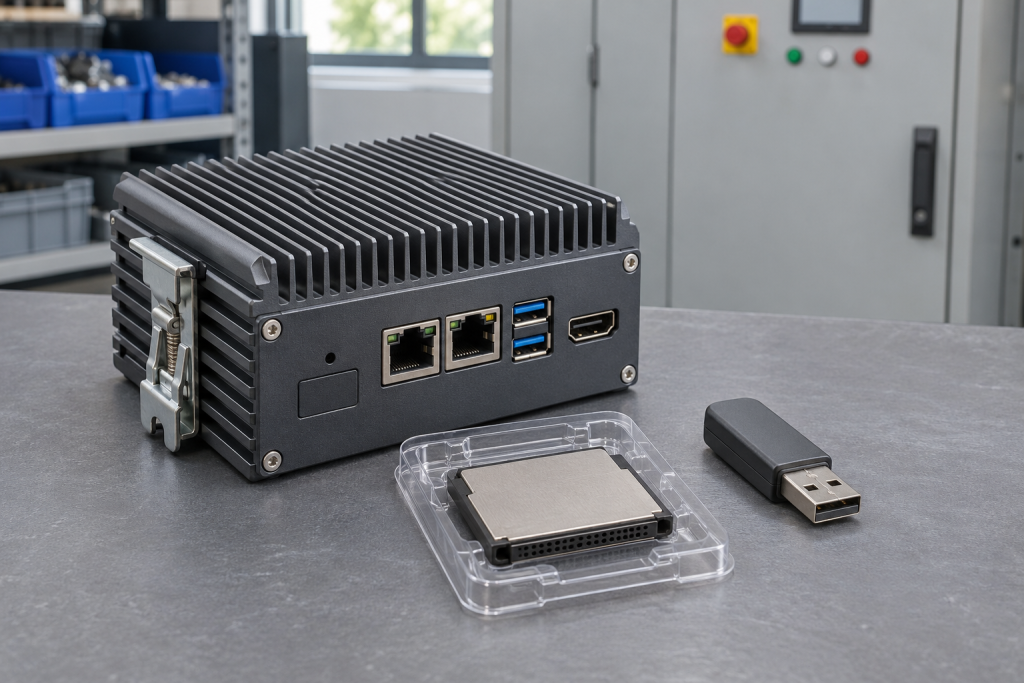
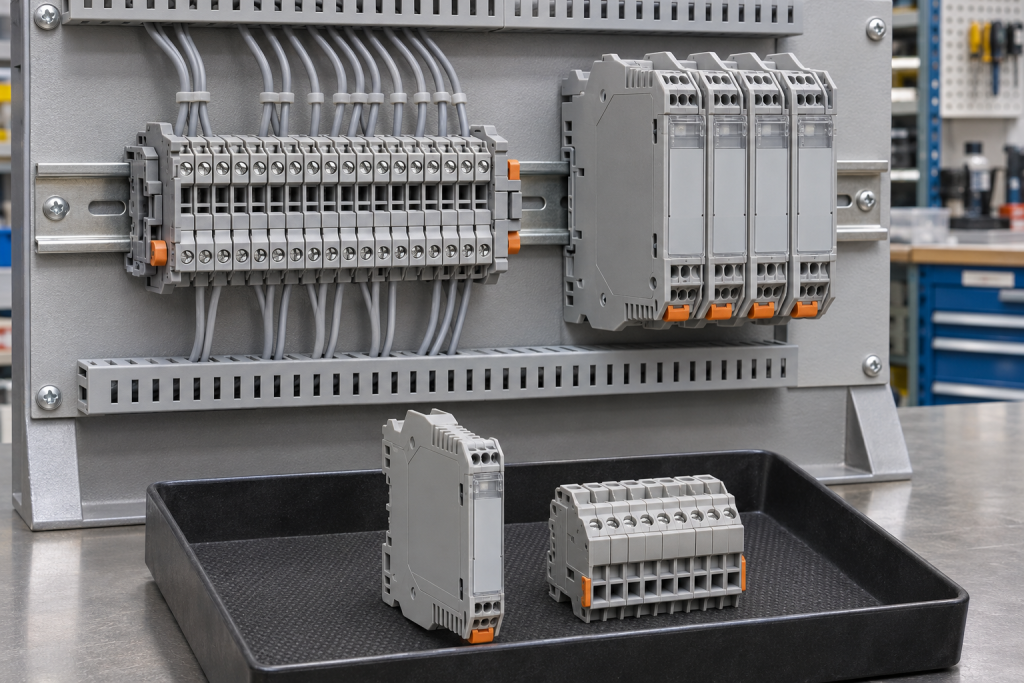
Featured image: AI-generated illustration of generic marshalling and interface hardware, not a product photograph.
Related Product Paths