
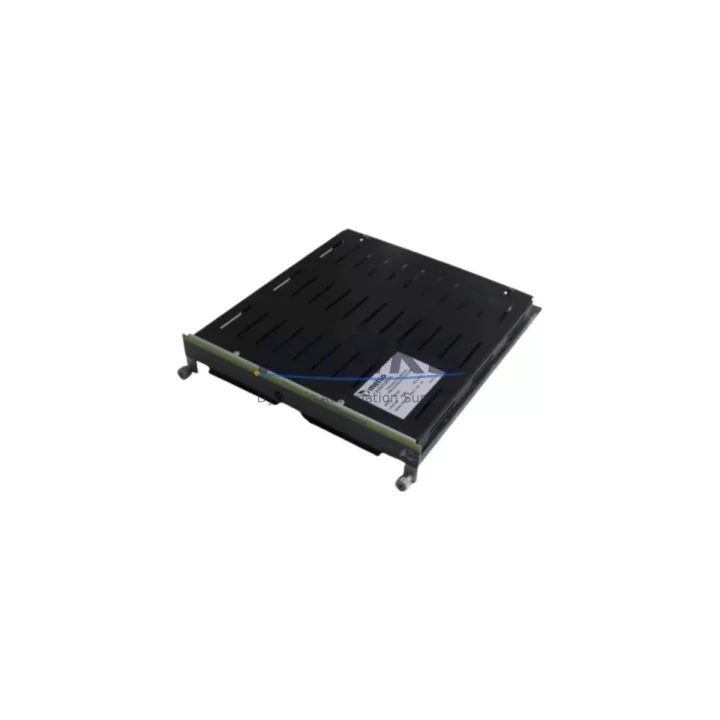
Overview
Metso IOP302 Migration-Ready Analog Input for DNA DCS: Legacy System Retrofit & Compatibility Upgrade
The Metso IOP302 is a migration-ready analog input module engineered for Metso DNA Distributed Control System platforms. As legacy DCS installations approach end-of-life or face obsolescence-driven maintenance challenges, the IOP302 serves as a direct drop-in replacement for aging I/O infrastructure within existing DNA control cabinets. Designed to preserve original wiring topology and terminal block assignments, the IOP302 eliminates the need for full cabinet rewiring during planned or emergency retrofits — a critical advantage when minimizing process downtime is the primary engineering constraint.
In retrofit scenarios, engineers frequently encounter the challenge of maintaining signal integrity across 4–20 mA analog loops while transitioning from discontinued modules. The IOP302 supports standard analog input signal ranges and is compatible with the DNA system’s backplane communication architecture, allowing it to slot into existing rack positions without requiring changes to module addressing or controller configuration files. This compatibility extends to the DNA controller’s I/O mapping tables, meaning that in most cases the existing application program logic does not require modification — a significant reduction in commissioning risk and validation effort.
When planning a retrofit around the IOP302, site engineers should verify several key parameters before installation. Power supply capacity at the I/O cabinet level must be confirmed, particularly when replacing multiple modules simultaneously, as cumulative current draw across the backplane can approach the rated output of the existing Metso DNA power supply modules. Terminal block wiring should be documented and cross-referenced against the original loop drawings to ensure field signal polarity and shielding continuity are preserved. Backplane slot assignments must match the original module address configuration stored in the DNA engineering tool to avoid I/O mapping conflicts after restart.
For sites running Metso DNA with mixed I/O generations, the IOP302 is commonly deployed alongside the IOP303 digital input module and the IOP304 analog output module within the same I/O rack, allowing a phased cabinet upgrade without disrupting adjacent channel groups. Communication link integrity between the I/O station and the DNA controller node should be validated using the DNA system’s built-in diagnostics before returning the loop to automatic control. HMI faceplate displays tied to the affected analog tags should be reviewed to confirm that engineering unit scaling and alarm setpoints remain correctly mapped after module substitution.
Firmware compatibility is another consideration for sites running older DNA system versions. The IOP302 should be confirmed against the DNA system’s supported hardware revision list prior to procurement, particularly for installations running DNA versions predating the current release cycle. In cases where the existing DNA controller firmware does not natively support the replacement module revision, a controlled firmware update to the controller node may be required as part of the migration plan — a step that should be scheduled during a planned maintenance window to avoid unplanned process interruption.
Physical installation space within the existing I/O rack should be measured and confirmed before ordering. The IOP302 occupies a standard DNA I/O module slot and is designed to fit within the original cabinet envelope, but sites with non-standard rack configurations or aftermarket mounting modifications should verify clearance for module extraction and insertion. Pre-shipment functional testing is performed on every IOP302 unit prior to dispatch, covering analog channel accuracy, backplane communication handshake, and power consumption verification — ensuring that field installation proceeds without module-level defects.
Global inventory is maintained across multiple stocking locations to support both planned retrofit projects and emergency replacement requirements. Standard lead times support scheduled maintenance outages, while priority dispatch is available for unplanned failures requiring same-week replacement. Every IOP302 is covered by a support terms confirmed by quotation from the date of shipment, with technical support available for installation and commissioning queries.
Migration Compatibility Table
| Parameter | Detail |
|---|---|
| SKU / Part Number | IOP302 |
| Brand | Metso |
| Series | Metso DNA I/O |
| Module Type | Analog Input Module |
| Signal Range | 4–20 mA (standard analog input) |
| Backplane Interface | Metso DNA I/O backplane compatible |
| Installation | Direct slot replacement in existing DNA I/O rack |
| Wiring Compatibility | Terminal block wiring preserved; no rewiring required |
| Communication | DNA internal I/O bus |
| Controller Compatibility | Metso DNA DCS controller nodes |
| Program Modification Required | Typically none; I/O mapping preserved |
| Replacement For | Legacy Metso DNA analog input modules (same slot form factor) |
| Commissioning | DNA engineering tool address verification + loop test |
| Pre-Shipment Testing | Yes — channel accuracy, backplane comms, power draw |
| Support terms | 12 months from shipment date |
| Origin | Finland |
| Dispatch | Global; priority dispatch available |
Retrofit Planning for Existing Automation Systems
A successful IOP302 retrofit begins with a structured audit of the existing DNA I/O station. Engineers should document the current slot population across the I/O rack, noting the position of adjacent modules such as the IOP303 digital input module, IOP304 analog output module, and any installed IOP305 digital output modules. This mapping ensures that the replacement IOP302 is inserted into the correct backplane slot and that the DNA controller’s I/O configuration file reflects the accurate module inventory after restart.
Power budget verification is a mandatory pre-installation step. The existing Metso DNA power supply module feeding the I/O rack must have sufficient headroom to support the IOP302’s operating current alongside all other installed modules. Sites that have incrementally expanded their I/O population over time may be operating close to the power supply’s rated output, making a current audit essential before adding or replacing modules. If the power budget is marginal, a parallel power supply upgrade using a compatible DNA redundant power supply module should be planned as part of the same maintenance window.
Field wiring documentation should be retrieved and verified against the as-built terminal block layout before disconnecting any existing module. Signal cable shielding continuity, loop power source configuration, and field device output type (2-wire vs. 4-wire transmitter) must all be confirmed to ensure correct reconnection to the IOP302’s terminal interface. For sites using Metso DNA marshalling cabinets with intermediate junction blocks, the signal path from the field device through the marshalling layer to the I/O module terminal should be traced and documented before work begins.
After physical installation, the DNA engineering tool should be used to verify module recognition, confirm channel-level I/O mapping, and perform a live loop test against each connected field transmitter. HMI displays referencing the affected analog tags — including trend displays, alarm summary pages, and operator faceplate graphics — should be reviewed to confirm that tag values are updating correctly and that engineering unit scaling matches the original configuration. Communication link status between the I/O station and the DNA controller node should be confirmed as healthy before releasing the loop to automatic control.
Downtime Control During System Migration
Minimizing process downtime during an IOP302 module replacement requires a structured pre-outage preparation sequence. Before the maintenance window opens, all affected analog loops should be placed in manual control mode at the DCS operator station, with field devices confirmed in a safe hold state. The DNA controller’s I/O configuration should be exported and archived as a baseline, providing a recovery reference if the module substitution requires a configuration rollback.
Physical module swap time for the IOP302 is typically short — the module extracts from the backplane without tools and reseats without requiring rack disassembly. The primary time investment during the maintenance window is the post-installation verification sequence: module recognition confirmation in the DNA engineering tool, channel-level loop testing, and HMI display validation. Sites with a large number of affected analog channels should pre-stage a loop test checklist organized by channel number to accelerate the verification sequence and reduce the risk of missed channels before returning to automatic control.
For sites where process continuity is critical and a cold swap is not acceptable, a hot-standby strategy using a pre-configured spare IOP302 can be considered. In this approach, the replacement module is pre-addressed and verified offline before the maintenance window, reducing in-window activity to the physical swap and a brief loop confirmation check. This approach is particularly effective for retrofit projects involving multiple simultaneous module replacements across a large DNA I/O station, where cumulative verification time could otherwise extend the planned outage window significantly.
Post-restoration, the DNA system’s event log and alarm history should be reviewed to confirm that no spurious alarms or I/O faults were generated during the module transition. Any residual alarm conditions should be acknowledged and cleared before handing the system back to operations. A brief post-restoration monitoring period — typically 15 to 30 minutes of observation at the operator station — is recommended before formally closing the maintenance work order.
Retrofit Support FAQ
Q: Is the IOP302 a direct replacement for the original Metso DNA analog input module in the same rack slot?
A: Yes. The IOP302 is designed as a slot-compatible replacement for legacy Metso DNA analog input modules. It uses the same backplane connector and terminal block interface, allowing direct substitution without rack modification or rewiring in the majority of installations.
Q: Will the existing DNA controller program require modification after installing the IOP302?
A: In most cases, no program modification is required. The IOP302 preserves the original I/O address mapping recognized by the DNA controller, meaning existing application logic, PID loops, and alarm configurations remain valid. Post-installation, a loop test and I/O mapping verification using the DNA engineering tool is recommended to confirm correct operation before returning to automatic control.
Q: What pre-shipment testing is performed on each IOP302 unit?
A: Every IOP302 undergoes functional testing prior to dispatch, including analog channel accuracy verification, backplane communication handshake confirmation, and power consumption measurement. Test records are available upon request. Each unit is covered by a support terms confirmed by quotation from the shipment date.
Q: What is the typical lead time and are emergency replacement units available?
A: Standard inventory is maintained for planned retrofit and scheduled maintenance requirements. Priority dispatch is available for unplanned failures requiring urgent replacement. Contact admin@knmks.com or +86 18359268345 to confirm current stock availability and lead time for your specific requirement.
© 2026 KNMKS. All rights reserved.
Original Source: https://knmks.com
Contact: admin@knmks.com | +86 18359268345
Product Identification
- Brand / Ecosystem
-
METSO
Assorted Brands - Model / Series
-
IOP302
Assorted Series - Product Family
- PLCs & Controllers
- Availability Status
- Available on request after model and quantity confirmation
- Inquiry Type
- B2B RFQ, replacement inquiry and project spare-part request
- Pre-Quote Check
- Exact SKU, brand, series, quantity, nameplate photos and destination country are checked before quotation
System Path
Where this product fits in the KNMKS automation structure.
Specification & Inquiry Focus
- Control platform
- PLC, PAC and modular controllers
- Common needs
- CPU, rack, power and I/O expansion
- Project support
- Replacement, cabinet build and maintenance
Buyer Confirmation
Information KNMKS checks before replying.
- Exact model
- IOP302
- Brand / ecosystem
- METSO
- Product family
- PLCs & Controllers
- Application note
- Replacement, maintenance, project build or spare-part list
- Useful photos
- Nameplate, installed unit, cabinet layout or connector side
- Delivery details
- Quantity, destination country and target schedule
Document Support
Files and notes can be confirmed during quotation.
- Product photos or nameplate confirmation when available
- Packing and delivery notes before quotation confirmation
- Support scope and delivery terms confirmed per inquiry
- Export document coordination for qualified B2B requests
Inquiry Support
- Model cross-checking before quotation
- CPU, power, rack and expansion module matching
- Support for replacement and project inquiry
What to Send Us
- Brand and exact model number: METSO IOP302
- Quantity and required delivery time
- Application, replacement requirement or nameplate photo
- Destination country and shipping preference
RFQ Preparation
This is a product inquiry page built for RFQ communication.
Fast Model Check
Send this model to KNMKS for confirmation.
Include quantity, destination country and photos if this is a maintenance replacement. The inquiry will be saved with a reference number after submission.
Brand & Compatibility Note
KNMKS displays automation product information for well-known industrial brand ecosystems and compatible replacement references. Brand names are used for product identification and compatibility reference only; final availability and commercial terms are confirmed per quotation.
 Manufacturing
 Machine Tools
 Packaging
 Energy & Power
 HMI & Displays
 Servo Systems
 Variable Frequency Drives
 Sensors