
Overview
Honeywell 51305896-100 Migration-Ready LCN Modem for Legacy DCS Systems
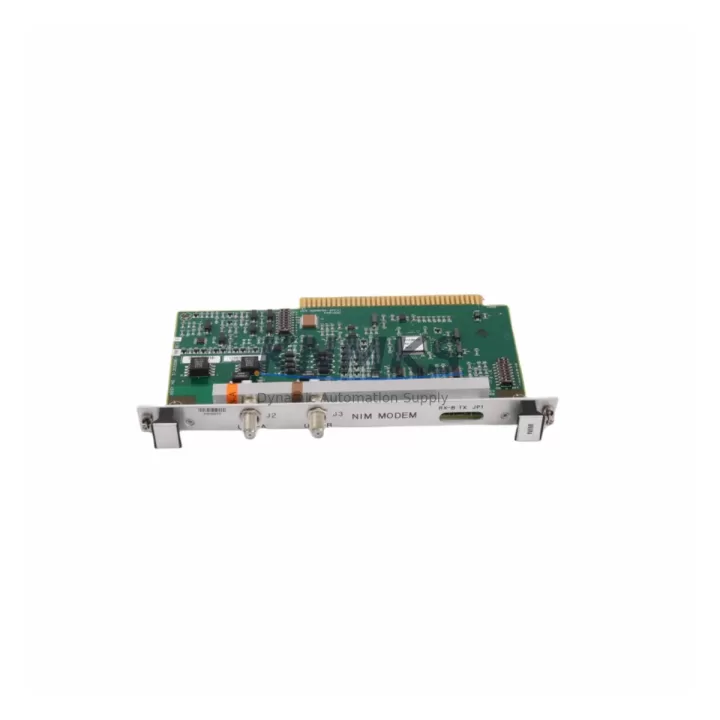
The Honeywell 51305896-100 is a Local Control Network (LCN) Modem Board designed for the TDC 3000 Distributed Control System platform — one of the most widely deployed process automation architectures in refining, petrochemical, and power generation industries. As Honeywell transitions customers toward the Experion PKS platform, the 51305896-100 remains a critical spare and migration bridge component for facilities operating legacy TDC 3000 cabinets that are not yet ready for full platform replacement.
This module handles LCN communication between the Universal Control Network (UCN) and the process hardware nodes, including the High-Performance Process Manager (HPPM) and the Advanced Process Manager (APM). When the 51305896-100 fails or degrades, the entire LCN segment loses communication integrity — triggering alarms, forcing manual override, and risking unplanned shutdown. Stocking a verified replacement unit is the single most effective measure to protect LCN uptime during scheduled turnarounds or emergency outages.
Each unit supplied by KNMKS is pre-tested against Honeywell TDC 3000 LCN signal specifications, inspected for board-level component integrity, and shipped with a support terms confirmed by quotation. Multi-region inventory ensures fast dispatch to refineries, chemical plants, and utilities across Asia-Pacific, the Middle East, and Europe.
Migration Compatibility Table
| Parameter | Details |
|---|---|
| SKU / Part Number | 51305896-100 |
| Brand / OEM | Honeywell |
| Series / Platform | TDC 3000 / LCN (Local Control Network) |
| Module Function | LCN Modem Board — UCN-to-LCN communication interface |
| Compatible Nodes | HPPM, APM, HPM, LM (Logic Manager), AM (Application Module) |
| Backplane Interface | TDC 3000 standard card cage slot — direct board insertion |
| Communication Protocol | Honeywell LCN proprietary coaxial network (5 Mbps) |
| Power Requirement | +5 VDC, +12 VDC via backplane — verify PSU capacity before swap |
| Installation Requirement | Power-down node before card removal; follow TDC 3000 card replacement SOP |
| Firmware Compatibility | Compatible with TDC 3000 R500 and later; confirm node firmware revision before installation |
| Replacement Recommendation | Direct drop-in replacement for failed or degraded 51305896-100 units in existing card cages |
| Commissioning Note | Re-address module via UCN node configuration after installation; verify LCN segment continuity |
| Pre-Shipment Testing | Board-level functional test performed on every unit prior to dispatch |
| Support terms | 12 months from date of shipment |
Retrofit Planning for Existing Automation Systems
A successful 51305896-100 replacement begins well before the maintenance window opens. Engineering teams should pull the current LCN segment map from the TDC 3000 Universal Station or the Honeywell Configuration Studio to confirm which node address the failed modem board occupies. The node address must be re-entered after the new board is seated — failure to do so will cause the node to appear offline on the LCN even if the hardware is physically functional.
Power supply capacity is the next verification step. TDC 3000 card cages are typically powered by the Honeywell 51195056-100 or 51195056-200 Power Entry Module, and the aggregate draw of all installed boards must remain within the rated output. If the cage is already near capacity — common in older installations where boards have been added incrementally — the replacement modem board should be bench-tested for current draw before installation.
Wiring and termination at the LCN coaxial tap must also be inspected. Corroded BNC connectors or damaged coaxial segments between the 51305896-100 and the LCN trunk can cause intermittent communication errors that mimic a failed modem board. Replacing the board without addressing the coaxial infrastructure will result in repeat failures. Teams should also verify the LCN terminator resistors at both ends of the segment are intact — a missing terminator causes reflections that degrade all nodes on that LCN ring.
For facilities planning a phased migration toward Experion PKS, the 51305896-100 is often retained in service alongside the Honeywell ESVT (Experion Server) during the parallel-run period. In this configuration, the LCN modem board continues to serve legacy HPM and APM nodes while the new Experion C300 controllers are commissioned on the FTE (Fault Tolerant Ethernet) network. The 51305896-100 therefore plays a direct role in maintaining control continuity during the migration window — making a verified spare unit essential inventory for any site in Phase 1 of an Experion migration.
I/O integrity should be confirmed at the associated Process Manager I/O Link modules and field termination assemblies (FTAs) before and after the modem board swap. Any I/O channel that was in a forced or manual state prior to the failure should be documented and restored systematically after LCN communication is re-established. HMI displays on the Universal Station or GUS (Global User Station) should be monitored during the first 30 minutes of post-replacement operation to confirm all process points are updating correctly and no spurious alarms are generated by the node re-initialization sequence.
Downtime Control During System Migration
Unplanned LCN modem board failures in TDC 3000 systems typically force an immediate node shutdown, which can cascade into a partial or full unit shutdown depending on the process criticality of the affected node. The most effective downtime control strategy is maintaining at least one verified spare 51305896-100 on-site, pre-tested and ready for same-shift installation.
For planned replacement during a scheduled turnaround, the recommended sequence is: (1) export and archive the current node configuration from the TDC 3000 database before any hardware is touched; (2) place the affected node in manual control at the Universal Station; (3) power down the card cage following the TDC 3000 lockout/tagout procedure; (4) swap the 51305896-100 board; (5) restore power and allow the node to complete its self-test sequence; (6) re-enter the node address and verify LCN segment communication from the Universal Station; (7) transfer control back from manual and confirm all process variables are tracking correctly.
Original program logic stored in the HPPM or APM is retained in non-volatile memory and is not affected by the modem board replacement — the control strategy, setpoints, and alarm limits remain intact. This means the replacement procedure does not require a program reload in most cases, significantly reducing the commissioning time and the risk of introducing configuration errors during the outage window.
For sites where the TDC 3000 is approaching end-of-support and a full migration to Experion PKS is planned within the next 12–36 months, maintaining a small buffer stock of critical LCN components — including the 51305896-100, the associated LCN cable assemblies, and the node power supply modules — is a cost-effective way to ensure the legacy system remains operational through the migration transition without forcing an emergency platform upgrade ahead of schedule.
Retrofit Support FAQ
Q1: Is the 51305896-100 a direct drop-in replacement for all TDC 3000 LCN nodes?
A: The 51305896-100 is the standard LCN Modem Board used across the TDC 3000 platform in HPPM, APM, HPM, and LM nodes. It is a direct physical and functional replacement in all standard TDC 3000 card cages. Confirm the node firmware revision is compatible (R500 or later recommended) before installation. No hardware modification is required.
Q2: Does replacing the LCN modem board require reloading the control program?
A: No. Control logic, setpoints, and configuration data are stored in the node’s non-volatile memory, not on the modem board itself. The replacement procedure does not overwrite or affect the existing control strategy. After the board swap and node re-initialization, the node will reload its configuration from local memory automatically.
Q3: How do I verify LCN communication is restored after installation?
A: From the TDC 3000 Universal Station, navigate to the LCN Diagnostic display and confirm the replaced node appears online with a green status indicator. Check the LCN segment error counter — it should return to zero or near-zero within 2–3 minutes of node initialization. If errors persist, inspect the coaxial tap connection and BNC termination at the node.
Q4: What is the support terms and pre-shipment testing policy for the 51305896-100?
A: Every 51305896-100 unit supplied by KNMKS undergoes board-level functional testing prior to shipment. Units are verified for LCN signal integrity and power rail compliance. A support terms confirmed by quotation is provided from the date of shipment, covering manufacturing defects and functional failures under normal operating conditions. Expedited shipping is available for emergency replacement orders.
© 2026 KNMKS. All rights reserved.
Original Source: https://knmks.com
Contact: admin@knmks.com | +86 18359268345
Product Identification
- Brand / Ecosystem
-
Honeywell
Honeywell - Model / Series
-
51305896-100
Legacy Series - Product Family
- Communication Modules
- Availability Status
- Available on request after model and quantity confirmation
- Inquiry Type
- B2B RFQ, replacement inquiry and project spare-part request
- Pre-Quote Check
- Exact SKU, brand, series, quantity, nameplate photos and destination country are checked before quotation
System Path
Where this product fits in the KNMKS automation structure.
Specification & Inquiry Focus
- Network range
- Ethernet, fieldbus and gateway modules
- Common needs
- Protocol, port and controller family
- Project support
- Machine networking and data integration
Buyer Confirmation
Information KNMKS checks before replying.
- Exact model
- 51305896-100
- Brand / ecosystem
- Honeywell
- Product family
- Communication Modules
- Application note
- Replacement, maintenance, project build or spare-part list
- Useful photos
- Nameplate, installed unit, cabinet layout or connector side
- Delivery details
- Quantity, destination country and target schedule
Document Support
Files and notes can be confirmed during quotation.
- Product photos or nameplate confirmation when available
- Packing and delivery notes before quotation confirmation
- Support scope and delivery terms confirmed per inquiry
- Export document coordination for qualified B2B requests
Inquiry Support
- Industrial Ethernet and fieldbus module inquiry
- Protocol compatibility review
- Integration project inquiry support
What to Send Us
- Brand and exact model number: Honeywell 51305896-100
- Quantity and required delivery time
- Application, replacement requirement or nameplate photo
- Destination country and shipping preference
RFQ Preparation
This is a product inquiry page built for RFQ communication.
Fast Model Check
Send this model to KNMKS for confirmation.
Include quantity, destination country and photos if this is a maintenance replacement. The inquiry will be saved with a reference number after submission.
Brand & Compatibility Note
KNMKS displays automation product information for well-known industrial brand ecosystems and compatible replacement references. Brand names are used for product identification and compatibility reference only; final availability and commercial terms are confirmed per quotation.
 Manufacturing
 Machine Tools
 Packaging
 Energy & Power
 PLCs & Controllers
 HMI & Displays
 Servo Systems
 Variable Frequency Drives