
Overview
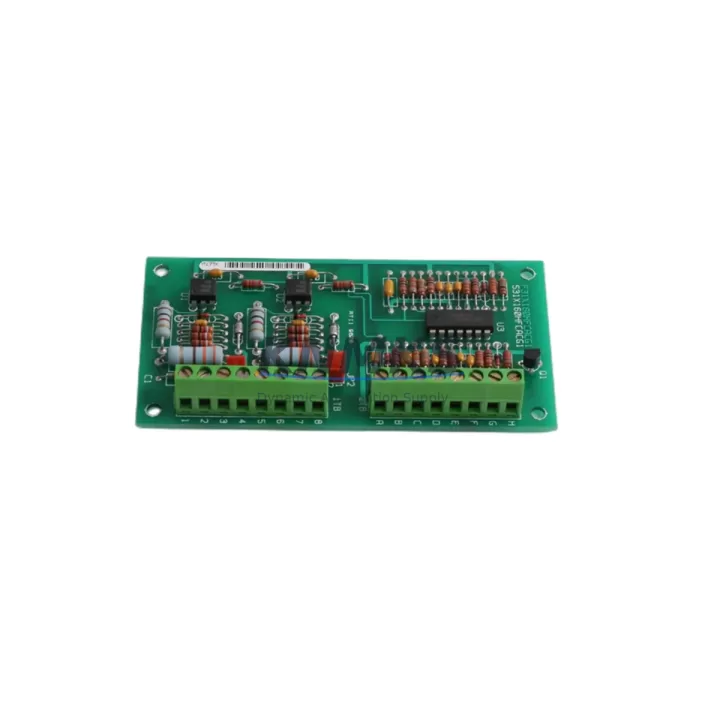
GE 531X160HFCACG1 Migration-Ready Flag Board for Legacy Control Systems
The GE 531X160HFCACG1 is a Home Flag Board designed for the GE Mark V turbine control platform — one of the most widely deployed legacy control architectures in gas turbine, steam turbine, and combined-cycle power generation facilities worldwide. As the Mark V platform approaches end-of-life and OEM spare parts become increasingly scarce, the 531X160HFCACG1 serves as a critical migration-ready replacement component for facilities executing phased retrofits, emergency spare restocking, or full control system modernization programs.
This board interfaces directly with the Mark V’s IONET communication backbone and is responsible for flag signal routing between the R, S, and T processor cards within the triple-redundant voting architecture. When planning a replacement, engineers must verify the existing backplane slot assignment, confirm the IONET node address configuration, and cross-check the terminal block wiring against the original GE Speedtronic Mark V wiring diagrams. The 531X160HFCACG1 is a direct form-fit-function replacement for the original board and requires no firmware modification when installed in a properly maintained Mark V cabinet.
For facilities transitioning from Mark V to Mark VIe, the 531X160HFCACG1 is commonly retained as an interim spare during the phased cutover period. During this window, the existing Mark V I/O wiring — including thermocouple inputs, 4–20 mA analog signals, and discrete digital I/O — is typically re-terminated onto new Mark VIe I/O packs such as the IS200VTURH1B or IS200AEAAH1B. Retaining a functional 531X160HFCACG1 in the legacy cabinet allows the control room to maintain turbine supervisory visibility during the transition without a full shutdown.
Migration Compatibility Table
| Parameter | Details |
|---|---|
| SKU / Part Number | 531X160HFCACG1 |
| Brand / OEM | General Electric (GE Speedtronic) |
| Series / Platform | Mark V Turbine Control System |
| Board Function | Home Flag Board — flag signal routing for R/S/T processor voting |
| Communication Interface | IONET (Mark V proprietary control network) |
| Backplane Compatibility | Mark V TCCA, TCDA, TCQA core I/O racks |
| Replacement Compatibility | Direct drop-in for original 531X160HFCACG1; verify slot and node address |
| Migration Path | Mark V to Mark VIe (interim spare during phased cutover) |
| Terminal Wiring | Match original GE Speedtronic Mark V wiring diagrams; no re-termination required for like-for-like swap |
| Firmware Requirement | No firmware update required for direct replacement in existing Mark V cabinet |
| Installation Space | Standard Mark V board slot; confirm physical clearance before installation |
| Commissioning Note | Verify IONET node address, flag signal continuity, and processor voting status post-installation |
| Support terms | support terms confirmed by quotation — covers manufacturing defects and functional failure under normal operating conditions |
| Availability | availability confirmed by RFQ — ready for immediate dispatch |
Retrofit Planning for Existing Automation Systems
A successful Mark V retrofit begins well before the replacement board arrives on site. Facilities should start by auditing the existing cabinet layout, documenting the current slot assignments for all installed boards including the 531X160HFCACG1, the DS200TCQAG1B (Quad Core Processor), and the DS200TCDAG1B (Diagnostic Board). These boards share the same IONET backbone and their node addresses must remain consistent during any board swap to avoid communication faults.
Power supply integrity is a prerequisite for any retrofit activity. The Mark V cabinet typically draws from a DS200PTBAG1A or equivalent power terminal board, and engineers should verify that the 28 VDC and 5 VDC rails are within tolerance before installing the replacement 531X160HFCACG1. Voltage deviations outside the specified range can cause intermittent flag signal errors that are difficult to distinguish from a faulty board during post-installation diagnostics.
For facilities that have already migrated their HMI from the legacy Cimplicity workstation to a modern SCADA platform, the flag signal data mapped through the 531X160HFCACG1 must be re-verified against the new HMI tag database. Any discrepancy between the original Mark V flag assignments and the updated HMI screen objects can result in incorrect alarm annunciation or suppressed trip signals — a critical safety concern in turbine control applications.
Where I/O expansion is required as part of the broader modernization program, engineers frequently add IS200VSVOH1B servo output boards or IS200TREGH1B terminal boards alongside the retained Mark V hardware during the interim period. Signal isolation between legacy 4–20 mA loops and new digital I/O packs is typically handled by DIN-rail mounted signal isolators installed in the same control cabinet, preserving the original field wiring while enabling compatibility with the new control platform.
Programming compatibility is another key consideration. The Mark V application code — stored in the TCCA processor — does not require modification for a like-for-like 531X160HFCACG1 replacement. However, if the retrofit involves upgrading to a Mark VIe controller, the existing ToolboxST configuration must be reviewed to ensure that all flag logic blocks are correctly mapped to the new I/O pack addresses before the system is brought back online.
Downtime Control During System Migration
Minimizing unplanned downtime is the primary operational constraint in any turbine control retrofit. For a direct 531X160HFCACG1 board replacement, the recommended procedure is to perform a hot-standby verification using the Mark V’s built-in diagnostic tools before initiating the physical swap. This confirms that the R, S, and T processors are in a healthy voting state and that the flag signals are being correctly arbitrated prior to removal of the existing board.
The physical board swap itself — including removal of the original 531X160HFCACG1, installation of the replacement, and restoration of the IONET connection — can typically be completed within a planned maintenance window of two to four hours, assuming all pre-swap diagnostics have been completed and the replacement board has been pre-tested at the supplier’s facility. KNMKS performs functional verification on all outgoing boards prior to dispatch, reducing the risk of a failed installation on site.
Post-installation, the commissioning sequence should include: confirmation of IONET communication link establishment, verification of flag signal continuity across all monitored I/O points, a review of the Mark V alarm log for any new fault codes, and a controlled turbine start sequence under close supervision. Where possible, the first post-retrofit start should be performed with maintenance personnel on site and with the original program logic backed up to an external storage device.
For facilities executing a phased Mark V to Mark VIe migration, the 531X160HFCACG1 can remain in service in the legacy cabinet while the new Mark VIe I/O packs are commissioned in parallel. This parallel operation strategy — sometimes called a shadow mode cutover — allows the control team to validate the new system’s outputs against the legacy system before transferring control authority, significantly reducing the risk of an unplanned trip during the migration window.
Retrofit Support FAQ
Q1: Is the 531X160HFCACG1 a direct replacement for the original GE board?
Yes. The 531X160HFCACG1 is a form-fit-function replacement for the original GE Speedtronic Mark V Home Flag Board. No wiring changes or firmware updates are required for a like-for-like swap in an existing Mark V cabinet. Engineers should verify the IONET node address and slot assignment against the original system documentation before installation.
Q2: What pre-shipment testing is performed on the 531X160HFCACG1?
All 531X160HFCACG1 boards dispatched by KNMKS undergo functional verification prior to shipment, including power-on testing, IONET communication link verification, and flag signal output checks. A test report is available upon request. Each board is covered by a support terms confirmed by quotation against manufacturing defects and functional failure under normal operating conditions.
Q3: Can this board be used during a Mark V to Mark VIe migration?
Yes. The 531X160HFCACG1 is commonly retained as an active spare or interim operational board during phased Mark V to Mark VIe migrations. It allows the legacy cabinet to remain operational while the new Mark VIe I/O packs and ToolboxST configuration are being commissioned in parallel, supporting a shadow-mode cutover strategy that minimizes turbine downtime.
Q4: What is the lead time and stock availability?
The 531X160HFCACG1 is currently availability confirmed by RFQ at KNMKS and available for immediate dispatch. Standard lead time for in-stock items is 3–7 business days depending on destination. For urgent requirements, expedited shipping options are available. Contact admin@knmks.com or call +86 18359268345 to confirm current inventory and arrange dispatch.
© 2026 KNMKS. All rights reserved.
Original Source: https://knmks.com
Contact: admin@knmks.com | +86 18359268345
Product Identification
- Brand / Ecosystem
-
General Electric
Assorted Brands - Model / Series
-
531X160HFCACG1
Assorted Series - Product Family
- I/O Modules
- Availability Status
- Available on request after model and quantity confirmation
- Inquiry Type
- B2B RFQ, replacement inquiry and project spare-part request
- Pre-Quote Check
- Exact SKU, brand, series, quantity, nameplate photos and destination country are checked before quotation
System Path
Where this product fits in the KNMKS automation structure.
Specification & Inquiry Focus
- I/O range
- Digital, analog and remote I/O modules
- Common needs
- Channel count, signal and bus type
- Project support
- PLC expansion and distributed control
Buyer Confirmation
Information KNMKS checks before replying.
- Exact model
- 531X160HFCACG1
- Brand / ecosystem
- General Electric
- Product family
- I/O Modules
- Application note
- Replacement, maintenance, project build or spare-part list
- Useful photos
- Nameplate, installed unit, cabinet layout or connector side
- Delivery details
- Quantity, destination country and target schedule
Document Support
Files and notes can be confirmed during quotation.
- Product photos or nameplate confirmation when available
- Packing and delivery notes before quotation confirmation
- Support scope and delivery terms confirmed per inquiry
- Export document coordination for qualified B2B requests
Inquiry Support
- Digital and analog signal matching
- Remote station and rack expansion support
- Spare module inquiry for downtime recovery
What to Send Us
- Brand and exact model number: General Electric 531X160HFCACG1
- Quantity and required delivery time
- Application, replacement requirement or nameplate photo
- Destination country and shipping preference
RFQ Preparation
This is a product inquiry page built for RFQ communication.
Fast Model Check
Send this model to KNMKS for confirmation.
Include quantity, destination country and photos if this is a maintenance replacement. The inquiry will be saved with a reference number after submission.
Brand & Compatibility Note
KNMKS displays automation product information for well-known industrial brand ecosystems and compatible replacement references. Brand names are used for product identification and compatibility reference only; final availability and commercial terms are confirmed per quotation.
 Manufacturing
 Machine Tools
 Packaging
 Energy & Power
 PLCs & Controllers
 HMI & Displays
 Servo Systems
 Variable Frequency Drives