
Overview
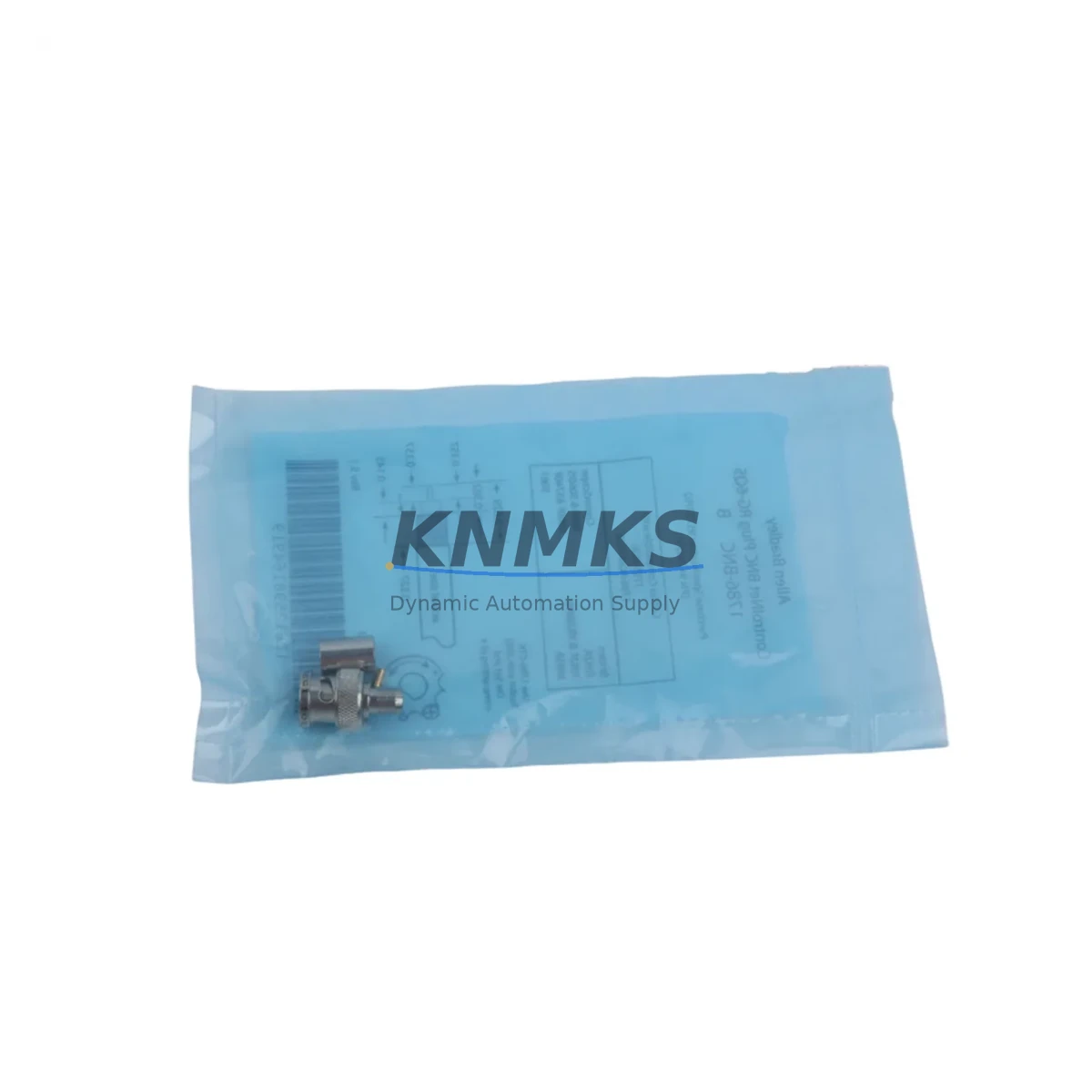
Allen-Bradley 1786-BNC Maintenance-Proven Spare Part for Factory Uptime
The Allen-Bradley 1786-BNC is a BNC coaxial connector designed for use within Rockwell Automation’s ControlNet communication network infrastructure. As a critical physical-layer component in the 1786 ControlNet series, this connector ensures reliable signal integrity between ControlNet trunk cables and network tap assemblies. For maintenance engineers managing aging Rockwell PLC or DCS installations, keeping a verified stock of 1786-BNC connectors is a foundational element of any ControlNet uptime strategy.
ControlNet networks are widely deployed in discrete manufacturing, automotive assembly, food and beverage processing, and utilities. A failed or corroded BNC connector can interrupt the entire ControlNet segment, triggering cascading I/O faults across all connected 1756 ControlLogix or 1785 PLC-5 nodes. The 1786-BNC is the correct field-replaceable unit to restore physical-layer continuity without requiring segment reconfiguration or software changes.
Spare Maintenance Table
| Parameter | Specification |
|---|---|
| Part Number | 1786-BNC |
| Brand | Allen-Bradley / Rockwell Automation |
| Series | 1786 ControlNet |
| Product Type | BNC Coaxial Connector |
| Application | ControlNet trunk cable termination and tap connection |
| Compatible Networks | ControlNet (IEEE 802.3 coaxial physical layer) |
| Compatible Modules | 1786-RPA, 1786-RPCD, 1786-TPYR, 1786-TP, 1756-CNB, 1756-CNBR |
| Installation | Field-terminable, tool-assisted crimp or twist-lock per 1786 wiring guide |
| Operating Environment | Industrial panel and cabinet; standard ControlNet ambient conditions |
| Country of Origin | United States |
| Support terms | 12 Months |
| Pre-shipment Testing | Continuity and impedance verified before dispatch |
| Availability | In-stock; long-term supply supported |
Maintenance Planning for Continuous Operation
When a ControlNet segment experiences intermittent communication faults or complete loss of network traffic, the physical layer — trunk cables, BNC connectors, taps, and terminators — is the first area to inspect. The 1786-BNC connector is a low-cost, high-impact spare that should be stocked in every control cabinet spares kit for any facility running a Rockwell ControlNet architecture.
During scheduled annual maintenance or unplanned fault isolation, engineers should inspect the 1786-BNC alongside the following components to ensure full system restoration:
- 1786-TPYR / 1786-TP Tap Assemblies: BNC connectors interface directly with ControlNet taps. A damaged tap body or corroded tap port will cause recurring connector failures even after BNC replacement. Inspect and replace tap assemblies as a paired action.
- 1786-RPA / 1786-RPCD Repeaters: If the BNC connector fault is located near a segment boundary, verify that the repeater unit is functioning correctly. Repeater port damage can mimic physical-layer connector faults.
- 1756-CNB / 1756-CNBR ControlNet Bridge Modules: After restoring the physical connector, confirm that the ControlNet bridge module in the 1756 ControlLogix chassis is re-establishing scheduled and unscheduled connections. A persistent fault after BNC replacement may indicate a degraded CNB module.
- ControlNet Trunk Cable (RG-6 Coaxial): Inspect the trunk cable jacket and shield continuity at the connector termination point. Cable damage adjacent to the BNC crimp is a common root cause of repeated connector failures.
- 75-Ohm BNC Terminators: Both ends of every ControlNet trunk segment must be properly terminated. Missing or failed terminators cause reflections that degrade all nodes on the segment. Always verify terminator presence and condition when replacing a 1786-BNC.
- 1756 I/O Modules (1756-IB16, 1756-OB16, etc.): Once ControlNet communication is restored, perform a full I/O status scan to confirm that all remote I/O chassis are communicating correctly and that no I/O modules have latched faults from the communication interruption.
For procurement engineers, the 1786-BNC is a consumable-class spare with a long service life under normal conditions but a high criticality rating due to its role in network continuity. Recommended stocking level is a minimum of 5–10 units per ControlNet segment in facilities with continuous production requirements. Bulk procurement reduces per-unit cost and ensures availability during multi-point failure events.
Site Replacement Workflow
Replacing a 1786-BNC connector on an active ControlNet segment requires careful sequencing to minimize disruption to connected nodes:
- Fault Isolation: Use the RSNetWorx for ControlNet diagnostic tool to identify which node or segment is reporting physical-layer errors. Confirm the fault is localized to the connector and not the tap or trunk cable before proceeding.
- Segment Isolation (if required): For redundant ControlNet architectures using 1786-RPCD dual-channel repeaters, the faulty channel can often be isolated while the redundant channel maintains communication. For single-channel segments, coordinate a brief maintenance window with operations.
- Connector Removal and Inspection: Remove the faulty 1786-BNC and inspect the cable end for shield damage, center conductor deformation, or moisture ingress. If the cable end is damaged, re-terminate the cable before installing the new connector.
- New Connector Installation: Install the replacement 1786-BNC per the Rockwell 1786 ControlNet Cable System Installation Manual. Verify correct crimp torque or twist-lock engagement. Do not over-tighten.
- Segment Restoration and Verification: Reconnect the segment and use RSNetWorx to confirm all nodes return to scheduled communication. Check for any residual error counters on adjacent nodes and clear latched faults in the 1756-CNB module if present.
- Documentation: Record the replacement date, cable condition findings, and post-replacement node status in the facility maintenance log. Update the spares inventory to trigger reorder of the consumed 1786-BNC unit.
This workflow applies equally to legacy 1785 PLC-5 ControlNet installations, where the 1786-BNC connector specification is identical. The 1786-BNC is a direct drop-in replacement across all 1786 series ControlNet physical-layer installations, eliminating compatibility risk during emergency repairs.
Spare Parts Support FAQ
Q1: Is the 1786-BNC compatible with both new and legacy ControlNet installations?
Yes. The 1786-BNC is the standard BNC coaxial connector for all Rockwell Automation 1786 ControlNet physical-layer installations, including systems built around the 1756 ControlLogix, 1785 PLC-5, and 1771 PLC-5/C platforms. The connector specification has remained consistent across the 1786 series product lifecycle, making it a universal replacement for any ControlNet trunk or tap connection point.
Q2: How is the 1786-BNC tested before shipment?
Each 1786-BNC unit is inspected for mechanical integrity and verified for correct impedance characteristics (75 ohm) and center conductor continuity before dispatch. Units showing any sign of physical damage, corrosion, or out-of-tolerance impedance are rejected. A support terms confirmed by quotation cover all shipped units against manufacturing defects and premature failure under normal operating conditions.
Q3: What is the recommended spare parts stocking strategy for ControlNet facilities?
For facilities with continuous production requirements, we recommend maintaining a minimum of 5–10 units of 1786-BNC per active ControlNet segment. Connectors should be stored in sealed anti-static packaging in a dry, temperature-controlled environment. Annual inventory audits should coincide with scheduled ControlNet segment inspections to ensure stock levels remain adequate for emergency replacement scenarios.
Q4: Can long-term supply of the 1786-BNC be guaranteed for legacy system maintenance?
Yes. We maintain dedicated inventory of 1786-BNC and related 1786 series ControlNet components to support long-term maintenance programs for facilities that cannot migrate away from legacy ControlNet architectures. Blanket purchase orders and scheduled delivery programs are available for procurement engineers managing multi-year maintenance contracts. Contact our sales team to discuss volume pricing and supply continuity agreements.
© 2026 KNMKS. All rights reserved.
Original Source: https://knmks.com
Contact: admin@knmks.com | +86 18359268345
Product Identification
- Brand / Ecosystem
-
Allen-Bradley
Allen-Bradley - Model / Series
- 1786-BNC
- Product Family
- PLCs & Controllers
- Availability Status
- Available on request after model and quantity confirmation
- Inquiry Type
- B2B RFQ, replacement inquiry and project spare-part request
- Pre-Quote Check
- Exact SKU, brand, series, quantity, nameplate photos and destination country are checked before quotation
System Path
Where this product fits in the KNMKS automation structure.
Specification & Inquiry Focus
- Control platform
- PLC, PAC and modular controllers
- Common needs
- CPU, rack, power and I/O expansion
- Project support
- Replacement, cabinet build and maintenance
Buyer Confirmation
Information KNMKS checks before replying.
- Exact model
- 1786-BNC
- Brand / ecosystem
- Allen-Bradley
- Product family
- PLCs & Controllers
- Application note
- Replacement, maintenance, project build or spare-part list
- Useful photos
- Nameplate, installed unit, cabinet layout or connector side
- Delivery details
- Quantity, destination country and target schedule
Document Support
Files and notes can be confirmed during quotation.
- Product photos or nameplate confirmation when available
- Packing and delivery notes before quotation confirmation
- Support scope and delivery terms confirmed per inquiry
- Export document coordination for qualified B2B requests
Inquiry Support
- Model cross-checking before quotation
- CPU, power, rack and expansion module matching
- Support for replacement and project inquiry
What to Send Us
- Brand and exact model number: Allen-Bradley 1786-BNC
- Quantity and required delivery time
- Application, replacement requirement or nameplate photo
- Destination country and shipping preference
RFQ Preparation
This is a product inquiry page built for RFQ communication.
Fast Model Check
Send this model to KNMKS for confirmation.
Include quantity, destination country and photos if this is a maintenance replacement. The inquiry will be saved with a reference number after submission.
Brand & Compatibility Note
KNMKS displays automation product information for well-known industrial brand ecosystems and compatible replacement references. Brand names are used for product identification and compatibility reference only; final availability and commercial terms are confirmed per quotation.
 Manufacturing
 Machine Tools
 Packaging
 Energy & Power
 HMI & Displays
 Servo Systems
 Variable Frequency Drives
 Sensors