
Overview
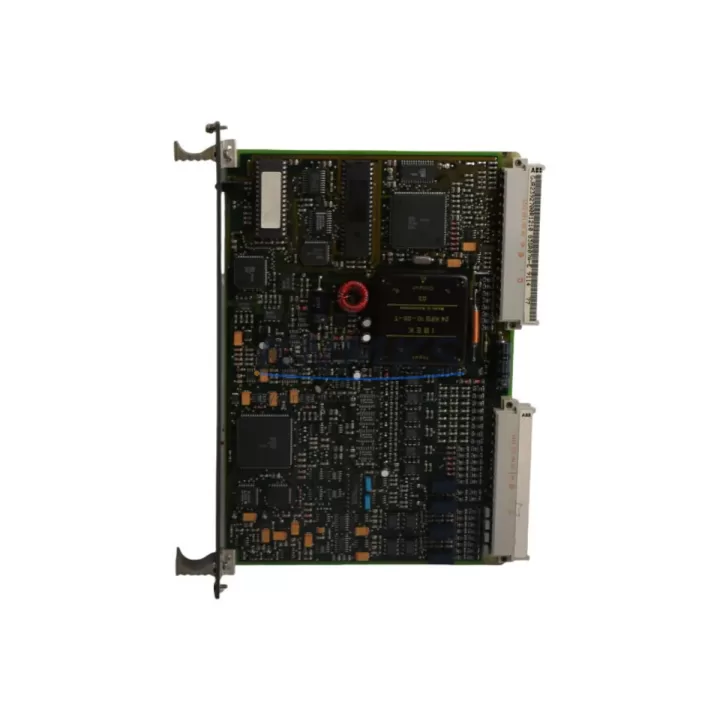
ABB GJR2392700R1210 Migration-Ready CPU for Legacy Control Systems
The ABB GJR2392700R1210 (83SR07A-E) is a proven CPU module for the AC500 programmable logic controller platform, purpose-built to support legacy system migration, discontinued spare part replacement, and control cabinet upgrades across industrial automation environments. Whether you are retiring an aging S500 or AC31 controller, consolidating multi-rack architectures, or extending the operational life of an existing AC500 installation, this CPU module provides a reliable, field-verified migration path with minimal disruption to your production line.
Before committing to a retrofit, engineers must systematically verify several critical parameters: available power supply capacity on the existing backplane, terminal wiring compatibility between the legacy and replacement modules, backplane interface pinout alignment, module addressing and slot configuration, program logic compatibility in the Automation Builder or PS501 Control Builder environment, HMI screen tag mapping, communication link integrity across Modbus RTU or PROFIBUS DP networks, physical installation space within the control cabinet, firmware version requirements, and the on-site commissioning sequence including I/O force testing and loop verification.
The GJR2392700R1210 is designed to integrate directly into existing AC500 rack assemblies. When paired with a compatible TB521 or TB541 terminal base, the module maintains the same footprint as predecessor units, reducing the need for cabinet re-engineering. Engineers migrating from earlier AC500 CPU variants such as the PM554 or PM564 series will find that the backplane bus interface and power rail assignments remain consistent, allowing existing I/O modules — including digital input/output cards and analog signal modules — to remain in place during the transition.
Migration Compatibility Table
| Parameter | Detail |
|---|---|
| SKU / Part Number | GJR2392700R1210 (83SR07A-E) |
| Brand / Series | ABB / AC500 |
| Module Type | CPU / Central Processing Unit |
| Compatible Backplane | AC500 standard rack; TB521, TB541 terminal bases |
| Communication Protocols | Modbus RTU, PROFIBUS DP, CS31 bus |
| Programming Environment | PS501 Control Builder / Automation Builder (IEC 61131-3) |
| Legacy Replacement Path | AC31, S500, earlier AC500 PM5xx CPU variants |
| Installation Space | Standard AC500 single-slot CPU position |
| Firmware Compatibility | Verify firmware version against Automation Builder release notes prior to deployment |
| Power Supply Requirement | Confirm 24 VDC rail capacity on existing backplane before installation |
| Terminal Wiring | Compatible with existing AC500 terminal base wiring; verify signal assignments against original I/O list |
| Support terms | support terms confirmed by quotation — Pre-shipment tested and verified |
Retrofit Planning for Existing Automation Systems
A successful retrofit begins with a structured assessment of the existing control architecture. For installations built around the AC500 platform, the GJR2392700R1210 CPU slots into the same rack position as earlier processor modules, preserving the physical layout of the control cabinet. This is particularly valuable when cabinet space is constrained and re-engineering the enclosure is not feasible within the project timeline.
Power budget verification is a mandatory first step. The existing AC500 power supply module — typically a CP501 or CP502 unit — must have sufficient headroom to support the replacement CPU alongside all installed I/O modules. If the power margin is insufficient, a parallel power supply or a higher-capacity replacement unit should be specified before the migration proceeds.
Communication continuity is equally critical. Sites running Modbus RTU networks will need to confirm that the baud rate, parity, and station address settings configured in the original CPU are replicated exactly in the replacement unit. For installations using PROFIBUS DP, the GSD file and master configuration must be reviewed to ensure the replacement CPU is recognized correctly by the network master — whether that is a SIMATIC S7 gateway, a Schneider Quantum bridge, or a third-party PROFIBUS master. Signal isolators installed on analog I/O loops should also be inspected to confirm they remain within specification after the CPU swap.
Program migration requires careful attention to memory allocation, function block library versions, and any hardware-specific configuration blocks embedded in the original project file. Engineers should export and archive the original program from the legacy CPU before removal, then perform a full compilation and simulation in Automation Builder against the target firmware version of the GJR2392700R1210. Any deprecated function blocks or library references must be resolved before the program is downloaded to the replacement unit.
HMI screen integrity should be validated after the CPU replacement is complete. Tag addresses, data type mappings, and communication driver settings between the HMI panel and the AC500 CPU must be confirmed to prevent alarm suppression or incorrect process value display during the first live run. If the site uses a CP600 or CP620 operator panel connected via Ethernet or serial link, the communication parameters should be re-verified against the new CPU configuration before handover.
For sites requiring I/O expansion during the retrofit, additional digital or analog I/O modules can be added to the existing rack without disrupting the CPU replacement process, provided the backplane slot count and power budget allow. A programming cable or USB-to-serial adapter compatible with the PS501 environment should be on hand during commissioning to support live diagnostics and forced I/O testing.
Downtime Control During System Migration
Minimizing unplanned downtime is the primary operational constraint in any live system migration. For the GJR2392700R1210 retrofit, a structured cold-swap procedure is recommended: isolate the control cabinet from field power, document all terminal wiring connections with photographs and a verified I/O list, remove the legacy CPU module, install the replacement unit into the same rack slot, and restore power in a controlled sequence before initiating the program download.
Where production schedules do not permit extended outages, a parallel commissioning approach can be used: the replacement CPU is configured and program-tested on a bench rack using the same I/O module types as the live system, allowing the field cutover to be completed within a single planned maintenance window. This approach also provides an opportunity to validate communication link behavior, HMI tag mapping, and alarm logic before the replacement unit is connected to live field signals.
All units supplied by KNMKS undergo pre-shipment functional testing to confirm module initialization, communication port operation, and basic I/O response prior to dispatch. This reduces the risk of receiving a non-functional unit on the day of the planned cutover and supports the support terms confirmed by quotation coverage from the date of shipment. Customers are encouraged to retain the original program backup, the I/O wiring documentation, and the firmware version record as part of the site migration file for future reference and audit compliance.
Retrofit Support FAQ
Q1: Is the GJR2392700R1210 a direct drop-in replacement for earlier AC500 CPU modules?
The GJR2392700R1210 is designed for the AC500 platform and is physically compatible with standard AC500 rack assemblies and TB521/TB541 terminal bases. However, program compatibility must be verified in Automation Builder before deployment, as firmware differences between CPU generations may require library updates or configuration block revisions. A bench test prior to live installation is strongly recommended.
Q2: What commissioning steps are required after installing the replacement CPU?
After physical installation, the replacement CPU requires a firmware version check, program download from the archived project file, communication parameter configuration (Modbus station address, PROFIBUS node ID, or CS31 bus settings as applicable), I/O force testing across all connected modules, and HMI communication verification. A full loop check against the original I/O list should be completed before returning the system to automatic operation.
Q3: Can existing terminal wiring be reused without modification?
In most AC500 retrofit scenarios, the existing terminal base wiring can be retained without modification, as the GJR2392700R1210 uses the same terminal base interface as predecessor modules. Signal assignments should be verified against the original wiring diagram before power-up to confirm that no field wiring changes were made during the legacy system’s operational life that are not reflected in the current documentation.
Q4: What support terms and supply terms apply to this unit?
All GJR2392700R1210 units supplied by KNMKS carry a support terms confirmed by quotation from the date of shipment and are pre-shipment tested for functional integrity. Stock availability is maintained to support both immediate replacement requirements and planned long-term spare part agreements. For volume procurement or multi-site supply arrangements, contact the KNMKS sales team directly to discuss lead times and inventory reservation options.
© 2026 KNMKS. All rights reserved.
Original Source: https://knmks.com
Contact: admin@knmks.com | +86 18359268345
Product Identification
- Brand / Ecosystem
-
ABB
ABB - Model / Series
-
GJR2392700R1210 83SR07A-E
AC500 Series - Product Family
- PLCs & Controllers
- Availability Status
- Available on request after model and quantity confirmation
- Inquiry Type
- B2B RFQ, replacement inquiry and project spare-part request
- Pre-Quote Check
- Exact SKU, brand, series, quantity, nameplate photos and destination country are checked before quotation
System Path
Where this product fits in the KNMKS automation structure.
Specification & Inquiry Focus
- Control platform
- PLC, PAC and modular controllers
- Common needs
- CPU, rack, power and I/O expansion
- Project support
- Replacement, cabinet build and maintenance
Buyer Confirmation
Information KNMKS checks before replying.
- Exact model
- GJR2392700R1210 83SR07A-E
- Brand / ecosystem
- ABB
- Product family
- PLCs & Controllers
- Application note
- Replacement, maintenance, project build or spare-part list
- Useful photos
- Nameplate, installed unit, cabinet layout or connector side
- Delivery details
- Quantity, destination country and target schedule
Document Support
Files and notes can be confirmed during quotation.
- Product photos or nameplate confirmation when available
- Packing and delivery notes before quotation confirmation
- Support scope and delivery terms confirmed per inquiry
- Export document coordination for qualified B2B requests
Inquiry Support
- Model cross-checking before quotation
- CPU, power, rack and expansion module matching
- Support for replacement and project inquiry
What to Send Us
- Brand and exact model number: ABB GJR2392700R1210 83SR07A-E
- Quantity and required delivery time
- Application, replacement requirement or nameplate photo
- Destination country and shipping preference
RFQ Preparation
This is a product inquiry page built for RFQ communication.
Fast Model Check
Send this model to KNMKS for confirmation.
Include quantity, destination country and photos if this is a maintenance replacement. The inquiry will be saved with a reference number after submission.
Brand & Compatibility Note
KNMKS displays automation product information for well-known industrial brand ecosystems and compatible replacement references. Brand names are used for product identification and compatibility reference only; final availability and commercial terms are confirmed per quotation.
 Manufacturing
 Machine Tools
 Packaging
 Energy & Power
 HMI & Displays
 Servo Systems
 Variable Frequency Drives
 Sensors