
Overview
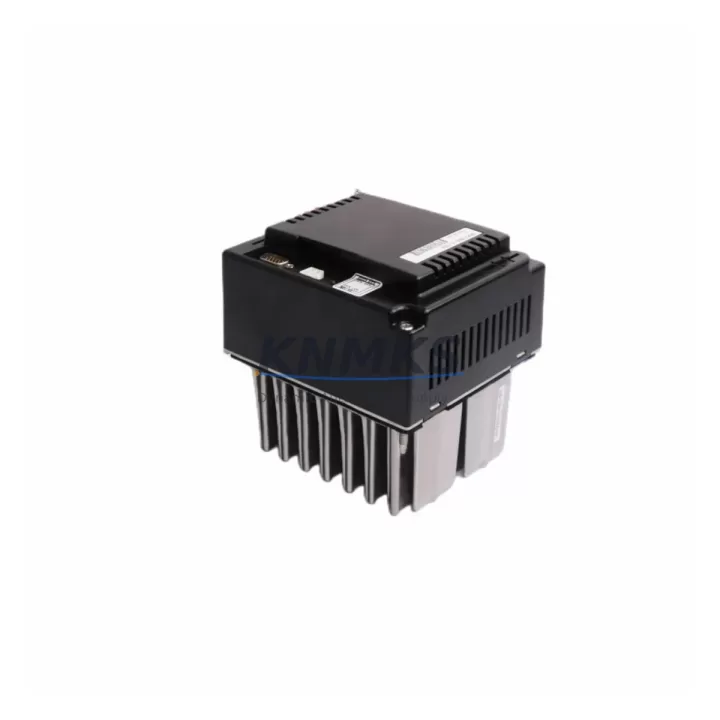
ABB 3HAC14549-3/07A Migration-Ready Rectifier for Legacy Control Systems
The ABB 3HAC14549-3/07A is a rectifier module engineered for the IRC5 robot controller platform, one of ABB’s most widely deployed industrial robot control architectures. As automation facilities face increasing pressure to extend the operational life of legacy IRC5 cabinets or migrate to updated control infrastructure, the 3HAC14549-3/07A serves as a critical power conversion component that bridges existing installations with modern reliability standards. Whether you are replacing a failed unit in a running production line, sourcing a verified spare for a discontinued assembly, or planning a phased retrofit of an aging robot cell, this rectifier module provides the electrical foundation that the IRC5 drive system depends on.
The IRC5 controller family has been in active deployment across automotive, foundry, food processing, and general manufacturing environments for over two decades. Many of these installations continue to operate on original hardware, and the availability of verified replacement modules such as the 3HAC14549-3/07A is essential to sustaining uptime without committing to a full controller replacement. This module converts incoming AC supply to the regulated DC bus voltage required by the IRC5 drive units, and its correct operation is a prerequisite for axis motion, safety circuit integrity, and FlexPendant communication.
Migration Compatibility Table
| Parameter | Details |
|---|---|
| Compatible Controller | ABB IRC5 Single Cabinet, IRC5 Compact, IRC5 Panel Mounted Controller |
| Module Function | AC-to-DC rectification for IRC5 drive power bus |
| Revision | /07A (confirm hardware revision against existing unit label before ordering) |
| Mounting Interface | IRC5 internal backplane; verify cabinet generation and drive unit slot assignment |
| Terminal Compatibility | Match AC input terminal block wiring gauge and torque spec to original installation |
| Communication Impact | No direct fieldbus dependency; however, drive bus stability affects PROFIBUS/DeviceNet axis response |
| Firmware Dependency | Compatible with RobotWare 5.x and 6.x; no firmware update required for rectifier replacement |
| Replacement Recommendation | Direct drop-in for same revision; cross-revision substitution requires ABB service bulletin review |
| Commissioning Focus | DC bus voltage verification, drive unit fault reset, safety relay re-arm, FlexPendant reconnection |
| Support terms | support terms confirmed by quotation — covers manufacturing defects and verified functional failure under normal operating conditions |
Retrofit Planning for Existing Automation Systems
A successful rectifier replacement within an IRC5 cabinet requires more than a part swap. Engineers responsible for retrofit planning must account for the full power chain from the incoming AC disconnect through the rectifier, across the DC bus, and into each drive unit serving the robot axes. Before removing the 3HAC14549-3/07A from service, document the existing DC bus voltage under load using a calibrated meter, and confirm that the ABB DSQC 661 or DSQC 662 computer unit is logging no pre-existing drive faults that could be misattributed to the new module after installation.
Terminal block wiring on the AC input side must be inspected for insulation condition, correct torque, and phase sequencing. IRC5 cabinets operating in three-phase environments are sensitive to phase loss, and a loose terminal on the incoming supply can produce rectifier faults that appear as module failures. If the cabinet also houses an ABB DSQC 608 power supply unit serving the controller computer and I/O backplane, verify that its output remains stable during the rectifier swap, as a momentary voltage dip can corrupt active program memory on controllers not equipped with battery-backed RAM.
For facilities running multiple IRC5 cabinets in a coordinated cell, the ABB IRC5 MultiMove configuration introduces additional considerations. Each cabinet’s rectifier must be verified independently, and the drive synchronization parameters stored in the RobotWare configuration files should be backed up before any power module work begins. If the retrofit is part of a broader migration from IRC5 to IRC5P or a newer platform, the 3HAC14549-3/07A can serve as a bridge component that keeps legacy cabinets operational during the transition period, reducing the pressure to cut over all axes simultaneously.
Where the existing installation includes an ABB DSQC 378B I/O unit or similar distributed I/O modules connected via the IRC5 internal DeviceNet backbone, confirm that the I/O configuration is saved and that the DeviceNet node addresses are documented. A full power cycle following rectifier replacement will trigger a DeviceNet re-scan, and any undocumented node will generate a configuration mismatch fault that halts robot motion. Similarly, if the cell uses an ABB CP600 or similar HMI panel connected to the IRC5 via Ethernet, verify that the HMI project file references the correct controller IP address and that no IP conflict exists before restoring power.
Installation space within the IRC5 cabinet is fixed, and the 3HAC14549-3/07A occupies a defined slot in the power section. Confirm that no aftermarket cable management additions or third-party signal isolators have been routed through the rectifier mounting zone in a way that would obstruct removal or re-seating. If the cabinet has been modified to accommodate additional I/O expansion racks or a supplementary 24 VDC power rail for field devices, verify that the total current draw on the DC bus remains within the rectifier’s rated output capacity after the retrofit.
Downtime Control During System Migration
Minimizing unplanned downtime during a rectifier replacement in an active production environment requires a structured pre-work protocol. Begin by scheduling the replacement during a planned maintenance window and confirming that the robot program currently loaded in the IRC5 controller has been backed up to an external USB drive or network share using the RobotWare backup function. This backup captures the RAPID program modules, system parameters, I/O configuration, and safety configuration, and it is the single most important step in protecting the existing control logic from loss during a power interruption.
Before de-energizing the cabinet, photograph the existing terminal wiring on both the AC input and DC bus connections of the outgoing rectifier. Label each conductor with removable tape markers corresponding to the terminal numbers shown in the IRC5 wiring diagram. This documentation step eliminates reconnection errors that are a common source of extended downtime after module replacement.
Once the 3HAC14549-3/07A is installed and the cabinet is re-energized, follow the IRC5 startup sequence: allow the controller computer to complete its boot cycle before enabling drive power, verify the DC bus voltage at the test points specified in the IRC5 product manual, and confirm that no drive unit fault codes are present on the FlexPendant before releasing the system to automatic mode. If the installation includes a safety PLC or external safety relay module monitoring the IRC5 safety outputs, verify that the safety chain re-arms correctly and that the emergency stop circuit tests pass before returning the robot to production.
For multi-cabinet cells, stagger the rectifier replacements across maintenance windows rather than replacing all units simultaneously. This approach preserves at least partial cell functionality during the retrofit period and allows the maintenance team to validate the replacement procedure on the first cabinet before applying it to the remaining units.
Retrofit Support FAQ
Q: Is the 3HAC14549-3/07A a direct replacement for earlier revisions of the same part number?
A: The /07A revision designation indicates a specific hardware iteration. In many cases, later revisions are backward compatible within the same IRC5 cabinet generation, but this must be confirmed against the ABB service documentation for your specific cabinet serial number. We recommend providing your cabinet serial number and existing module revision when placing an order so that compatibility can be verified before shipment.
Q: What pre-shipment testing is performed on this module?
A: Each 3HAC14549-3/07A unit undergoes functional verification prior to dispatch, including DC output voltage check under simulated load conditions and visual inspection of connector integrity, PCB condition, and component seating. A test record is available upon request. The module ships with a support terms confirmed by quotation covering manufacturing defects and verified functional failure under normal operating conditions.
Q: How quickly can this module be dispatched, and is stock held locally?
A: Stock availability is confirmed at the time of inquiry. For urgent replacement requirements, expedited dispatch options are available. Contact admin@knmks.com or call +86 18359268345 to confirm current inventory and lead time before placing your order.
Q: What information should I have ready before contacting support for commissioning assistance?
A: Have the IRC5 cabinet serial number, the RobotWare version currently installed, the existing module revision number, and a description of any fault codes displayed on the FlexPendant. If the replacement is part of a broader retrofit, also note the number of axes, the drive unit types installed, and whether the cabinet is configured for MultiMove or single-robot operation. This information allows our technical team to provide accurate commissioning guidance without unnecessary back-and-forth.
© 2026 KNMKS. All rights reserved.
Original Source: https://knmks.com
Contact: admin@knmks.com | +86 18359268345
Product Identification
- Brand / Ecosystem
-
ABB
ABB - Model / Series
-
3HAC14549-3/07A
IRC5 Series - Product Family
- PLCs & Controllers
- Availability Status
- Available on request after model and quantity confirmation
- Inquiry Type
- B2B RFQ, replacement inquiry and project spare-part request
- Pre-Quote Check
- Exact SKU, brand, series, quantity, nameplate photos and destination country are checked before quotation
System Path
Where this product fits in the KNMKS automation structure.
Specification & Inquiry Focus
- Control platform
- PLC, PAC and modular controllers
- Common needs
- CPU, rack, power and I/O expansion
- Project support
- Replacement, cabinet build and maintenance
Buyer Confirmation
Information KNMKS checks before replying.
- Exact model
- 3HAC14549-3/07A
- Brand / ecosystem
- ABB
- Product family
- PLCs & Controllers
- Application note
- Replacement, maintenance, project build or spare-part list
- Useful photos
- Nameplate, installed unit, cabinet layout or connector side
- Delivery details
- Quantity, destination country and target schedule
Document Support
Files and notes can be confirmed during quotation.
- Product photos or nameplate confirmation when available
- Packing and delivery notes before quotation confirmation
- Support scope and delivery terms confirmed per inquiry
- Export document coordination for qualified B2B requests
Inquiry Support
- Model cross-checking before quotation
- CPU, power, rack and expansion module matching
- Support for replacement and project inquiry
What to Send Us
- Brand and exact model number: ABB 3HAC14549-3/07A
- Quantity and required delivery time
- Application, replacement requirement or nameplate photo
- Destination country and shipping preference
RFQ Preparation
This is a product inquiry page built for RFQ communication.
Fast Model Check
Send this model to KNMKS for confirmation.
Include quantity, destination country and photos if this is a maintenance replacement. The inquiry will be saved with a reference number after submission.
Brand & Compatibility Note
KNMKS displays automation product information for well-known industrial brand ecosystems and compatible replacement references. Brand names are used for product identification and compatibility reference only; final availability and commercial terms are confirmed per quotation.
 Manufacturing
 Machine Tools
 Packaging
 Energy & Power
 HMI & Displays
 Servo Systems
 Variable Frequency Drives
 Sensors