A soft starter inquiry should be built around the motor, the starting profile, and the protection scheme rather than the motor power rating alone. A unit may appear suitable by voltage and current while still being unsuitable for the number of starts per hour, starting time, bypass arrangement, environmental conditions, or required stopping behavior.
This checklist is for maintenance teams, integrators, and purchasing teams preparing an industrial soft starter RFQ. It focuses on the information needed to compare an installed unit with a replacement or an alternative series without assuming that similar-looking equipment is directly interchangeable.
1. Record the motor and supply data
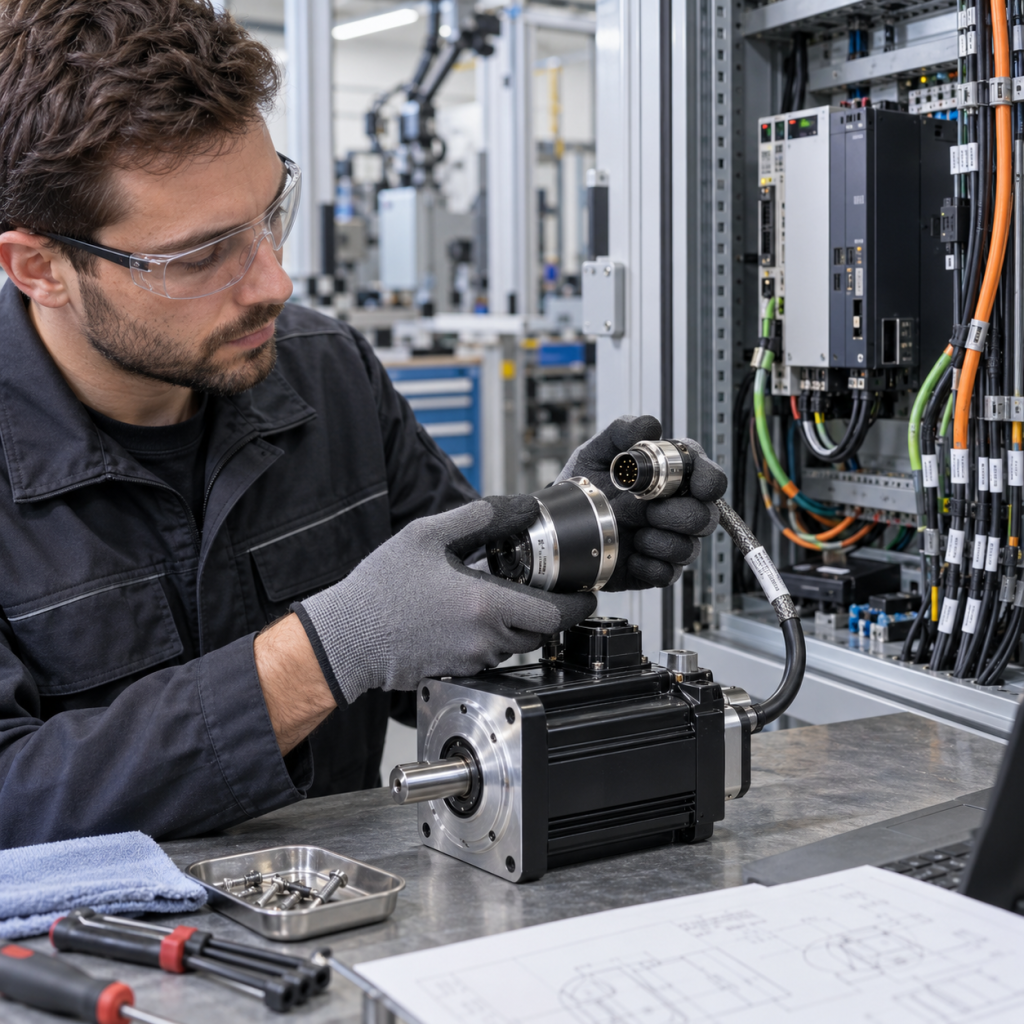
Begin with a clear motor nameplate photo. Record rated voltage, full-load current, frequency, power, speed, connection method, service factor, motor type, and any duty or insulation notes. Also record the incoming supply voltage, phase, frequency, short-circuit information when available, and whether the motor circuit uses a transformer, line reactor, contactor, or other upstream equipment.
The motor full-load current must be entered or checked against the starter configuration. Do not use horsepower or kilowatts as a substitute when the nameplate current is available. A difference in voltage, connection, or motor duty can change the required starter rating even when the nominal power appears unchanged.
2. Describe the starting and stopping application
State what the motor drives: a pump, fan, conveyor, compressor, crusher, mixer, blower, or another machine. Describe the load at start, the expected acceleration time, the number of starts per hour, the normal stopping method, and whether the load has high inertia or a high breakaway torque.
Starting class and start duration matter. Schneider Electric selection material for Altistart families includes voltage, current, cycle time, wiring, and accessory checks, while Siemens product documentation describes bypass and protection functions for SIRIUS soft starters. These details show why an application cannot be assessed from the motor power label alone.
Include whether the motor starts unloaded or under process load, whether the machine can reverse, and whether a controlled stop is required. A pump water-hammer concern, a conveyor with fragile material, and a high-inertia fan may need different ramp and stopping considerations even when their motors have similar ratings.
3. Check the bypass arrangement
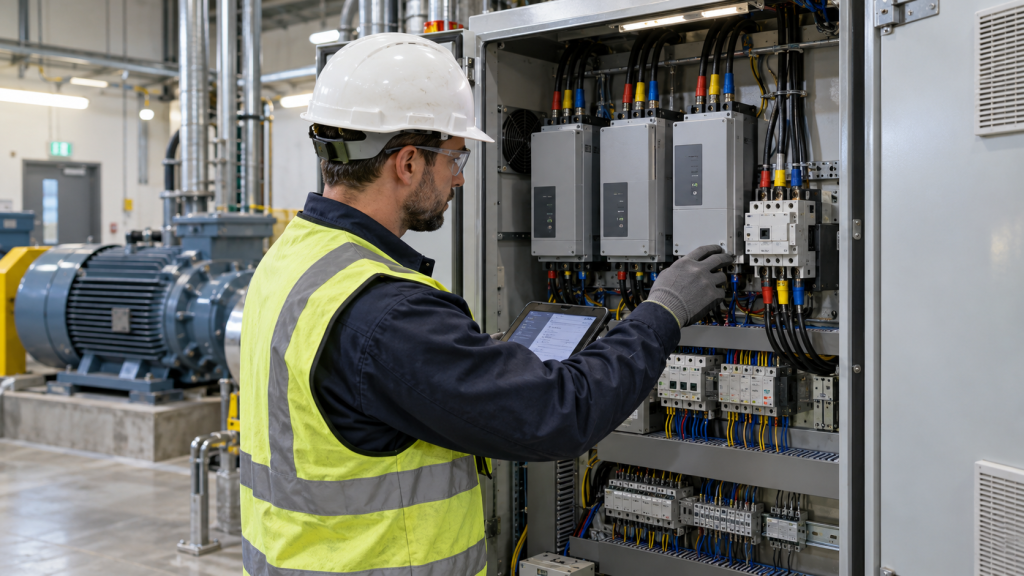
Identify whether the installed starter has an internal bypass or an external bypass contactor. Photograph the bypass wiring, contactor model, overload relay, fuses, and terminals. Record whether the bypass closes automatically at the end of acceleration or is controlled by an external circuit.
Bypass changes the protection and heat behavior of the installation. The RFQ should state which device protects the motor while the bypass is closed and how a starter fault removes motor power. Schneider Electric notes that the isolation and safety arrangement depends on the specific Altistart family, and that some installations require an independent device to remove motor power. Review the Schneider Electric line-contactor guidance when assessing a bypassed starter and the machine safety circuit.
Do not assume that a replacement with an internal bypass can be wired exactly like a unit using an external contactor. The power path, control circuit, fault relay logic, and isolation method should be compared from drawings and photographs.
4. Confirm overload and thermal protection
Record the motor overload class, trip class, current setting, thermal model, restart behavior, and cooling or recovery time after an overload trip. State whether the application has frequent starts, long acceleration, locked-rotor risk, or a motor that runs close to its thermal limit.
Where the starter has separate motor and semiconductor protection, identify both. If an overload relay is external, include its model and setting range. If the starter provides the overload function, record the configured motor current and class. A replacement should not be approved solely because its continuous current is equal to the old unit if its starting or protection limits are different.
5. Review control, I/O, and safety interfaces
List the start and stop command source, local or remote control selection, analog signals, auxiliary contacts, fault relay contacts, bypass feedback, and any fieldbus or Ethernet module. Record the PLC or DCS terminal numbers, signal voltage, normally open or normally closed logic, and the safety circuit that removes power during an emergency stop.
Also record the keypad, display, communication module, and any expansion or option card. A starter may be electrically compatible with the motor but still create commissioning problems if the control signals, fault logic, or fieldbus interface are different. Include cabinet drawings and a terminal photo when the original documentation is incomplete.
6. Check the mechanical and environmental installation
Document enclosure type, ambient temperature, altitude, ventilation, cabinet dimensions, mounting position, cable entry, clearances, and contamination or washdown conditions. Record whether the starter is installed in a clean control room, a hot cabinet, a dusty process area, or an outdoor enclosure.
Include the available line and motor cable sizes, upstream protection, earthing arrangement, and any space limitation. A unit that matches the electrical rating may still require a different terminal layout, clearance, ventilation path, or cabinet modification. Those constraints belong in the RFQ before a replacement is selected.
7. Send the right RFQ evidence
- Exact brand, full model, revision, serial or date code, and nameplate photo.
- Motor nameplate photo, rated current, voltage, frequency, power, speed, and connection.
- Application type, starting load, acceleration time, starts per hour, stopping method, and overload class.
- Bypass contactor, overload relay, fuses, braking or stopping accessories, and control wiring.
- PLC or DCS interface, fieldbus, I/O, safety circuit, quantity, destination, and target delivery window.
- Cabinet photos, wiring drawings, environmental conditions, and the reason for replacement.
For related system context, review the KNMKS automation systems section, the industrial control systems hub, and the product directory. If the exact starter model or application details are uncertain, use the KNMKS contact page to send the nameplate and cabinet information for review.
Need a soft starter checked? Send the full model, motor nameplate, application, starting profile, bypass details, quantity, and destination. A complete RFQ helps identify the technical gaps before a replacement or project configuration is reviewed.
Reference sources
- Siemens SIRIUS 3RW soft starters
- Schneider Electric Altistart 01 selection catalog
- Schneider Electric line-contactor and safety guidance
Related Product Paths