
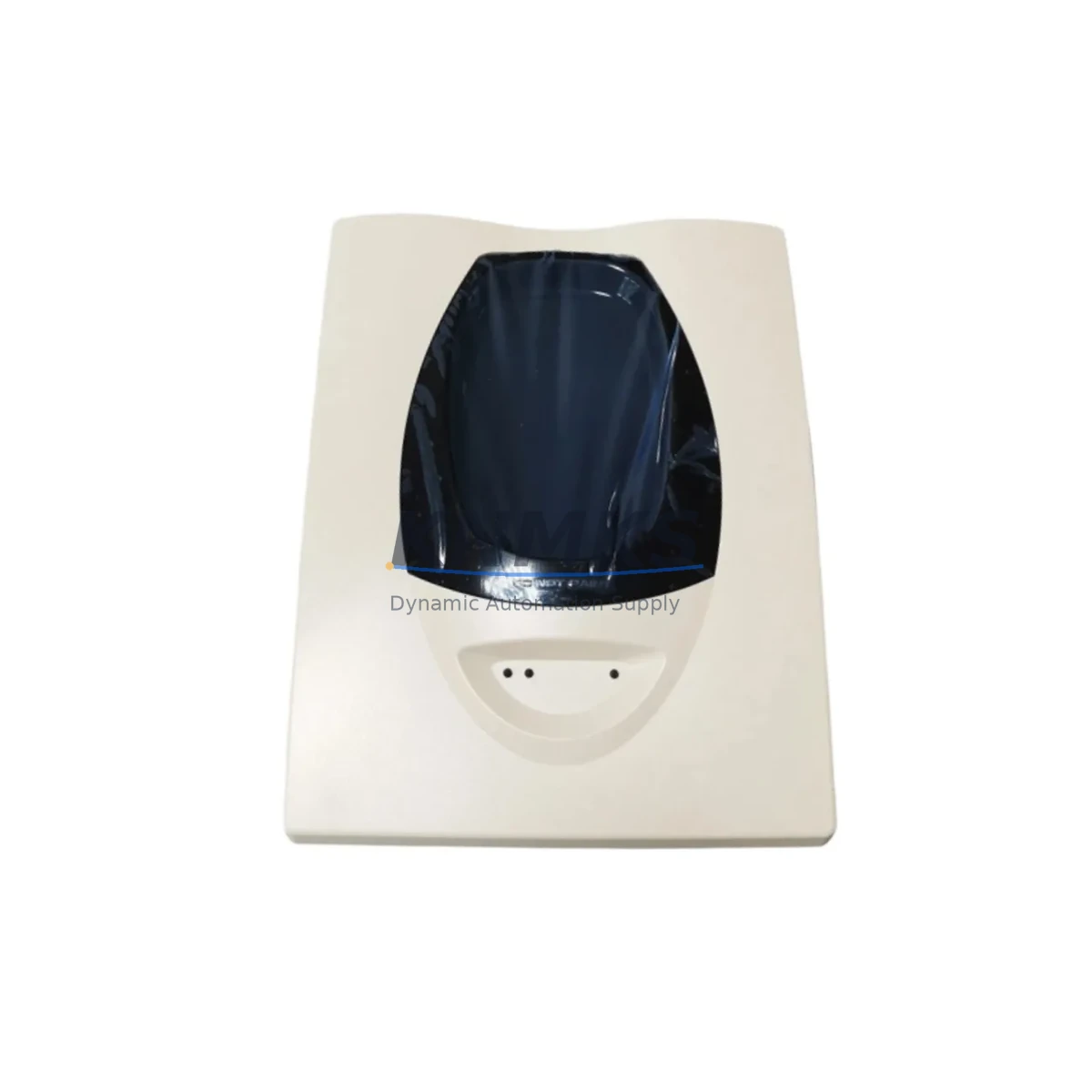
Overview
Honeywell FSB-200 Migration-Ready Beam Smoke Detector: Legacy System Retrofit and Compatible Upgrade
The Honeywell FSB-200 Reflected Beam Smoke Detector is engineered as a migration-ready solution for facilities transitioning away from discontinued or end-of-life beam detection systems. Designed to serve as a direct replacement within existing fire alarm control panel (FACP) architectures, the FSB-200 eliminates the need for full panel replacement during system modernization. Its reflective beam technology requires only a single mounting point, significantly reducing installation complexity in large open spaces such as warehouses, atriums, sports halls, and industrial process areas.
For engineers and maintenance teams managing legacy fire detection infrastructure, the FSB-200 addresses the most critical retrofit challenges: wiring compatibility, power budget alignment, and protocol continuity. The unit operates on a standard two-wire supervised loop, making it directly compatible with most conventional and addressable FACP configurations without requiring additional interface modules. Before installation, engineers should verify the panel’s available current budget, as the FSB-200 draws a defined standby and alarm current that must be accounted for within the total loop load calculation.
Terminal block wiring on the FSB-200 follows industry-standard conventions, allowing direct connection to existing field wiring in most retrofit scenarios. However, technicians should confirm wire gauge, insulation rating, and polarity markings against the original installation drawings before termination. Where legacy systems used proprietary connectors or non-standard terminal layouts — common in older System Sensor BEAM1224S or Hochiki beam detector installations — an adapter terminal block or short pigtail harness may be required to maintain wiring continuity without disturbing the existing conduit runs.
Alignment is a critical commissioning step for any reflected beam detector. The FSB-200 incorporates an integrated alignment indicator and automatic gain control (AGC) to simplify the process. During retrofit, the original reflector position should be verified for structural integrity and reflective surface condition. In many legacy installations, the reflector may have accumulated dust or suffered minor physical displacement over years of service; replacement with a compatible Honeywell reflector panel is recommended as part of the retrofit package to ensure optimal signal margin. The detector’s sensitivity can be adjusted to match the protected zone’s obscuration threshold, which is particularly important in environments with ambient particulate — such as woodworking facilities, food processing plants, or cement production areas — where false alarm management is a priority.
For facilities running integrated fire and building management systems, the FSB-200 can be incorporated into addressable loop architectures when paired with a compatible Honeywell addressable interface module. This allows the detector to report discrete fault and alarm states to the FACP, supporting zone-level diagnostics and event logging. Teams migrating from conventional zoned systems to addressable platforms — such as those upgrading to Honeywell’s Notifier NFS2-3030 or Fire-Lite MS-9600 series panels — should map the FSB-200’s address assignment during the pre-commissioning phase to avoid address conflicts with existing loop devices including manual call points, sounder bases, and input/output modules.
Installation space confirmation is essential before procurement. The FSB-200’s detector head and mounting bracket dimensions should be compared against the existing mounting surface, particularly in ceiling-mounted or wall-bracket configurations where structural fixings may already be in place. In retrofit scenarios where the original detector used a different mounting footprint, a universal mounting adapter plate can bridge the dimensional gap without requiring new core drilling or structural modification.
Firmware and software compatibility should be reviewed when the FSB-200 is integrated into a networked fire alarm system. Panel firmware versions that predate the FSB-200’s device library entry may require a firmware update to correctly identify the detector type and apply the appropriate alarm processing algorithm. This is particularly relevant for older Honeywell Galaxy or Esser IQ8 series panels where device databases are version-controlled. Coordinate with the panel manufacturer’s technical support team to confirm firmware compatibility before site commissioning.
Outgoing testing prior to shipment includes functional alarm trigger verification, sensitivity calibration confirmation, and wiring continuity checks. Each FSB-200 unit is supplied with a support terms confirmed by quotation covering manufacturing defects and component failure under normal operating conditions. Stocked inventory allows for short lead-time fulfillment, supporting urgent replacement scenarios where system downtime must be minimized.
Migration Compatibility Table
| Parameter | FSB-200 Specification | Retrofit Consideration |
|---|---|---|
| Detection Technology | Reflected infrared beam | Single-end mounting; verify reflector condition and alignment path clearance |
| Operating Voltage | 15–30 V DC (supervised loop) | Confirm FACP loop voltage and available current budget before installation |
| Wiring Interface | Two-wire supervised, standard terminal block | Compatible with most conventional loop wiring; verify polarity and wire gauge |
| Mounting | Wall or ceiling bracket, single-point | Check existing fixing positions; adapter plate may be required for legacy footprints |
| Communication Protocol | Conventional or addressable (with interface module) | Addressable integration requires compatible Honeywell interface module and address assignment |
| Sensitivity Adjustment | Adjustable obscuration threshold | Set per zone environment; critical in high-particulate industrial areas |
| Replacement Compatibility | System Sensor BEAM1224S, Hochiki beam series (with wiring verification) | Confirm terminal layout and loop supervision method before direct substitution |
| Commissioning Requirement | Alignment, sensitivity calibration, functional test | Use FSB-200 alignment indicator; test with FACP in walk-test mode |
| Support terms | 12 months | Covers manufacturing defects and component failure under normal operating conditions |
Retrofit Planning for Existing Automation Systems
A successful FSB-200 retrofit begins with a thorough site survey that documents the existing detection layout, panel loop assignments, and field wiring condition. In facilities where the fire alarm system is integrated with a building management system (BMS) or SCADA platform, the beam detector’s alarm and fault outputs may be mapped to BMS input points via relay modules or digital I/O cards. These mappings should be documented and verified post-installation to ensure alarm annunciation continuity.
Power supply adequacy is a foundational check. The existing FACP’s power supply module — whether an internal panel PSU or an external Honeywell HPFF8 or similar auxiliary power supply unit — must have sufficient residual capacity to support the FSB-200’s standby and alarm current draw alongside all other connected devices. Where power budget is marginal, a dedicated auxiliary power supply with battery backup should be added to the retrofit scope.
In multi-zone or large-site installations, the FSB-200 may be deployed alongside other detection technologies. Common co-installed devices in industrial retrofit projects include conventional heat detectors on high-temperature process lines, addressable multi-sensor detectors in control rooms, manual call points at egress routes, and sounder/strobe bases in open production areas. The FSB-200’s zone assignment should be coordinated with these devices to maintain logical alarm zone boundaries and avoid cross-zone confusion during panel programming.
For sites migrating from older panel platforms to modern addressable systems, the retrofit may also involve replacing the FACP itself. In such cases, the FSB-200 can be pre-wired and loop-tested independently before the new panel is brought online, allowing parallel commissioning that reduces total system downtime. Temporary bridging of the existing conventional loop during the panel changeover period — using a conventional-to-addressable gateway module — allows the FSB-200 to remain operational throughout the transition.
Cable management during retrofit should preserve existing conduit routes wherever possible. Where new cable runs are required — for example, to extend the loop to a relocated detector position — use fire-rated cable compliant with local building codes. Label all new terminations clearly with zone and device identifiers to support future maintenance access.
Downtime Control During System Migration
Minimizing system downtime during a beam detector retrofit requires careful pre-planning and staged execution. The recommended approach is to complete all mechanical installation — mounting bracket positioning, reflector placement, and cable termination — during a scheduled maintenance window before the live cutover. This allows the electrical connection and commissioning steps to be completed rapidly when the system is taken offline.
Before isolating the existing detector from the loop, download and archive the current FACP configuration, including zone assignments, device addresses, sensitivity settings, and event log data. This backup ensures that the original program logic can be restored immediately if the retrofit encounters an unexpected compatibility issue. For addressable systems, export the device database from the panel’s programming software before making any hardware changes.
During the cutover, isolate only the affected zone or loop segment rather than taking the entire system offline. Most modern FACPs support zone-level isolation that maintains alarm monitoring on all other zones while the retrofit zone is in maintenance mode. Coordinate with the site’s fire safety officer and, where required, notify the monitoring station of the planned maintenance period to prevent unnecessary emergency response.
After the FSB-200 is connected and powered, perform the alignment procedure using the detector’s built-in indicator before restoring the zone to normal monitoring. Conduct a functional alarm test — using a calibrated test filter or the panel’s walk-test mode — to confirm correct alarm signal transmission to the FACP and all downstream annunciators. Document the commissioning results, including alignment signal strength, sensitivity setting, and test alarm response time, for inclusion in the site’s fire system maintenance records.
Where the retrofit is part of a larger system upgrade involving multiple detectors or panel replacement, a phased cutover schedule — replacing one zone at a time over successive maintenance windows — is strongly recommended to maintain continuous fire protection coverage throughout the project duration.
Retrofit Support FAQ
Q: Is the FSB-200 a direct drop-in replacement for the System Sensor BEAM1224S?
A: The FSB-200 is functionally compatible with most installations previously using the System Sensor BEAM1224S, sharing similar operating voltage range and two-wire loop interface. However, terminal block layout and mounting bracket dimensions may differ. A wiring diagram comparison and physical mounting check are required before confirming a direct substitution. In most cases, existing field wiring can be reused with minor terminal re-labeling.
Q: What commissioning steps are required after installation?
A: Commissioning the FSB-200 requires optical alignment of the detector head to the reflector, sensitivity threshold adjustment for the protected environment, and a functional alarm test conducted with the FACP in walk-test mode. Alignment is confirmed via the detector’s built-in signal strength indicator. All commissioning results should be recorded in the site fire system log. For addressable installations, device address assignment and panel database update are additional required steps.
Q: Can the FSB-200 be used with older conventional fire alarm panels?
A: Yes. The FSB-200 operates on a standard two-wire supervised conventional loop and is compatible with most conventional FACP platforms. Verify the panel’s loop voltage output and available current capacity before connection. For panels with non-standard supervision voltages or proprietary loop protocols, consult the panel manufacturer’s compatibility documentation or contact our technical team for application guidance.
Q: What does the support terms confirmed by quotation cover, and what is the typical lead time?
A: The support terms confirmed by quotation cover manufacturing defects and component failure under normal operating and environmental conditions. It does not cover damage resulting from incorrect installation, physical impact, or exposure to conditions outside the specified operating range. Units are stocked for prompt dispatch; standard lead time is 1–3 business days for in-stock orders. Pre-shipment functional testing is conducted on each unit. Contact admin@knmks.com or +86 18359268345 for stock confirmation and order processing.
© 2026 KNMKS. All rights reserved. Original Source: https://knmks.com | Contact: admin@knmks.com | +86 18359268345
Product Identification
- Brand / Ecosystem
-
Honeywell
Honeywell - Model / Series
- FSB-200
- Product Family
- Sensors
- Availability Status
- Available on request after model and quantity confirmation
- Inquiry Type
- B2B RFQ, replacement inquiry and project spare-part request
- Pre-Quote Check
- Exact SKU, brand, series, quantity, nameplate photos and destination country are checked before quotation
System Path
Where this product fits in the KNMKS automation structure.
Specification & Inquiry Focus
- Sensor range
- Photoelectric, proximity and process sensors
- Common needs
- Output type, distance and connector
- Project support
- Machine detection and replacement inquiry
Buyer Confirmation
Information KNMKS checks before replying.
- Exact model
- FSB-200
- Brand / ecosystem
- Honeywell
- Product family
- Sensors
- Application note
- Replacement, maintenance, project build or spare-part list
- Useful photos
- Nameplate, installed unit, cabinet layout or connector side
- Delivery details
- Quantity, destination country and target schedule
Document Support
Files and notes can be confirmed during quotation.
- Product photos or nameplate confirmation when available
- Packing and delivery notes before quotation confirmation
- Support scope and delivery terms confirmed per inquiry
- Export document coordination for qualified B2B requests
Inquiry Support
- NPN/PNP, analog and digital output checking
- Connector and cable compatibility review
- Fast inquiry support for maintenance teams
What to Send Us
- Brand and exact model number: Honeywell FSB-200
- Quantity and required delivery time
- Application, replacement requirement or nameplate photo
- Destination country and shipping preference
RFQ Preparation
This is a product inquiry page built for RFQ communication.
Fast Model Check
Send this model to KNMKS for confirmation.
Include quantity, destination country and photos if this is a maintenance replacement. The inquiry will be saved with a reference number after submission.
Brand & Compatibility Note
KNMKS displays automation product information for well-known industrial brand ecosystems and compatible replacement references. Brand names are used for product identification and compatibility reference only; final availability and commercial terms are confirmed per quotation.
 Manufacturing
 Machine Tools
 Packaging
 Energy & Power
 PLCs & Controllers
 HMI & Displays
 Servo Systems
 Variable Frequency Drives