
Overview
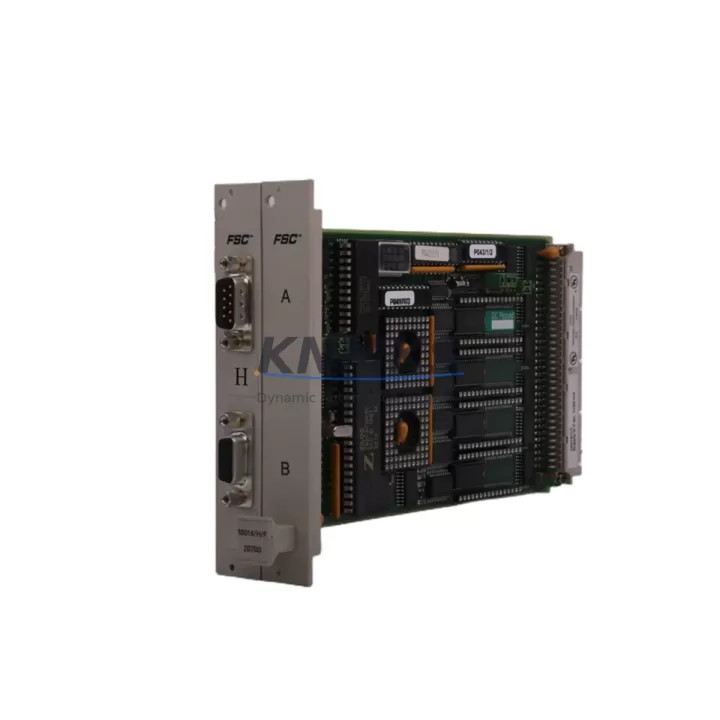
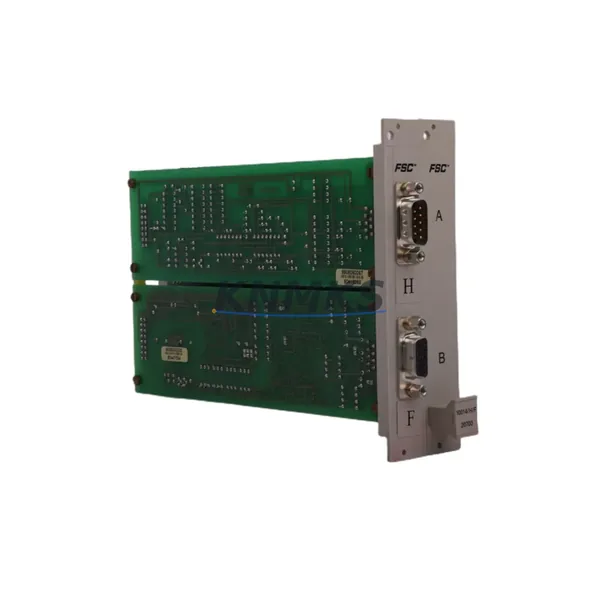
Honeywell 10014/F/F Migration-Ready Dual-Port Comm Module: Legacy System Retrofit & Compatibility Upgrade
The Honeywell 10014/F/F is a dual-port communication module engineered for seamless integration within Honeywell’s TDC 3000, TPS (Total Plant Solution), and Experion PKS distributed control system platforms. As legacy DCS installations approach end-of-life and spare part availability tightens, the 10014/F/F has become a critical component in retrofit projects, discontinued model replacements, and control cabinet modernization programs across refining, petrochemical, power generation, and continuous process industries.
This module supports the Local Control Network (LCN) and Universal Control Network (UCN) communication architectures that form the backbone of Honeywell’s legacy automation hierarchy. Its dual-port design provides redundant communication paths, ensuring that a single link failure does not interrupt process control continuity — a requirement that is non-negotiable in high-availability plant environments. When replacing a failed or end-of-life communication module, engineers must verify that the replacement unit carries the correct firmware revision compatible with the installed NIM (Network Interface Module) and AM (Application Module) firmware levels already running in the rack.
Before committing to a retrofit using the 10014/F/F, the engineering team should conduct a structured pre-replacement audit. Power budget verification is the first step: the existing power supply module — typically a Honeywell PM (Power Module) installed in the same HPM (High-Performance Process Manager) or LCN node enclosure — must have sufficient headroom to support the replacement module without triggering an over-current condition. Terminal wiring on the backplane connector must be inspected for corrosion, pin damage, or non-standard field modifications made during previous maintenance cycles. Backplane slot addressing must be confirmed against the current system database to ensure the replacement module is recognized at the correct logical address without requiring a full database reload.
Program compatibility is another key checkpoint. The control strategies, regulatory control blocks, and sequence logic stored in the Application Module must remain intact during the swap. In most TDC 3000 and TPS environments, the AM retains its loaded database independently of the communication module, but the engineer should confirm that no active downloads or checkpoint saves are in progress before removing the failed unit. HMI screen assignments linked to the communication path served by the 10014/F/F — including operator displays on the Universal Station (US) or GUS (Global User Station) — should be documented and verified post-replacement to confirm that all process variable tags are resolving correctly.
Communication link integrity must be validated after installation. The LCN or UCN cable connections at both ports should be checked for proper termination resistance and signal levels. In systems where the 10014/F/F interfaces with a Honeywell Data Hiway Gateway or a third-party MODBUS/OPC bridge, the communication parameters — baud rate, node address, and protocol timeout settings — must be re-confirmed. Installation space within the node enclosure should be measured before ordering: the 10014/F/F occupies a standard HPM card slot, but some older enclosures with non-standard card guides or custom cable management may require minor mechanical adaptation.
Firmware version alignment is critical. The 10014/F/F must run a firmware version that is compatible with the NIM firmware and the overall system software release installed on the Honeywell Engineering Workstation (EWS). Mismatched firmware can result in the module failing to join the network or generating spurious diagnostic alarms. KNMKS verifies firmware revision on all units prior to shipment and provides documentation upon request.
Migration Compatibility Table
| Parameter | Details |
|---|---|
| Compatible Platforms | Honeywell TDC 3000, TPS, Experion PKS (LCN/UCN nodes) |
| Module Type | Dual-Port Communication Module |
| Network Architecture | LCN (Local Control Network) / UCN (Universal Control Network) |
| Slot Compatibility | Standard HPM / LCN node card slot |
| Backplane Interface | Honeywell proprietary backplane connector (verify pin condition before installation) |
| Power Requirement | Supplied via backplane PM; verify power budget before installation |
| Firmware Compatibility | Must match installed NIM and AM firmware revision; verified pre-shipment |
| Communication Ports | Dual redundant ports for LCN/UCN link continuity |
| Replacement Scope | Direct replacement for failed or discontinued 10014/F/F units in existing racks |
| Commissioning Requirement | Node address confirmation, firmware check, HMI tag verification, link test |
| Support terms | support terms confirmed by quotation — all units tested before shipment |
Retrofit Planning for Existing Automation Systems
A successful retrofit involving the 10014/F/F rarely occurs in isolation. In most plant environments, the communication module replacement is part of a broader control system stabilization or upgrade initiative. Engineers sourcing the 10014/F/F frequently need to address adjacent components in the same node enclosure or control cabinet simultaneously.
The Honeywell PM (Power Module) installed in the same HPM enclosure should be inspected and load-tested if it has not been replaced within the past five to seven years. An aging power module operating near its rated capacity is a common root cause of intermittent communication faults that are incorrectly attributed to the communication module itself. Similarly, the Honeywell NIM (Network Interface Module) — which manages the LCN segment to which the 10014/F/F connects — should be confirmed as running a compatible and current firmware version.
For plants migrating from TDC 3000 toward Experion PKS, the retrofit path often involves introducing a Honeywell C300 Controller alongside the existing HPM infrastructure during a phased transition. In this scenario, the 10014/F/F continues to serve the legacy LCN nodes while the new C300 handles expanded I/O and advanced control strategies. I/O expansion in the legacy rack may involve Honeywell HLAI (High-Level Analog Input) or LLAI (Low-Level Analog Input) modules that share the same backplane and power budget as the communication module — making the power audit step even more important.
HMI continuity is another planning consideration. Operators working on Honeywell GUS (Global User Station) or legacy Universal Station displays must not experience tag resolution failures during or after the module swap. The engineering team should prepare a pre-tested HMI snapshot and confirm all process variable displays are live within the first 15 minutes of bringing the replacement module online. For sites using a Honeywell Application Module (AM) to execute regulatory control, the AM’s checkpoint file should be saved and backed up to the Engineering Workstation before the maintenance window begins.
Where the control system interfaces with field devices via HART or Foundation Fieldbus, the signal path through the I/O modules and into the LCN via the 10014/F/F should be traced and documented. Any signal isolators or marshalling panels in the loop should be inspected for terminal integrity as part of the same maintenance window, avoiding a return visit for a secondary fault.
Downtime Control During System Migration
Minimizing unplanned downtime is the primary operational constraint in any DCS communication module replacement. For the 10014/F/F, the recommended approach is a structured hot-swap procedure executed during a planned maintenance window, with the process unit placed in manual control or a safe hold state before the module is removed.
The dual-port architecture of the 10014/F/F provides an inherent advantage: in systems where both LCN ports are active and the network is configured for redundancy, a controlled switchover to the secondary path can be initiated before the primary module is removed, maintaining network continuity for other nodes on the same LCN segment. This approach eliminates the communication blackout period that would otherwise affect all devices sharing the segment.
Before the maintenance window, the engineering team should prepare a commissioning checklist that includes: current firmware version of the unit being replaced, node address and slot position, backplane connector condition, power module load reading, HMI tag list for affected displays, and a post-installation communication link test procedure. Having a pre-tested replacement unit on the bench — with firmware already verified — reduces the active maintenance window to the physical swap and network join sequence, typically 20 to 45 minutes for an experienced DCS technician.
Post-installation, the module should be observed through at least one full process scan cycle before returning the unit to automatic control. Diagnostic LEDs on the 10014/F/F provide immediate feedback on network join status and port activity. Any persistent fault indication should be investigated against the firmware compatibility matrix before escalating to a full system diagnostic.
KNMKS ships all 10014/F/F units with pre-shipment functional testing documentation, reducing the risk of receiving a non-functional replacement and extending the downtime window unexpectedly. Units are held in climate-controlled storage to preserve connector and board integrity.
Retrofit Support FAQ
Q1: Is the Honeywell 10014/F/F a direct drop-in replacement for the original unit in my TDC 3000 rack?
In most cases, yes — the 10014/F/F is designed for the standard HPM/LCN card slot and uses the Honeywell proprietary backplane interface. However, you must verify that the firmware revision of the replacement unit is compatible with your installed NIM and AM firmware levels. KNMKS provides firmware documentation with each unit and can advise on compatibility based on your system software release.
Q2: What commissioning steps are required after installing the replacement module?
After physical installation, confirm the node address is recognized in the system database, verify both LCN/UCN port link indicators are active, check HMI tag resolution for all process variables served by this node, and run a communication link test from the Engineering Workstation. If the system uses a Data Hiway Gateway or OPC bridge, re-confirm communication parameters on the gateway side.
Q3: Can I install the 10014/F/F while the rest of the LCN segment remains in service?
Yes, if your system is configured for dual-port LCN redundancy, you can switch traffic to the secondary port before removing the failed module, keeping other nodes on the segment online. The affected node should be placed in manual control or a safe hold state before the swap. Always follow your site’s Management of Change (MOC) and permit-to-work procedures.
Q4: What support terms and testing does KNMKS provide with the 10014/F/F?
All units supplied by KNMKS carry a support terms confirmed by quotation from the date of shipment. Each unit undergoes functional testing prior to dispatch, and test documentation is available upon request. Units are stored in climate-controlled conditions to maintain board and connector integrity. In-stock units typically ship within 1–3 business days. Contact admin@knmks.com or +86 18359268345 for availability and lead time confirmation.
© 2026 KNMKS. All rights reserved.
Original Source: https://knmks.com
Contact: admin@knmks.com | +86 18359268345
Product Identification
- Brand / Ecosystem
-
Honeywell
Honeywell - Model / Series
-
10014/F/F
Experion PKS Series - Product Family
- PLCs & Controllers
- Availability Status
- Available on request after model and quantity confirmation
- Inquiry Type
- B2B RFQ, replacement inquiry and project spare-part request
- Pre-Quote Check
- Exact SKU, brand, series, quantity, nameplate photos and destination country are checked before quotation
System Path
Where this product fits in the KNMKS automation structure.
Specification & Inquiry Focus
- Control platform
- PLC, PAC and modular controllers
- Common needs
- CPU, rack, power and I/O expansion
- Project support
- Replacement, cabinet build and maintenance
Buyer Confirmation
Information KNMKS checks before replying.
- Exact model
- 10014/F/F
- Brand / ecosystem
- Honeywell
- Product family
- PLCs & Controllers
- Application note
- Replacement, maintenance, project build or spare-part list
- Useful photos
- Nameplate, installed unit, cabinet layout or connector side
- Delivery details
- Quantity, destination country and target schedule
Document Support
Files and notes can be confirmed during quotation.
- Product photos or nameplate confirmation when available
- Packing and delivery notes before quotation confirmation
- Support scope and delivery terms confirmed per inquiry
- Export document coordination for qualified B2B requests
Inquiry Support
- Model cross-checking before quotation
- CPU, power, rack and expansion module matching
- Support for replacement and project inquiry
What to Send Us
- Brand and exact model number: Honeywell 10014/F/F
- Quantity and required delivery time
- Application, replacement requirement or nameplate photo
- Destination country and shipping preference
RFQ Preparation
This is a product inquiry page built for RFQ communication.
Fast Model Check
Send this model to KNMKS for confirmation.
Include quantity, destination country and photos if this is a maintenance replacement. The inquiry will be saved with a reference number after submission.
Brand & Compatibility Note
KNMKS displays automation product information for well-known industrial brand ecosystems and compatible replacement references. Brand names are used for product identification and compatibility reference only; final availability and commercial terms are confirmed per quotation.
 Manufacturing
 Machine Tools
 Packaging
 Energy & Power
 HMI & Displays
 Servo Systems
 Variable Frequency Drives
 Sensors