
Overview
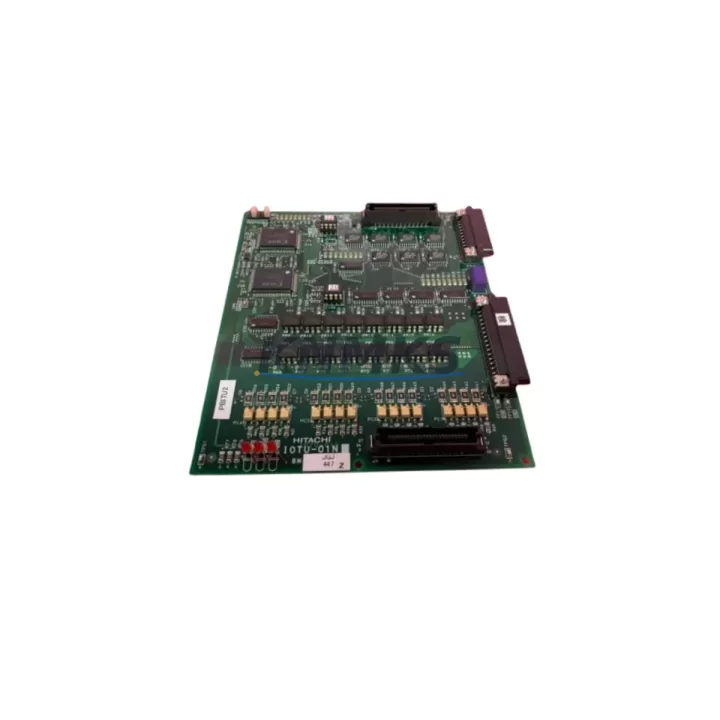
HITACHI LCE250A Migration-Ready Logic Board for LCE Series: Legacy Elevator System Modernization
The HITACHI LCE250A is a migration-ready elevator logic control PCB engineered for direct replacement within the LCE Series control platform. As elevator OEMs phase out legacy boards and spare part availability narrows, facilities managers and elevator maintenance contractors increasingly face the challenge of sourcing reliable, tested replacements that preserve existing wiring infrastructure, program logic, and HMI screen configurations. The LCE250A addresses this challenge with a form-factor-compatible design that minimizes retrofit complexity and reduces planned downtime to the shortest possible window.
Whether you are managing a single-car residential installation or a multi-car commercial building with grouped LCE Series controllers, the LCE250A provides a verified upgrade path that does not require full controller replacement. The board retains compatibility with the original terminal block layout, allowing field technicians to transfer wiring harnesses directly without re-labeling or re-routing conductors. Power supply requirements align with the standard 24 VDC logic rail used across the LCE Series, so the existing HITACHI PS-LCE power supply module can remain in service without modification.
Migration Compatibility Table
| Parameter | Legacy Board (LCE Series) | LCE250A Replacement | Retrofit Note |
|---|---|---|---|
| Form Factor | Standard LCE PCB footprint | Identical footprint | Direct drop-in; no bracket modification |
| Terminal Block Layout | OEM LCE wiring harness | Fully compatible | Transfer harness directly; verify torque spec |
| Logic Power Supply | 24 VDC (PS-LCE module) | 24 VDC | Existing PS-LCE module retained |
| Communication Interface | Serial / CAN bus (LCE platform) | Compatible | Verify baud rate and node address settings |
| Backplane / Rack Interface | LCE Series backplane connector | Compatible | Inspect backplane pins before seating board |
| Module Address | DIP switch configurable | DIP switch configurable | Match original address before power-on |
| Firmware Version | OEM factory firmware | Pre-loaded compatible firmware | Confirm version with controller revision label |
| HMI Screen Compatibility | LCE Series HMI panel | Compatible | No HMI screen reprogramming required |
| Installation Space | Standard LCE control cabinet | Identical clearance | No cabinet modification required |
| Outgoing Test | — | 100% function-tested before shipment | Test report available on request |
| Support terms | — | support terms confirmed by quotation | Covers manufacturing defects; DOA replacement |
Retrofit Planning for Existing Automation Systems
A successful LCE250A retrofit begins well before the board arrives on site. The first step is a full audit of the existing control cabinet: document the current DIP switch positions on the logic board, photograph all terminal block wiring, and record the firmware revision printed on the original board’s label. This information ensures the replacement board is configured identically before power is restored, eliminating the most common source of post-retrofit faults.
In multi-car grouped installations, the LCE Series group controller communicates with individual car controllers over a serial or CAN bus link. Before replacing the LCE250A in any car, verify that the group controller — often a HITACHI GC-LCE or equivalent group control module — is operating normally and that the communication link is stable. A faulty group controller can mask logic board faults and lead to misdiagnosis. Similarly, if the installation includes a HITACHI I/O expansion module for additional floor calls or auxiliary outputs, confirm that the I/O module’s address settings do not conflict with the replacement board’s node address.
Power capacity is a critical checkpoint. Measure the output voltage and current capacity of the existing PS-LCE power supply module under load before committing to the board swap. Aging power supplies operating near their rated capacity can cause intermittent resets on a new logic board, which are difficult to diagnose in the field. If the power supply shows signs of capacitor aging or output ripple, replacing it alongside the LCE250A — rather than after a second call-back — is the more cost-effective approach.
For sites where the elevator HMI panel displays floor position, door status, and fault codes, the LCE250A’s communication protocol compatibility means that existing HMI screen configurations and floor label mappings are preserved. Technicians do not need to re-enter floor count parameters or re-map call button assignments, which significantly reduces commissioning time. If the site uses a HITACHI programming cable (such as the PC-LCE interface) for parameter backup and restore, use it to back up the original controller parameters before removing the old board, then restore them to the LCE250A after installation.
Signal isolation is another consideration in older installations where long cable runs between the machine room and shaft sensors introduce electrical noise. If the existing installation includes signal isolators on safety circuit inputs or door zone sensor lines, verify that these isolators are functioning correctly before attributing any post-retrofit faults to the new board. Replacing a logic board without addressing upstream signal quality issues will not resolve intermittent safety circuit trips.
Downtime Control During System Migration
Minimizing elevator downtime during a logic board replacement requires a structured approach that separates preparation, execution, and verification into distinct phases. The preparation phase — auditing wiring, backing up parameters, and pre-configuring the LCE250A’s DIP switches to match the original board — should be completed before the elevator is taken out of service. When the replacement window opens, the physical swap can typically be completed within 30 to 60 minutes for a single-car installation, provided all preparatory steps are done.
During the swap, work systematically through the terminal blocks using the wiring photographs taken during the audit phase. Reconnect each group of terminals in the same sequence they were disconnected, and verify torque on all screw terminals before applying power. Loose terminals are a leading cause of intermittent faults that appear only under vibration or thermal cycling — conditions that are common in elevator machine rooms.
After power is restored, perform a full floor-to-floor run test before returning the elevator to passenger service. Verify that all floor calls register correctly, that door open and close cycles complete within the programmed time limits, and that the HMI panel displays the correct floor position throughout the run. Check the fault log on the controller for any new entries generated during the first power-on cycle. A clean fault log after the initial run test is the strongest indicator that the retrofit has been completed successfully.
For buildings where elevator downtime directly impacts operations — hospitals, logistics facilities, or high-rise commercial properties — consider scheduling the retrofit during off-peak hours and pre-positioning a spare LCE250A on site before beginning work. Having a second tested board available eliminates the risk of extended downtime if the first board reveals an unexpected compatibility issue during commissioning. KNMKS maintains stock of the LCE250A and can arrange expedited dispatch to support time-critical retrofit projects.
Retrofit Support FAQ
Q: Is the LCE250A a direct replacement for all variants of the HITACHI LCE Series logic board?
A: The LCE250A is compatible with the standard LCE Series control platform. If your installation uses a variant with additional I/O or a non-standard communication option, please share your original board’s part number and firmware revision with our technical team before ordering. We will confirm compatibility and, where necessary, identify the correct replacement variant.
Q: Does the LCE250A ship pre-tested, and is a test report available?
A: Yes. Every LCE250A unit undergoes 100% functional testing on a dedicated LCE Series test bench before shipment. A test report confirming power-on, communication, I/O, and logic function results is available on request. This documentation supports your incoming inspection process and provides a baseline for any future support requests.
Q: What wiring changes are required when installing the LCE250A?
A: In a standard LCE Series installation, no wiring changes are required. The LCE250A uses the same terminal block layout and connector positions as the original board. Photograph all wiring before removal, transfer the harness directly, and verify terminal torque after reconnection. If your installation has been modified from the OEM wiring standard, contact our support team for guidance before proceeding.
Q: What does the support terms confirmed by quotation cover, and how is a support terms claim processed?
A: The support terms confirmed by quotation cover manufacturing defects and DOA (dead on arrival) units. It does not cover damage caused by incorrect installation, overvoltage, or physical impact. To initiate a support terms claim, contact admin@knmks.com with your order number, a description of the fault, and any available fault log data from the controller. We will arrange a replacement dispatch or repair within the agreed service window.
© 2026 KNMKS. All rights reserved.
Original Source: https://knmks.com
Contact: admin@knmks.com | +86 18359268345
Product Identification
- Brand / Ecosystem
-
HITACHI
Assorted Brands - Model / Series
-
LCE250A
Assorted Series - Product Family
- Other Components
- Availability Status
- Available on request after model and quantity confirmation
- Inquiry Type
- B2B RFQ, replacement inquiry and project spare-part request
- Pre-Quote Check
- Exact SKU, brand, series, quantity, nameplate photos and destination country are checked before quotation
System Path
Where this product fits in the KNMKS automation structure.
Specification & Inquiry Focus
- Component range
- Breakers, terminals and cabinet accessories
- Common needs
- Model, photo and installation requirement
- Project support
- Maintenance and mixed spare-part inquiry
Buyer Confirmation
Information KNMKS checks before replying.
- Exact model
- LCE250A
- Brand / ecosystem
- HITACHI
- Product family
- Other Components
- Application note
- Replacement, maintenance, project build or spare-part list
- Useful photos
- Nameplate, installed unit, cabinet layout or connector side
- Delivery details
- Quantity, destination country and target schedule
Document Support
Files and notes can be confirmed during quotation.
- Product photos or nameplate confirmation when available
- Packing and delivery notes before quotation confirmation
- Support scope and delivery terms confirmed per inquiry
- Export document coordination for qualified B2B requests
Inquiry Support
- Mixed automation spare parts inquiry
- Cabinet component and accessory support
- Model identification from photos or labels
What to Send Us
- Brand and exact model number: HITACHI LCE250A
- Quantity and required delivery time
- Application, replacement requirement or nameplate photo
- Destination country and shipping preference
RFQ Preparation
This is a product inquiry page built for RFQ communication.
Fast Model Check
Send this model to KNMKS for confirmation.
Include quantity, destination country and photos if this is a maintenance replacement. The inquiry will be saved with a reference number after submission.
Brand & Compatibility Note
KNMKS displays automation product information for well-known industrial brand ecosystems and compatible replacement references. Brand names are used for product identification and compatibility reference only; final availability and commercial terms are confirmed per quotation.
 Manufacturing
 Machine Tools
 Packaging
 Energy & Power
 PLCs & Controllers
 HMI & Displays
 Servo Systems
 Variable Frequency Drives