
Overview
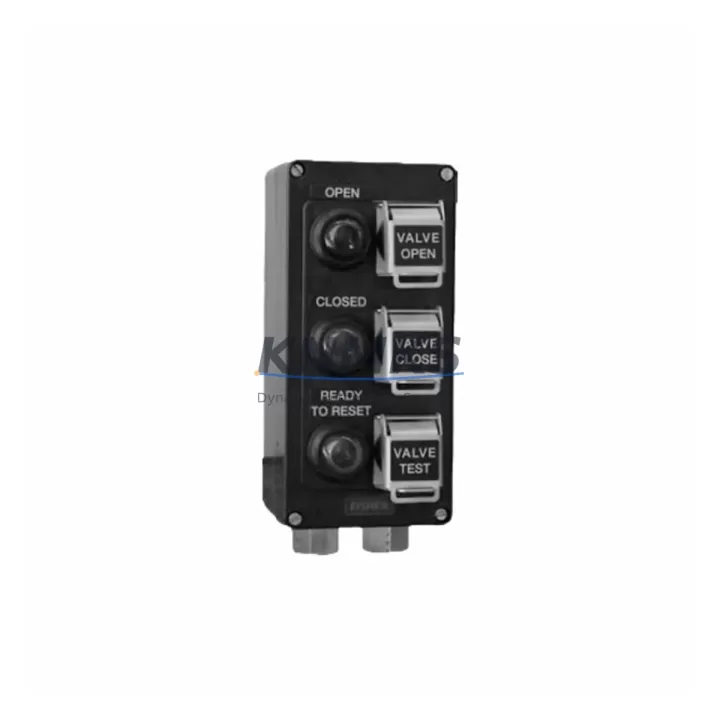
EXPERT LCP-100 Migration-Ready Local Control Panel for Legacy Systems
The EXPERT LCP-100 is a migration-ready local control panel engineered for direct replacement of end-of-life and discontinued LCP Series units in legacy automation environments. Designed to minimize retrofit risk and reduce planned downtime, the LCP-100 delivers verified electrical and mechanical compatibility with existing control cabinet layouts, terminal wiring configurations, and operator interface requirements. Whether your facility is executing a scheduled outage upgrade or responding to an emergency spare parts shortage, the LCP-100 is pre-tested, warehouse-stocked, and ready for fast global dispatch.
Industrial facilities operating aging local control panels face compounding risks: discontinued spare parts, degraded enclosure integrity, obsolete display technologies, and incompatible communication interfaces. The EXPERT LCP-100 addresses each of these failure points with a purpose-built replacement module that preserves existing wiring topology while introducing modern reliability standards. Before installation, engineering teams should confirm power supply capacity at the panel feed — the LCP-100 operates within standard 24 VDC or 110/220 VAC supply ranges common to LCP Series installations, but actual draw must be verified against the existing distribution board or UPS capacity.
Terminal block compatibility is a critical checkpoint during any local control panel retrofit. The LCP-100 maintains the same terminal pitch and labeling convention as legacy LCP Series units, reducing the need for rewiring or adapter harnesses. However, field teams should cross-reference the existing terminal schedule against the LCP-100 wiring diagram to confirm signal assignments for start/stop commands, fault outputs, status indicators, and any analog feedback loops. Where the original panel included a dedicated signal isolator module between the field device and the control input, the same isolator should be retained in the new installation to preserve signal integrity and ground loop protection.
For systems where the LCP-100 interfaces with a programmable logic controller — such as a SIMATIC S7-300 CPU or an ABB AC500 PM series controller — the communication link must be validated before commissioning. If the legacy panel used a hardwired discrete I/O connection, the LCP-100 supports direct substitution without protocol changes. In installations where a PROFIBUS DP or Modbus RTU link was used for status reporting to the supervisory layer, the existing network address and baud rate settings must be preserved in the replacement unit’s configuration. Failure to match the original node address will cause communication faults at the SCADA or DCS level, including Honeywell Experion PKS or Yokogawa CENTUM VP historian nodes that rely on continuous panel status data.
HMI screen updates are frequently overlooked during local control panel replacements. If the facility operates a Siemens SIMATIC HMI or a Schneider Electric Magelis panel with graphical representations of the LCP-100’s status outputs, the tag mapping must be verified after replacement. Status bits for RUN, FAULT, LOCAL/REMOTE mode, and EMERGENCY STOP should be confirmed against the HMI project database before returning the system to automatic operation. Where the original LCP Series panel included a built-in pilot light array or selector switch assembly, the LCP-100’s equivalent I/O points should be mapped to the same PLC memory addresses to avoid logic discrepancies.
Installation space confirmation is mandatory before ordering. The LCP-100 shares the standard LCP Series panel footprint, but control cabinet depth, door clearance, and DIN rail mounting rail spacing should be measured on-site. In retrofit scenarios where the original panel was surface-mounted rather than DIN-rail-mounted, a mounting adapter plate may be required. Firmware version compatibility should also be checked if the LCP-100 is being integrated into a system that uses a digital fieldbus for parameter exchange — the installed firmware must support the same function block versions used by the host controller.
Migration Compatibility Table
| Parameter | Legacy LCP Series | EXPERT LCP-100 | Retrofit Note |
|---|---|---|---|
| Power Supply Input | 24 VDC / 110–220 VAC | 24 VDC / 110–220 VAC | Verify UPS/distribution board capacity before swap |
| Terminal Pitch | Standard LCP Series pitch | Matched to LCP Series | Cross-reference terminal schedule; no rewiring expected |
| Mounting | DIN rail / surface mount | DIN rail standard | Adapter plate may be required for surface-mount cabinets |
| Communication Interface | Discrete I/O / PROFIBUS DP / Modbus RTU | Discrete I/O / PROFIBUS DP / Modbus RTU | Preserve original node address and baud rate settings |
| HMI Tag Mapping | Legacy tag database | Compatible I/O point layout | Verify RUN, FAULT, LOCAL/REMOTE, E-STOP tag assignments |
| Firmware | Legacy LCP firmware | Current EXPERT firmware | Confirm function block version compatibility with host PLC |
| Installation Space | Standard LCP footprint | Matched footprint | Measure cabinet depth and door clearance on-site |
| Pre-Shipment Testing | N/A (legacy stock) | 100% factory tested | Test report available on request |
| Support terms | Expired / not available | 12 months from dispatch | Covers manufacturing defects and functional failure |
Retrofit Planning for Existing Automation Systems
A successful LCP-100 retrofit begins with a complete bill-of-materials audit of the existing control cabinet. In most LCP Series installations, the local control panel operates alongside a dedicated 24 VDC power supply module, a terminal block distribution assembly, and one or more I/O expansion modules connected to the host PLC rack. Before the LCP-100 is installed, the power supply module output voltage and current rating should be confirmed to support the replacement panel’s inrush and steady-state load. If the existing power supply is also end-of-life, a concurrent replacement with a compatible 24 VDC DIN rail power supply unit is recommended to avoid a secondary failure during the commissioning phase.
In systems where the LCP-100 connects to a remote I/O rack — such as an ET 200S distributed I/O station or an ABB S800 I/O module cluster — the rack backplane addressing must be verified before the new panel is powered on. Incorrect slot addressing will cause the host controller to generate a hardware fault and may trigger an unplanned process shutdown. A programming cable connection to the host PLC is recommended during commissioning to monitor the I/O status in real time and confirm that all discrete inputs and outputs from the LCP-100 are correctly mapped in the control program.
Where the legacy installation included a signal isolator between the LCP panel output and a sensitive analog input card, the isolator should be retained and its output range verified against the replacement panel’s signal specification. In some LCP Series configurations, a dedicated communication module — such as a PROFIBUS DP slave adapter or a Modbus RTU gateway — was installed in the cabinet to bridge the panel’s local interface to the plant network. This communication module should be retained and its configuration backed up before the panel swap to ensure seamless network reintegration after the LCP-100 is commissioned.
For facilities using a Schneider Electric Altivar variable frequency drive in the same control loop as the LCP panel, the drive’s local/remote switching logic must be tested after the panel replacement to confirm that the LCP-100’s LOCAL/REMOTE selector output correctly enables and disables the drive’s remote control input. Similarly, where a Fuji FRENIC series drive or a GE Mark VI turbine control module receives start/stop commands from the local panel, the command signal timing and logic polarity should be verified in the PLC program before returning the system to automatic operation.
Downtime Control During System Migration
Minimizing unplanned downtime during a local control panel replacement requires a structured pre-outage preparation protocol. Before the scheduled maintenance window, the engineering team should complete a full backup of the host PLC program, including all data blocks, function blocks, and hardware configuration files. The HMI project database should also be archived, and a screenshot record of all relevant process screens should be taken to serve as a reference during post-installation verification.
During the panel swap, the original terminal wiring should be documented with photographs before any conductors are disconnected. Each wire should be labeled with its terminal number and signal function before removal to ensure accurate reconnection to the LCP-100’s terminal block. Where the original panel used ferrule-terminated conductors, the same ferrule type and size should be used on the replacement unit to maintain connection integrity and comply with the facility’s electrical standards.
After the LCP-100 is installed and wired, a cold commissioning check should be performed before the system is energized. This includes verifying that all terminal connections are secure, that the power supply polarity is correct, and that no short circuits exist between the panel’s output terminals and the cabinet earth rail. Once the panel is powered on, the PLC program should be placed in monitor mode and each discrete I/O point from the LCP-100 should be exercised individually to confirm correct operation before the process is returned to automatic control. This structured approach typically allows a complete LCP Series panel replacement to be completed within a four-hour maintenance window, preserving process continuity and reducing the risk of post-commissioning faults.
The EXPERT LCP-100 is dispatched from multi-region stock locations to support both emergency replacement and scheduled outage scenarios. All units undergo 100% pre-shipment functional testing and are covered by a support terms confirmed by quotation from the date of dispatch, covering manufacturing defects and functional failure under normal operating conditions.
Retrofit Support FAQ
Q: Is the EXPERT LCP-100 a direct drop-in replacement for all LCP Series local control panels?
A: The LCP-100 is designed as a migration-ready replacement for standard LCP Series panels. Terminal pitch, mounting footprint, and I/O point layout are matched to the LCP Series specification. However, site-specific wiring schedules, power supply ratings, and communication configurations should be verified before installation. Our technical team can review your existing panel documentation to confirm compatibility before dispatch.
Q: What pre-shipment testing does the LCP-100 undergo before delivery?
A: Every LCP-100 unit is subjected to 100% functional testing at our facility before dispatch. Testing covers power supply input range, discrete I/O operation, communication interface function, and enclosure integrity. A test report is available on request for quality assurance documentation purposes.
Q: Can the LCP-100 be commissioned without interrupting the host PLC program?
A: In most LCP Series retrofit scenarios, the host PLC program does not require modification if the LCP-100’s I/O point layout and communication address are configured to match the original panel. A programming cable connection during commissioning is recommended to monitor I/O status in real time and confirm correct tag mapping before returning the system to automatic operation.
Q: What does the support terms confirmed by quotation cover, and what is the stock availability?
A: The support terms confirmed by quotation cover manufacturing defects and functional failure under normal operating conditions from the date of dispatch. KNMKS maintains multi-region stock of the LCP-100 to support both emergency replacement and scheduled outage requirements. Standard lead time for in-stock units is 3–5 business days for international dispatch. Contact our team for current stock status and expedited shipping options.
© 2026 KNMKS. All rights reserved.
Original Source: https://knmks.com
Contact: admin@knmks.com | +86 18359268345
Product Identification
- Brand / Ecosystem
-
Other Brands
Assorted Brands - Model / Series
-
LCP-100
Assorted Series - Product Family
- Relays & Interface
- Availability Status
- Available on request after model and quantity confirmation
- Inquiry Type
- B2B RFQ, replacement inquiry and project spare-part request
- Pre-Quote Check
- Exact SKU, brand, series, quantity, nameplate photos and destination country are checked before quotation
System Path
Where this product fits in the KNMKS automation structure.
Specification & Inquiry Focus
- Interface range
- Relays, isolation and signal modules
- Common needs
- Coil voltage and contact rating
- Project support
- Panel wiring and signal protection
Buyer Confirmation
Information KNMKS checks before replying.
- Exact model
- LCP-100
- Brand / ecosystem
- Other Brands
- Product family
- Relays & Interface
- Application note
- Replacement, maintenance, project build or spare-part list
- Useful photos
- Nameplate, installed unit, cabinet layout or connector side
- Delivery details
- Quantity, destination country and target schedule
Document Support
Files and notes can be confirmed during quotation.
- Product photos or nameplate confirmation when available
- Packing and delivery notes before quotation confirmation
- Support scope and delivery terms confirmed per inquiry
- Export document coordination for qualified B2B requests
Inquiry Support
- Relay base and module matching
- Signal isolation and protection options
- Panel accessory inquiry support
What to Send Us
- Brand and exact model number: Other Brands LCP-100
- Quantity and required delivery time
- Application, replacement requirement or nameplate photo
- Destination country and shipping preference
RFQ Preparation
This is a product inquiry page built for RFQ communication.
Fast Model Check
Send this model to KNMKS for confirmation.
Include quantity, destination country and photos if this is a maintenance replacement. The inquiry will be saved with a reference number after submission.
Brand & Compatibility Note
KNMKS displays automation product information for well-known industrial brand ecosystems and compatible replacement references. Brand names are used for product identification and compatibility reference only; final availability and commercial terms are confirmed per quotation.
 Manufacturing
 Machine Tools
 Packaging
 Energy & Power
 PLCs & Controllers
 HMI & Displays
 Servo Systems
 Variable Frequency Drives