
Overview
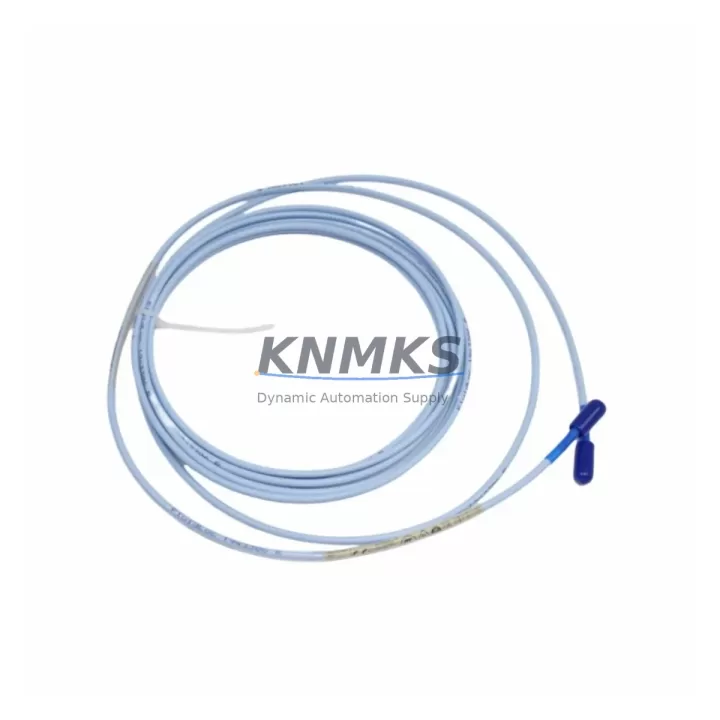
Bently Nevada AS3100S2-Z0 Migration-Ready IEPE Accelerometer: Legacy System Retrofit & Compatibility Upgrade
The Bently Nevada AS3100S2-Z0 is a migration-ready IEPE (Integrated Electronics Piezo-Electric) accelerometer engineered to serve as a direct replacement for discontinued AS3100 Series sensors deployed across legacy rotating machinery monitoring systems. As industrial facilities face increasing pressure to modernize aging condition monitoring infrastructure — including Bently Nevada 3300 Series rack-based systems and ADRE 408 DSPi data acquisition platforms — the AS3100S2-Z0 provides a validated, field-proven upgrade path that minimizes engineering risk and reduces unplanned downtime during the transition.
Facilities operating legacy Bently Nevada 7200 Series proximity systems or transitioning from older eddy-current sensor arrays to IEPE-based vibration monitoring will find the AS3100S2-Z0 particularly well-suited for integration into existing terminal blocks and junction boxes without requiring full cabinet redesign. The sensor’s 100 mV/g sensitivity and low-noise signal output are compatible with most modern vibration monitoring modules, including those used in Bently Nevada System 1 software environments, enabling seamless data continuity across the migration boundary.
Before committing to a retrofit plan, engineers should verify several critical parameters: the available constant current excitation (typically 2–10 mA) supplied by the monitoring module, the existing coaxial cable impedance and run length, the terminal block wiring configuration (single-ended vs. differential), and the frequency response range required by the application (the AS3100S2-Z0 covers 0.5 Hz to 10 kHz ±3 dB). Where the legacy system used a different connector standard, field-installable MIL-C-5015 or M12 adapters can be used to maintain wiring continuity without re-pulling cable runs.
For facilities integrating the AS3100S2-Z0 into a Bently Nevada 3500 Series rack, the sensor connects directly to the 3500/42M Proximitor/Seismic Monitor module, which accepts IEPE inputs and provides the necessary signal conditioning. Engineers should confirm the module’s input impedance and bias voltage settings match the AS3100S2-Z0 specifications prior to energizing the loop. Where a Bently Nevada TK-3 or TK-81 proximitor is already installed in the cabinet, the IEPE signal path may require a dedicated signal conditioner or barrier to isolate the new sensor from legacy circuitry.
In applications where the AS3100S2-Z0 replaces sensors mounted on high-temperature bearing housings or steam turbine casings, the installation team should confirm the sensor’s operating temperature range (−55°C to +121°C) against the actual surface temperature at the mounting point. Stud-mount torque specifications (typically 2.26 N·m / 20 in-lb) must be observed to avoid damaging the sensor base or altering the frequency response. Where adhesive mounting was used with the legacy sensor, a stud-mount adapter plate is recommended for the AS3100S2-Z0 to ensure long-term mechanical stability.
Program logic compatibility is another key consideration during migration. If the existing DCS or PLC — such as a Rockwell Automation ControlLogix or Siemens S7-400 — is configured to read vibration amplitude from a 4–20 mA transmitter output, the IEPE signal from the AS3100S2-Z0 will require an in-line IEPE-to-4–20 mA signal converter before reaching the analog input card. This conversion step preserves existing ladder logic, HMI tag mappings, and alarm setpoints without requiring a PLC program rewrite, which is critical for facilities with limited engineering resources or strict change management procedures.
Migration Compatibility Table
| Parameter | Legacy AS3100 Series | AS3100S2-Z0 (This Unit) | Retrofit Note |
|---|---|---|---|
| Sensor Type | IEPE Accelerometer | IEPE Accelerometer | Direct drop-in replacement |
| Sensitivity | 100 mV/g (nominal) | 100 mV/g ±5% | Verify monitor scaling factor |
| Frequency Range | 1 Hz – 8 kHz | 0.5 Hz – 10 kHz ±3 dB | Extended range; confirm filter settings |
| Excitation Current | 2–10 mA constant current | 2–10 mA constant current | Compatible with 3500/42M module |
| Connector | 10-32 coaxial (2-pin) | 10-32 coaxial (2-pin) | No cable change required |
| Mounting | 1/4-28 stud or adhesive | 1/4-28 stud mount | Adapter plate needed for adhesive mounts |
| Operating Temp. | −55°C to +100°C | −55°C to +121°C | Improved thermal margin |
| Housing Material | 316L Stainless Steel | 316L Stainless Steel | Same IP67 ingress protection |
| Communication | Analog IEPE (voltage) | Analog IEPE (voltage) | No protocol migration required |
| Replacement Recommendation | Confirmed drop-in replacement. Verify monitor bias voltage and scaling before commissioning. | ||
| Commissioning Focus | Bias voltage check, sensitivity scaling, alarm setpoint verification, cable continuity test | ||
| Support terms | support terms confirmed by quotation included. Covers manufacturing defects and functional failure under normal operating conditions. | ||
Retrofit Planning for Existing Automation Systems
A successful retrofit begins with a thorough audit of the existing monitoring architecture. For facilities running a Bently Nevada 3500 Series rack, the first step is to document all occupied module slots, including the 3500/15 Power Supply Module, 3500/20 Rack Interface Module, and any 3500/42M Proximitor/Seismic Monitor modules currently in service. This inventory determines whether the AS3100S2-Z0 can be integrated into the existing rack without adding new I/O capacity, or whether a 3500/25 Keyphasor Module or additional monitor card is required to support the expanded sensor count.
Where the legacy system includes a Bently Nevada 3300 Series rack operating in parallel with the 3500 platform, the migration team should plan for a phased cutover: the AS3100S2-Z0 is first wired to the new 3500/42M module while the old sensor remains active on the 3300 rack. This parallel-run approach allows the team to validate signal quality, alarm thresholds, and trend data continuity before decommissioning the legacy hardware, significantly reducing the risk of a missed alarm event during the transition window.
For facilities where the vibration data feeds into a Rockwell Automation ControlLogix PLC via a 1756-IF16 analog input module, the IEPE signal from the AS3100S2-Z0 must pass through a DIN-rail-mounted IEPE signal conditioner — such as a PCB Piezotronics ICP® power unit — before reaching the analog input card. The conditioner provides the constant current excitation and converts the AC-coupled IEPE output to a 0–10 V or 4–20 mA signal compatible with the existing analog input configuration. This approach preserves all existing PLC tag names, HMI screen bindings, and historian data paths without requiring a program revision or change management approval cycle.
In Siemens S7-300 or S7-400 environments, the same signal conditioning approach applies. The AS3100S2-Z0 output feeds through a signal isolator or IEPE conditioner before connecting to the SM 331 analog input module. Engineers should verify the input range configuration in STEP 7 or TIA Portal matches the conditioner output range, and confirm that the existing function block (FB) for vibration monitoring does not apply a scaling factor that was specific to the legacy sensor’s sensitivity tolerance.
Cable routing and installation space are frequently overlooked during retrofit planning. The AS3100S2-Z0 uses a standard 10-32 coaxial connector, and the existing low-noise coaxial cable (typically RG-58 or equivalent) can be reused if the cable is undamaged and the run length does not exceed the manufacturer’s recommended maximum (typically 300 m for standard IEPE applications). Where cable replacement is necessary, the new cable should be routed through existing conduit runs to minimize civil work and avoid introducing new cable tray conflicts in the control cabinet.
Downtime Control During System Migration
Minimizing production downtime during a vibration sensor retrofit requires a structured pre-commissioning process that begins well before the planned maintenance window. The AS3100S2-Z0 should be bench-tested against a calibrated reference accelerometer prior to installation, with the sensitivity value (mV/g) recorded and compared against the monitor’s configured scaling factor. Any discrepancy greater than ±5% should be resolved by adjusting the monitor’s input scaling — not by returning the sensor — to avoid extending the outage.
During the maintenance window, the recommended sequence is: (1) de-energize the monitoring loop and verify zero voltage at the sensor connector using a calibrated multimeter; (2) remove the legacy sensor and install the AS3100S2-Z0 to the specified stud torque; (3) reconnect the coaxial cable and verify cable continuity and shield integrity; (4) re-energize the loop and measure the bias voltage at the monitor input (typically 8–12 VDC for a healthy IEPE circuit); (5) apply a known vibration stimulus (hand tap or calibrated shaker) and verify the monitor displays a corresponding amplitude reading within the expected range.
To protect existing program logic during the migration, the PLC or DCS should be placed in manual mode for the affected control loops before the sensor is disconnected. This prevents spurious low-signal alarms from triggering automated shutdown sequences or safety instrumented system (SIS) responses during the sensor swap. Once the AS3100S2-Z0 is confirmed operational and the bias voltage is within specification, the control loop can be returned to automatic mode and the alarm setpoints re-enabled.
For facilities with a Bently Nevada System 1 software installation, the sensor replacement should be logged in the asset database with the new sensor serial number, sensitivity value, and installation date. This ensures that the trend data history is correctly attributed to the new sensor and that any sensitivity-based alarm scaling is updated to reflect the AS3100S2-Z0’s actual calibrated output. The System 1 configuration export should be backed up before and after the change to support rollback if required.
Where the retrofit involves multiple sensors across a large rotating machinery train — such as a compressor with four bearing measurement points — a rolling replacement strategy is recommended: replace one sensor per maintenance window, validate performance over a 24–48 hour monitoring period, then proceed to the next point. This approach limits the exposure window for any single measurement gap and allows the maintenance team to identify and resolve installation issues before they affect the full machine train.
Retrofit Support FAQ
Q1: Is the AS3100S2-Z0 a confirmed drop-in replacement for the discontinued AS3100 Series?
Yes. The AS3100S2-Z0 is dimensionally and electrically compatible with the AS3100 Series. The 1/4-28 stud mount, 10-32 coaxial connector, 100 mV/g sensitivity, and 2–10 mA constant current excitation requirement are identical. The only differences are an extended frequency response (0.5 Hz vs. 1 Hz lower limit) and a higher maximum operating temperature (121°C vs. 100°C), both of which are improvements. No wiring changes are required for a standard replacement.
Q2: What commissioning steps are required after installation?
After mechanical installation and cable reconnection, verify the bias voltage at the monitor input (8–12 VDC indicates a healthy IEPE circuit). Apply a known vibration stimulus and confirm the monitor displays a corresponding amplitude. Check that the monitor’s sensitivity scaling matches the AS3100S2-Z0’s calibrated sensitivity value (supplied on the calibration certificate shipped with the unit). Update the asset record in your condition monitoring software with the new sensor serial number and sensitivity.
Q3: Can the existing coaxial cable and terminal wiring be reused?
In most cases, yes. The AS3100S2-Z0 uses the same 10-32 coaxial connector and is compatible with standard low-noise coaxial cable (RG-58 or equivalent). Before reusing existing cable, perform a continuity and insulation resistance check to confirm the cable is undamaged. If the cable run exceeds 300 m or shows signs of shield degradation, replacement is recommended to ensure signal integrity at high frequencies.
Q4: What support terms and supply terms apply?
All AS3100S2-Z0 units supplied by KNMKS are covered by a support terms confirmed by quotation against manufacturing defects and functional failure under normal operating conditions. Each unit is functionally tested and ships with a calibration certificate. Stock is maintained for immediate dispatch, with typical lead times of 3–7 business days for standard orders. For volume requirements or urgent replacement needs, contact our technical sales team directly.
© 2026 KNMKS. All rights reserved.
Original Source: https://knmks.com
Contact: admin@knmks.com | +86 18359268345
Product Identification
- Brand / Ecosystem
-
Bently Nevada
Bently Nevada - Model / Series
- AS3100S2-Z0
- Product Family
- PLCs & Controllers
- Availability Status
- Available on request after model and quantity confirmation
- Inquiry Type
- B2B RFQ, replacement inquiry and project spare-part request
- Pre-Quote Check
- Exact SKU, brand, series, quantity, nameplate photos and destination country are checked before quotation
System Path
Where this product fits in the KNMKS automation structure.
Specification & Inquiry Focus
- Control platform
- PLC, PAC and modular controllers
- Common needs
- CPU, rack, power and I/O expansion
- Project support
- Replacement, cabinet build and maintenance
Buyer Confirmation
Information KNMKS checks before replying.
- Exact model
- AS3100S2-Z0
- Brand / ecosystem
- Bently Nevada
- Product family
- PLCs & Controllers
- Application note
- Replacement, maintenance, project build or spare-part list
- Useful photos
- Nameplate, installed unit, cabinet layout or connector side
- Delivery details
- Quantity, destination country and target schedule
Document Support
Files and notes can be confirmed during quotation.
- Product photos or nameplate confirmation when available
- Packing and delivery notes before quotation confirmation
- Support scope and delivery terms confirmed per inquiry
- Export document coordination for qualified B2B requests
Inquiry Support
- Model cross-checking before quotation
- CPU, power, rack and expansion module matching
- Support for replacement and project inquiry
What to Send Us
- Brand and exact model number: Bently Nevada AS3100S2-Z0
- Quantity and required delivery time
- Application, replacement requirement or nameplate photo
- Destination country and shipping preference
RFQ Preparation
This is a product inquiry page built for RFQ communication.
Fast Model Check
Send this model to KNMKS for confirmation.
Include quantity, destination country and photos if this is a maintenance replacement. The inquiry will be saved with a reference number after submission.
Brand & Compatibility Note
KNMKS displays automation product information for well-known industrial brand ecosystems and compatible replacement references. Brand names are used for product identification and compatibility reference only; final availability and commercial terms are confirmed per quotation.
 Manufacturing
 Machine Tools
 Packaging
 Energy & Power
 HMI & Displays
 Servo Systems
 Variable Frequency Drives
 Sensors