
Overview
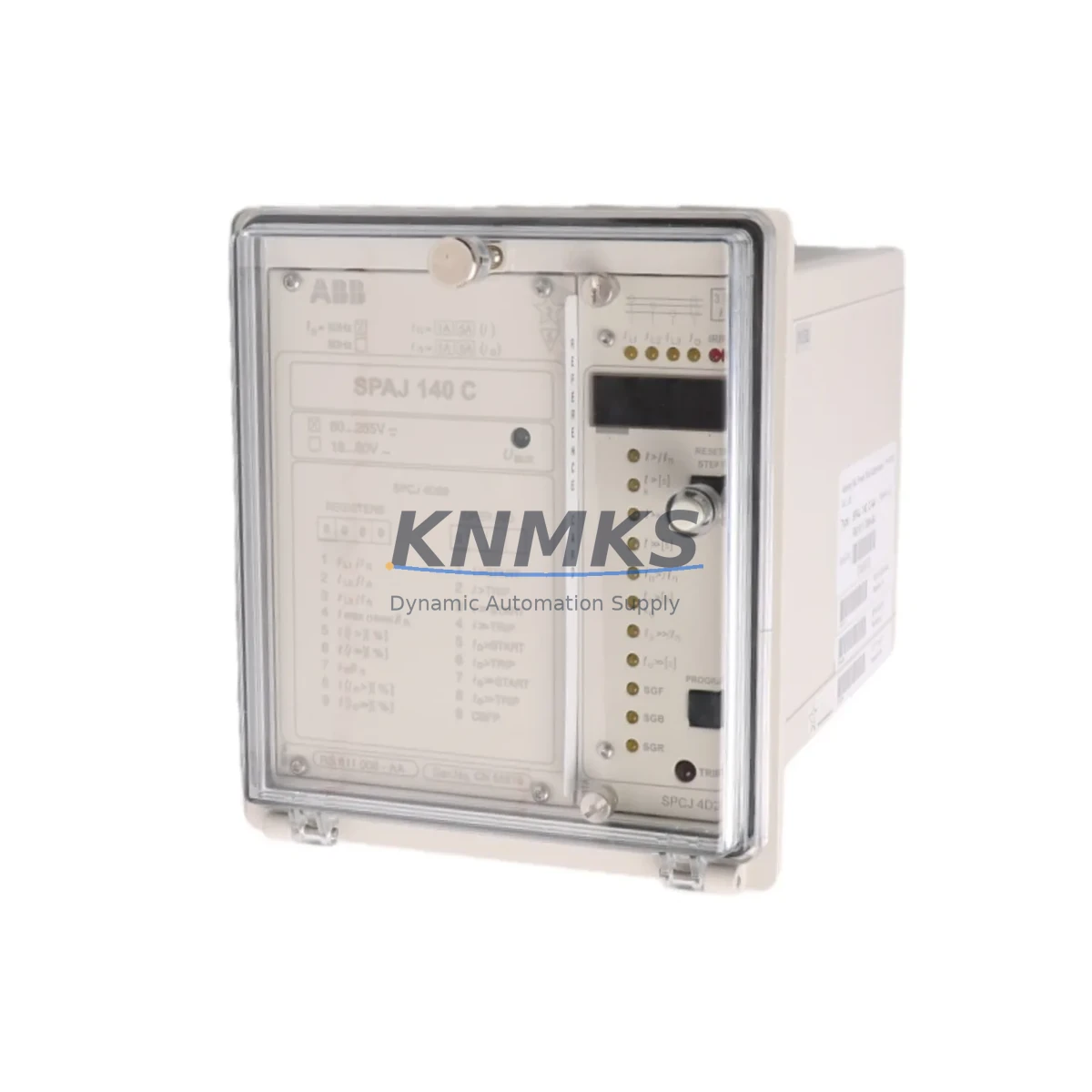
ABB SPAJ140C Migration-Ready Overcurrent Relay for Legacy Control Systems
The ABB SPAJ140C is a combined overcurrent and earth-fault protection relay engineered for feeder and transformer protection in medium-voltage distribution networks. As legacy REJ and SPAJ series installations approach end-of-life, the SPAJ140C has become the preferred migration-ready replacement for aging protection schemes across substations, industrial switchgear panels, and utility feeder bays. Its backward-compatible signal interface, standardized DIN-rail mounting footprint, and support for both self-powered and auxiliary-powered configurations make it a reliable drop-in candidate for brownfield retrofit projects where minimizing downtime and preserving existing wiring infrastructure are critical priorities.
For engineers managing aging protection relay panels, the SPAJ140C addresses the most common retrofit challenges: terminal block compatibility, auxiliary power range, output relay configuration, and communication readiness. Whether you are replacing a failed ABB REJ521 in a utility feeder bay or upgrading a bank of SPAJ110C units in an industrial MV switchboard, the SPAJ140C provides a validated migration path with minimal panel modification. Its wide auxiliary voltage range (24–240 V AC/DC) accommodates the mixed power supply environments typical of older control cabinets, and its compact 4U case fits standard 19-inch relay panels without requiring new cutouts or adapter plates.
Migration Compatibility Table
| Parameter | ABB SPAJ140C | Retrofit Notes |
|---|---|---|
| Mounting | Flush panel / DIN-rail (4U, 19″) | Compatible with existing REJ/SPAJ panel cutouts; no new drilling required in most installations |
| Auxiliary Voltage | 24–240 V AC/DC (universal) | Verify existing panel supply voltage; universal range eliminates need for auxiliary transformer replacement |
| CT Input | 1 A / 5 A selectable | Confirm existing CT secondary rating before wiring; jumper selection on rear terminal block |
| Output Relays | 3 trip + 1 alarm (configurable) | Map existing trip/alarm wiring to new terminal assignments; refer to SPAJ140C wiring diagram |
| Communication | SPA-bus (optional LON/Modbus via adapter) | SPA-bus compatible with existing ABB MicroSCADA and CAP505 systems; Modbus adapter required for third-party SCADA |
| Replacement for | REJ521, SPAJ110C, SPAJ120C, SPAJ130C | Direct functional replacement; verify protection function mapping and setting group migration |
| Commissioning Tool | CAP505 / SPACOM / local HMI | Settings transferable via CAP505 parameter file; local keypad allows on-site adjustment without laptop |
| Support terms | 12 Months | Covers manufacturing defects; includes pre-shipment functional test report |
Retrofit Planning for Existing Automation Systems
A successful SPAJ140C retrofit begins well before the relay arrives on site. The first step is a panel audit: document the existing terminal block layout, auxiliary supply voltage, CT secondary rating, and the number of trip and alarm output contacts currently wired to the protection scheme. In most REJ521 and SPAJ110C installations, the rear terminal arrangement is close enough to the SPAJ140C that existing cable looms can be re-terminated with minimal re-routing. However, engineers should pay particular attention to the earth-fault CT input terminal, which may differ in position between older SPAJ variants and the SPAJ140C.
For sites running ABB MicroSCADA or CAP505 engineering tools, the SPA-bus communication link can be preserved without modification. The SPAJ140C is fully compatible with the SPA-bus protocol used by legacy ABB substation automation systems, allowing existing SCADA database objects, event lists, and disturbance recorder configurations to remain intact. Where the existing system uses a third-party SCADA platform over Modbus RTU, an ABB SPA-ZC 22 protocol converter or equivalent gateway module will be required to bridge the SPA-bus output of the SPAJ140C to the Modbus network.
I/O expansion requirements should also be assessed during the planning phase. If the existing protection scheme relies on additional binary input modules or output relay expanders — such as the ABB SPTO 1D3 output relay module or SPTE 1E3 trip extension module — confirm that these accessories remain compatible with the SPAJ140C’s expansion port. In control cabinets where space is constrained, the SPAJ140C’s 4U compact form factor is an advantage, but engineers should verify that the rear connector depth does not conflict with existing cable duct or busbar arrangements.
For sites where the existing HMI displays protection relay status via ABB Panel Builder or a third-party HMI platform, the SPAJ140C’s SPA-bus register map should be cross-referenced against the existing HMI tag database. In most cases, the register addresses for overcurrent pickup, trip status, and fault recording are consistent across the SPAJ series, allowing HMI screens to be reused with minor tag remapping. Where the HMI communicates via a SPACOM communication module, the existing configuration can typically be retained without modification.
Finally, confirm firmware version compatibility if the site uses CAP505 for parameter management. The SPAJ140C supports parameter upload and download via the CAP505 relay tool, and existing setting files from SPAJ110C or SPAJ120C installations can serve as a baseline — though protection engineers must review and validate all setting groups before energization, particularly overcurrent pickup levels, time multiplier settings, and earth-fault sensitivity thresholds.
Downtime Control During System Migration
Minimizing protection outage duration is the primary operational constraint in any live substation or industrial MV switchgear retrofit. For SPAJ140C installations, a structured pre-commissioning workflow is the most effective way to compress on-site switching time. Before the maintenance window opens, complete all setting calculations offline using CAP505 or equivalent tools, prepare the parameter file, and verify the replacement relay on the bench using a secondary injection test set. A pre-tested, pre-configured SPAJ140C can typically be installed, wired, and energized within a two-to-four-hour outage window in a straightforward single-feeder replacement scenario.
To protect existing program logic and SCADA configurations, export all current relay settings, event logs, and disturbance records from the outgoing relay before removal. In MicroSCADA-integrated systems, ensure that the relay’s database object is placed in maintenance mode before disconnection to prevent spurious alarms during the changeover. After installation of the SPAJ140C, perform a staged energization sequence: apply auxiliary power first, verify communication link establishment, confirm output relay wiring with a continuity check, and then perform a secondary injection test to validate overcurrent and earth-fault pickup before returning the feeder to service.
For multi-relay panel upgrades — for example, replacing an entire bank of SPAJ110C units across a six-feeder switchboard — a phased replacement strategy reduces cumulative risk. Replace and commission one feeder at a time, returning each to service before proceeding to the next. This approach maintains partial system protection throughout the upgrade and limits the exposure window for any single feeder. Document each relay’s as-left settings and test results in a commissioning record for future reference and support terms validation.
Retrofit Support FAQ
Q1: Is the ABB SPAJ140C a direct replacement for the REJ521 and SPAJ110C?
The SPAJ140C provides equivalent overcurrent and earth-fault protection functions to the REJ521 and SPAJ110C. Terminal assignments and rear connector layouts are similar but not identical — a wiring comparison using the respective technical manuals is required before re-termination. Protection settings must be recalculated and validated; direct transfer of numeric setting values without engineering review is not recommended.
Q2: What communication protocol does the SPAJ140C support, and is it compatible with existing ABB SCADA systems?
The SPAJ140C uses the ABB SPA-bus serial communication protocol, which is natively compatible with MicroSCADA, CAP505, and SPACOM-based systems. For Modbus RTU or IEC 60870-5-103 integration, a protocol converter such as the ABB SPA-ZC 22 is required. Confirm the existing communication wiring standard (RS-485 or optical fiber loop) before ordering accessories.
Q3: What pre-shipment testing is performed, and what documentation is included?
Each SPAJ140C unit undergoes a functional test covering auxiliary power-up, output relay operation, overcurrent and earth-fault pickup verification, and communication port response before dispatch. A test report is included with shipment. The unit is covered by a support terms confirmed by quotation against manufacturing defects from the date of delivery.
Q4: What is the typical lead time, and is stock available for urgent replacement orders?
Stock units are available for immediate dispatch. For urgent breakdown replacement orders, contact our sales team directly to confirm current inventory and arrange priority shipping. We support global delivery with export documentation for customs clearance in major industrial markets.
© 2026 KNMKS. All rights reserved.
Original Source: https://knmks.com
Contact: admin@knmks.com | +86 18359268345
Product Identification
- Brand / Ecosystem
-
ABB
ABB - Model / Series
- SPAJ140C
- Product Family
- Relays & Interface
- Availability Status
- Available on request after model and quantity confirmation
- Inquiry Type
- B2B RFQ, replacement inquiry and project spare-part request
- Pre-Quote Check
- Exact SKU, brand, series, quantity, nameplate photos and destination country are checked before quotation
System Path
Where this product fits in the KNMKS automation structure.
Specification & Inquiry Focus
- Interface range
- Relays, isolation and signal modules
- Common needs
- Coil voltage and contact rating
- Project support
- Panel wiring and signal protection
Buyer Confirmation
Information KNMKS checks before replying.
- Exact model
- SPAJ140C
- Brand / ecosystem
- ABB
- Product family
- Relays & Interface
- Application note
- Replacement, maintenance, project build or spare-part list
- Useful photos
- Nameplate, installed unit, cabinet layout or connector side
- Delivery details
- Quantity, destination country and target schedule
Document Support
Files and notes can be confirmed during quotation.
- Product photos or nameplate confirmation when available
- Packing and delivery notes before quotation confirmation
- Support scope and delivery terms confirmed per inquiry
- Export document coordination for qualified B2B requests
Inquiry Support
- Relay base and module matching
- Signal isolation and protection options
- Panel accessory inquiry support
What to Send Us
- Brand and exact model number: ABB SPAJ140C
- Quantity and required delivery time
- Application, replacement requirement or nameplate photo
- Destination country and shipping preference
RFQ Preparation
This is a product inquiry page built for RFQ communication.
Fast Model Check
Send this model to KNMKS for confirmation.
Include quantity, destination country and photos if this is a maintenance replacement. The inquiry will be saved with a reference number after submission.
Brand & Compatibility Note
KNMKS displays automation product information for well-known industrial brand ecosystems and compatible replacement references. Brand names are used for product identification and compatibility reference only; final availability and commercial terms are confirmed per quotation.
 Manufacturing
 Machine Tools
 Packaging
 Energy & Power
 PLCs & Controllers
 HMI & Displays
 Servo Systems
 Variable Frequency Drives